


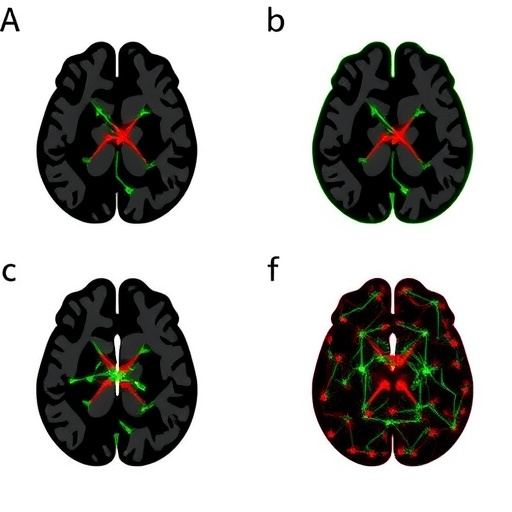
A new study of the mouse insular cortex is challenging the idea that this brain region operates as a single, uniform hub for taste, pain, emotion and internal bodily signals. By combining cellular anatomy with circuit-level analysis, researchers have identified distinct populations of pyramidal neurons whose positions, connections and physiological properties point to specialized roles within the insula. The findings suggest that the cortex does not simply blend sensory and emotional information together. Instead, it may organize these signals through parallel but interacting neural pathways.
The insular cortex occupies a strategic position between sensory systems and the networks that regulate motivation, decision-making and bodily states. It receives information about conditions inside and outside the body, including visceral signals, taste, temperature, pain and changes associated with arousal. In humans, the insula has also been linked to empathy, craving, anxiety and conscious awareness of internal sensations. Yet the cellular architecture that allows one region to support such a wide range of functions has remained poorly understood.
The new work, led by Jongbloets, Chen, Muniak and colleagues, focuses on pyramidal cells, the principal excitatory neurons of the cerebral cortex. These cells transmit information over short and long distances, using glutamate as their primary neurotransmitter. Rather than forming one homogeneous population, pyramidal neurons can differ in their layer of residence, dendritic structure, molecular identity, electrical behavior and projection targets. Those differences determine which signals a neuron receives and which downstream circuits it can influence.
Using the mouse insular cortex as a model, the researchers examined how pyramidal cell types are arranged across cortical layers and how their axons are distributed through the brain. The study connects neuronal form with circuit destination, an approach that is essential for understanding function. A neuron that projects locally may coordinate activity within the insula, while one that sends axons to the amygdala, striatum, thalamus or brainstem can influence emotion, action selection, sensory processing or autonomic control. Mapping these routes provides a structural explanation for the insula’s unusually broad behavioral repertoire.
The results reveal a layered organization in which different pyramidal populations are associated with different patterns of connectivity. Superficial neurons are positioned to integrate information within nearby cortical networks and to communicate with other cortical areas. Deeper-layer populations include cells capable of sending longer-range outputs to subcortical structures. Such an arrangement is consistent with a division of labor: local and corticocortical neurons may refine representations of sensory and bodily states, whereas subcortically projecting neurons may translate those representations into motivated behavior or physiological responses.
A central implication is that “the insula” should not be treated as one functional unit. Two neighboring pyramidal cells can occupy the same broad anatomical region while participating in different circuits and responding to different combinations of inputs. Their dendrites may sample distinct layers or afferent systems, and their axons may carry information to separate targets. In technical terms, the functional identity of an insular neuron depends not only on its molecular profile but also on its laminar position, morphology, intrinsic excitability and projection pattern.
This circuit logic could help explain why insular activity has been associated with apparently contradictory processes. The same region can contribute to the perception of pain, the evaluation of food, the anticipation of danger and the monitoring of internal bodily changes. These functions may be distributed across partially specialized cell classes rather than generated by a single undifferentiated population. Communication between those classes could allow the brain to compare incoming sensory evidence with memories, motivational states and predictions about what is likely to happen next.
The findings may also be relevant to neurological and psychiatric disorders. Abnormal insular activity has been reported in addiction, chronic pain, eating disorders, anxiety and depression. If distinct pyramidal populations control different outputs, disease-related changes may affect particular cell types or pathways instead of the entire insular cortex. That possibility raises the prospect of more precise interventions, including pathway-selective drugs, targeted neuromodulation or genetic tools designed to alter activity in defined neuronal populations.
The study is also a reminder that brain regions are best understood as networks of specialized microcircuits. Anatomical maps alone cannot reveal what a neuron computes, and physiological recordings alone cannot show where its signals go. By linking cell type, cortical layer and long-range connectivity, the researchers provide a framework for testing how the insula transforms bodily and environmental information into perception and behavior. Future experiments will need to determine how these circuits operate during taste, pain, stress, social interaction and decision-making, and whether comparable organizational principles exist in the human insula. For now, the work offers a detailed blueprint of a region whose complexity may be far greater than its compact size suggests.
Cite Scienmag News
Cassandra Pierce. (August 7, 2026). Mouse insular cortex pyramidal cell types reveal specialized circuit functions. Scienmag. https://scienmag.com/mouse-insular-cortex-pyramidal-cell-types-reveal-specialized-circuit-functions/
Cassandra Pierce. "Mouse insular cortex pyramidal cell types reveal specialized circuit functions." Scienmag, 7 August 2026, https://scienmag.com/mouse-insular-cortex-pyramidal-cell-types-reveal-specialized-circuit-functions/. Accessed 4 September 2026.
Cassandra Pierce. "Mouse insular cortex pyramidal cell types reveal specialized circuit functions." Scienmag. August 7, 2026. https://scienmag.com/mouse-insular-cortex-pyramidal-cell-types-reveal-specialized-circuit-functions/


