


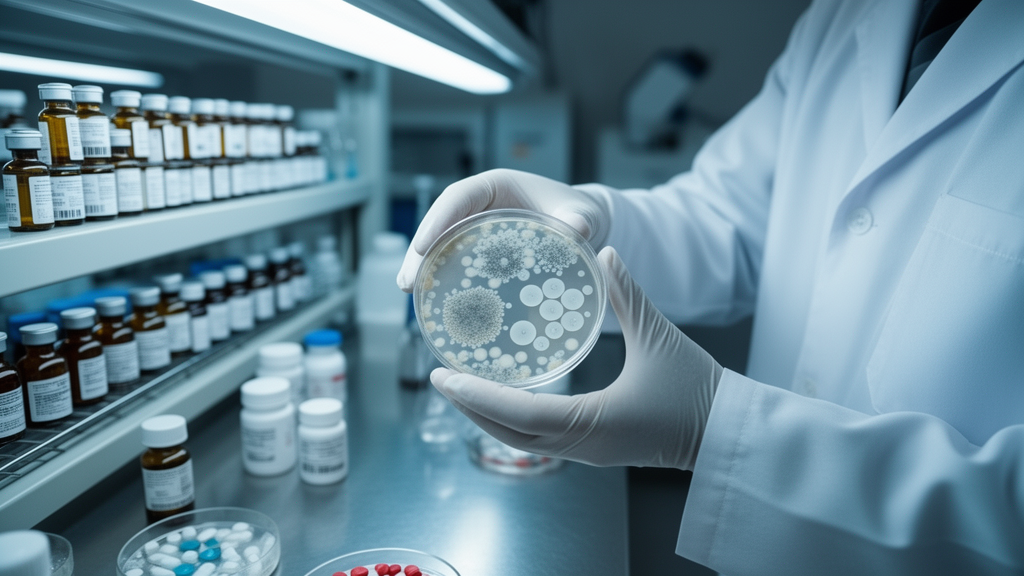
Antimicrobial resistance has quietly become one of the most consequential threats in modern medicine, and a comprehensive new review published in the Journal of Pharmacy & Pharmaceutical Sciences argues that the fastest route to new treatments may already be sitting on pharmacy shelves. The analysis, led by researchers at GITAM deemed-to-be University in India, maps the current landscape of drug repurposing against resistant pathogens and makes the case that approved medications—anticancer agents, antidepressants, anti-inflammatory drugs, even legacy antibiotics—can be systematically converted into weapons against the so-called superbugs.
The scale of the problem is staggering. Bacterial antimicrobial resistance contributed to an estimated 4.95 million deaths in 2019, with 1.27 million deaths directly attributable to infections that resisted treatment. The World Health Organization reports that resistance is highest in the South-East Asian and Eastern Mediterranean regions, where one in three reported infections is resistant, and one in five in the African region. The ESKAPE pathogens—Staphylococcus aureus, Pseudomonas aeruginosa, Enterococcus faecium, Klebsiella pneumoniae, Acinetobacter baumannii and Enterobacter species—along with carbapenem-resistant Enterobacteriaceae, drug-resistant Mycobacterium tuberculosis and resistant Neisseria gonorrhoeae, now evade standard therapy with alarming regularity. Even last-line drugs such as colistin and tigecycline are losing ground against multidrug-resistant Gram-negative infections, which remain linked to high rates of death and treatment failure.
What makes the crisis particularly intractable is the collapse of the antibiotic discovery pipeline. The review describes how the early decades of antibiotic research, driven by simple screening of soil-derived microorganisms, exhausted the easily accessible natural-product reservoirs and created what scientists call the antibiotic discovery void. Approval of genuinely new antibiotic classes has dropped sharply since the 1970s, and the scientific barriers are formidable: compounds must penetrate the impermeable outer membrane of Gram-negative bacteria, minimize intrinsic resistance determinants, maintain acceptable pharmacokinetics and safety, and outpace rapidly evolving resistance. Financial disincentives compound the problem—antibiotics are prescribed briefly and increasingly reserved as last-line treatments, offering far lower profit potential than chronic-disease medications. Many major pharmaceutical companies have simply withdrawn from antibacterial research and development altogether.
Drug repurposing, also known as repositioning, offers a strikingly efficient alternative. Rather than designing molecules from scratch, researchers find new applications outside the original indication for drugs already on the market. The economics are compelling: the review estimates that repurposed therapies can reach the market in roughly three to twelve years, compared with ten to seventeen for a new molecular entity, at around 300 million dollars versus 1.6 to 2 billion. Because repurposed drugs already carry established safety profiles, known pharmacokinetics and existing manufacturing infrastructure, they bypass the most expensive and failure-prone stages of early development. For FDA-approved compounds, shorter regulatory pathways such as the 505(b)(2) application can further accelerate clinical validation.
Mechanistically, repurposed drugs fall into three broad categories. Some exhibit direct antibacterial activity through off-target effects—non-antibiotic drugs that kill or inhibit bacteria outright. Others function as adjuvants that restore or enhance the efficacy of existing antibiotics, for example by inhibiting efflux pumps, disrupting biofilms or blocking beta-lactamase enzymes. A third class comprises host-directed therapies that modulate the immune response or pathophysiology rather than targeting bacterial viability directly. The review emphasizes that repurposing should be viewed as a strategic complement to conventional antibiotic discovery rather than a substitute, since issues like reduced potency in new indications, complicated dosing and possible unintended effects on resistance dynamics remain real concerns.
Among the most intriguing candidates are anticancer drugs, which share surprising mechanistic overlap with bacteria. Cancer cells and bacteria both proliferate rapidly, adapt metabolically, communicate cell-to-cell and develop drug resistance through efflux pump overexpression. The review catalogs compounds such as cisplatin, which crosslinks bacterial DNA and shows activity against S. aureus, P. aeruginosa and E. coli; 5-fluorouracil, which targets virulence factor and biofilm production in staphylococci; gallium nitrate, which inhibits iron transport and DNA replication in P. aeruginosa, A. baumannii and M. tuberculosis; and gemcitabine, which disrupts bacterial phosphorylation in MRSA and related strains. Elesclomol, a redox-active copper chelator, enhances oxidative stress against M. tuberculosis H37Rv, while linsitinib, an experimental kinase inhibitor, has demonstrated direct antimycobacterial activity. The caveat is serious: because these agents were designed to target cell proliferation, they risk immune suppression and secondary infections, so preventing over-suppression in patients is a critical clinical consideration.
Psychiatric medications offer another unexpected avenue. Bacteria reduce antimicrobial accumulation by overexpressing efflux pumps, and antidepressants and antipsychotics can inhibit these pumps directly. Selective serotonin reuptake inhibitors such as paroxetine and sertraline, tricyclic antidepressants like amitriptyline, and phenothiazine antipsychotics including thioridazine and chlorpromazine all show efflux pump-modulating activity against S. aureus, E. coli, P. aeruginosa and Helicobacter pylori. Amitriptyline inhibits the AcrAB-TolC efflux system in Salmonella Typhimurium, while imipramine and desipramine reverse plasmid-mediated resistance in E. coli. However, the review notes that persistent antidepressant use can disrupt gut bacteria, and the concentrations required for antimicrobial effects typically exceed those needed for psychiatric conditions, raising toxicity concerns that must be resolved before clinical deployment.
Anti-inflammatory drugs add further depth to the arsenal. Auranofin, an antirheumatic metallodrug, inhibits bacterial thioredoxin reductase and shows activity against vancomycin-intermediate and vancomycin-resistant S. aureus. Diclofenac reduces biofilm formation and blocks staphyloxanthin synthesis in MRSA, while ibuprofen disrupts membranes and biofilms across P. aeruginosa, B. cereus, E. coli and staphylococcal strains. Carprofen inhibits mycobacterial drug efflux and biofilm growth in tuberculosis, and diflunisal limits AgrA-mediated gene expression in MRSA osteomyelitis. Statins such as atorvastatin and rosuvastatin show cytotoxic activity against E. coli, P. aeruginosa and S. pneumoniae, while the anthelmintic niclosamide disrupts the proton motive force of H. pylori and the antidiabetic metformin reversibly inhibits mitochondrial NADH dehydrogenase in E. faecalis. Ivacaftor, a cystic fibrosis transmembrane conductance regulator potentiator, shows activity against MRSA, MSSA and VRSA.
Adjuvant therapies represent perhaps the most immediately actionable strategy. Beta-lactamase inhibitors such as clavulanic acid, sulbactam and avibactam irreversibly inhibit the serine beta-lactamase enzymes that degrade the beta-lactam ring of penicillins, cephalosporins and carbapenems, preserving antibiotic efficacy against extended-spectrum beta-lactamase and carbapenemase producers. Efflux pump inhibitors like PAβN and CCCP increase intracellular antibiotic concentrations when combined with levofloxacin or erythromycin against P. aeruginosa. Biofilm-disrupting agents—including N-acetyl cysteine, Dispersin B, DNase I and alpha-amylase—prevent maturation of the extracellular polymeric substances that give biofilms their structural stability, while membrane permeabilizers such as guanidinylated polymyxins and cerium oxide nanoparticles enhance antibiotic uptake. Biofilm infections are responsible for more than 65 percent of all infections, making these strategies particularly valuable.
Computational approaches are transforming the field from serendipitous observation into rational design. High-throughput screening of drug libraries, molecular docking, quantitative structure-activity relationship predictions, machine learning models and network pharmacology have dramatically accelerated candidate identification. The ReFRAME library has yielded compounds with greater than 90 percent inhibition against Trypanosoma cruzi and MRSA. Deep learning applied to a library of 39,000 compounds identified halicin, previously unrelated to antibiotics, which showed in vitro and in vivo activity against resistant Acinetobacter baumannii and C. difficile. More recently, deep learning contributed to the discovery of abaucin, a new antibiotic with strong selective activity against A. baumannii. Structure-based drug design, using three-dimensional receptor structures obtained through X-ray crystallography, cryo-EM or NMR, enables systematic optimization of ligand binding through conformational search algorithms and scoring functions that balance accuracy, speed and cost.
Pharmacokinetic and pharmacodynamic considerations remain essential. Chloroquine and hydroxychloroquine, repurposed from antimalarial use to COVID-19, exhibited modified pharmacokinetics due to extreme tissue binding and long half-lives, causing cardiac toxicity in some patients. Remdesivir’s poor bioavailability demanded intravenous administration of its phosphate ester to reach adequate concentrations at the viral replication site. Thalidomide, withdrawn for teratogenic effects, was successfully reintroduced as an immunomodulatory drug for multiple myeloma after thorough investigation of its cytokine-regulating pharmacodynamics. Physiology-based pharmacokinetic simulations now predict whether existing doses can achieve sufficient exposure at novel target sites or whether formulation and dosing alterations are required.
The review also documents successful cross-pathogen repurposing. Toremifene and clomiphene, selective estrogen receptor modulators, emerged as potent inhibitors of Zaire ebolavirus infection through off-target effects on viral entry. Azithromycin inhibits Zika virus propagation in glial cell lines and human astrocytes. Auranofin exhibits macrofilaricidal and antileishmanial activity through redox enzyme inhibition. The Malaria Box, assembled by the Medicines for Malaria Venture, has returned potent hits against kinetoplastids, toxoplasmosis, amoebiasis, candidiasis and schistosomiasis. Antifungals can be repurposed against Leishmania and Trypanosoma because both fungi and trypanosomatids use ergosterol rather than cholesterol as their membrane sterol component.
Despite these advances, significant barriers persist. Repurposed drugs often rely on compounds that are off-patent or near expiry, creating weak intellectual property protection and limited commercial exclusivity. Protection is typically restricted to new-use, formulation or combination patents, which are narrower and more easily challenged than composition-of-matter patents, weakening a company’s ability to secure returns on costly Phase II and III trials. Stewardship policies that appropriately limit antimicrobial use further constrain sales volume, making outdated sales-based market models inadequate to incentivize investment. Seven government-run programs in the United States, European Union and United Kingdom have recently been established to help organizations reduce costs or mitigate these challenges, and alternative financing models—including subscription-style payments, market entry rewards and public-private partnerships—are gaining support.
The review concludes that drug repurposing should be seen not as a replacement for novel antibiotic discovery but as a powerful complementary strategy that can alleviate the current therapeutic situation while innovation rebuilds. Coordinated global efforts linking laboratory science, clinical validation, sustained financial investment and regulatory reform will be essential. Public and private partnerships, subscription-based compensation, strengthened surveillance, data-sharing frameworks and stewardship systems will determine whether repurposed drugs fulfill their potential to fill significant voids in the global antimicrobial resistance pipeline before the stealthy spread of resistance undoes decades of progress in treating infectious diseases.
Subject of Research: Current trends in repurposing approved drugs as direct antimicrobials, adjuvants and host-directed therapies against antimicrobial resistance
Article Title: Old drugs, new weapons: current trends in repurposing therapies against antimicrobial resistance
Article References: Srikanth, G., Praveen Kumar, N., Sridevi, B., Borra, P. B., Thapar, P., & Wani, A. (2026). Old drugs, new weapons: current trends in repurposing therapies against antimicrobial resistance. Journal of Pharmacy & Pharmaceutical Sciences, 29, Article 16158. https://doi.org/10.3389/jpps.2026.16158
Image Credits: AI Generated
Keywords: antimicrobial resistance, drug repurposing, antibiotic adjuvants, efflux pump inhibitors, beta-lactamase inhibitors, biofilm disruption, host-directed therapy, machine learning, high-throughput screening, molecular docking, ESKAPE pathogens, pharmacokinetics
Cite Scienmag News
Kristina Jarvis. (October 17, 2026). Old drugs, new weapons: repurposing therapies against antimicrobial resistance. Scienmag. https://scienmag.com/old-drugs-new-weapons-repurposing-therapies-against-antimicrobial-resistance/
Kristina Jarvis. "Old drugs, new weapons: repurposing therapies against antimicrobial resistance." Scienmag, 17 October 2026, https://scienmag.com/old-drugs-new-weapons-repurposing-therapies-against-antimicrobial-resistance/. Accessed 17 October 2026.
Kristina Jarvis. "Old drugs, new weapons: repurposing therapies against antimicrobial resistance." Scienmag. October 17, 2026. https://scienmag.com/old-drugs-new-weapons-repurposing-therapies-against-antimicrobial-resistance/


