Esophageal squamous cell carcinoma (ESCC) has long been one of oncology’s most stubborn adversaries, a malignancy marked by late diagnosis, geographic clustering, and five-year survival rates that rarely exceed 20 percent. Now, a comprehensive narrative review published in Frontiers in Pharmacology argues that the marriage of immune checkpoint inhibitors with the field’s conventional arsenal—chemotherapy, radiotherapy, and surgery—has produced something rarer than incremental progress: a genuinely synergistic, greater-than-additive effect that has already reshaped first-line treatment for advanced disease.
The review, led by Ruyan Li of the Nantong Institute of Technology together with Zihao Heng and Xi Cheng of Nantong University, synthesizes literature drawn from PubMed, Web of Science, the Cochrane Library, and CNKI through March 2026. Its central thesis is mechanistically elegant: conventional therapies and PD-1/PD-L1 inhibitors do not merely stack their effects—they complement one another at the molecular level. Cytotoxic treatments kill tumor cells and, in doing so, trigger immunogenic cell death, releasing tumor antigens and dismantling the immunosuppressive tumor microenvironment. PD-1/PD-L1 inhibitors then release the molecular brakes on T cells, allowing the host immune system to finish the job and establish long-term surveillance against residual disease.
The scale of the clinical problem justifies the intensity of the research effort. According to 2022 global cancer statistics cited in the review, esophageal cancer accounted for roughly 510,000 new cases and 450,000 deaths worldwide, ranking eleventh in incidence and seventh in mortality among all malignancies. China bears more than half of the global burden, with high-incidence zones concentrated in the Taihang Mountain region. ESCC itself represents approximately 80 to 90 percent of all esophageal cancer cases, and about 70 percent of patients are diagnosed at an intermediate or advanced stage, after the window for potentially curative surgery has closed.
The etiology of ESCC differs notably between Eastern and Western populations. While tobacco smoking and alcohol consumption remain internationally recognized risk factors—nitrosamines and polycyclic aromatic hydrocarbons in tobacco directly damage the esophageal mucosa, and ethanol’s metabolite acetaldehyde is itself carcinogenic—the Chinese population shows a less pronounced association with these habits. Instead, positive family history, nutritional deficiencies, chronic consumption of scalding-hot beverages, and genetic polymorphisms contribute more heavily. At the molecular level, TP53 mutation stands out as the most frequent genetic lesion, disabling DNA damage repair, cell cycle control, and apoptosis, while constitutive activation of PI3K/AKT, NF-κB, and NOTCH signaling pathways pushes esophageal epithelial cells toward relentless proliferation.
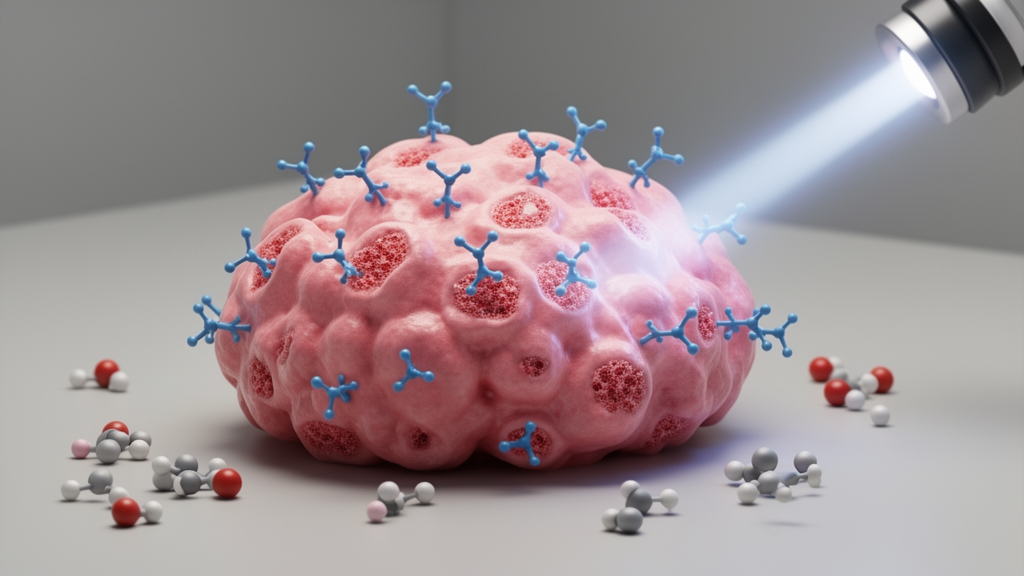
Against this backdrop, the PD-1/PD-L1 pathway has emerged as the central target of modern ESCC immunotherapy. PD-1, a co-inhibitory receptor of the CD28 family expressed on activated T cells, B cells, and macrophages, transmits negative regulatory signals when engaged by PD-L1, a ligand highly expressed on many cancer cells but largely absent from normal tissues. This engagement induces T cell exhaustion and suppresses immune surveillance, effectively forming an immunosuppressive shield around the tumor. Monoclonal antibodies such as pembrolizumab, nivolumab, camrelizumab, sintilimab, toripalimab, and tislelizumab block this interaction—either at the PD-1 receptor or the PD-L1 ligand—restoring cytotoxic T cell function and remodeling the tumor microenvironment at molecular, cellular, and systemic levels.
The clinical evidence for combining these inhibitors with chemotherapy is now robust across multiple Phase III trials. KEYNOTE-590 demonstrated that pembrolizumab plus cisplatin and fluorouracil reduced the risk of death by 28 percent compared to chemotherapy alone (HR 0.72), extending median overall survival from 9.8 to 12.3 months. ESCORT-1st showed camrelizumab plus chemotherapy cut mortality risk by 30 percent (HR 0.70), while JUPITER-06 revealed toripalimab plus paclitaxel and cisplatin reduced progression or death risk by 42 percent (HR 0.72). CheckMate 648, RATIONALE-306, and ORIENT-15 each confirmed similar survival advantages with nivolumab, tislelizumab, and sintilimab respectively. Meta-analytically, the combination reduces death risk by 32 percent (HR 0.68) and progression risk by 38 percent (HR 0.62), with objective response rates more than doubling (OR 2.08). Five-year follow-up from KEYNOTE-590 presented at the 2024 ASCO GI symposium showed a five-year overall survival rate of 10.6 percent in the combination arm—more than triple the 3.0 percent seen with chemotherapy alone.
The mechanistic basis for this synergy centers on immunogenic cell death, a tightly choreographed molecular process by which dying tumor cells convert themselves into in situ vaccines. Taxanes and platinum agents induce calreticulin translocation to the cell surface—an “eat-me” signal facilitating phagocytosis by dendritic cells—while releasing high-mobility group box 1 (HMGB1) and adenosine triphosphate (ATP) into the tumor microenvironment. HMGB1 engages toll-like receptor 4 on dendritic cells, promoting antigen cross-presentation, while ATP acts as a “find-me” signal recruiting antigen-presenting cells via purinergic P2RX7 signaling. These damage-associated molecular patterns orchestrate dendritic cell maturation and prime tumor-specific CD8-positive T cell responses. PD-1 inhibitors then prevent the exhaustion of these newly activated T cells within the immunosuppressive microenvironment, creating a complementary cytotoxic partnership in which chemotherapy rapidly reduces tumor burden while the reinvigorated immune system clears residual cells and maintains long-term memory.
In the perioperative setting, neoadjuvant immunochemotherapy (NICT)—typically two to four cycles of a PD-1 inhibitor combined with nab-paclitaxel and a platinum agent before surgery—has demonstrated encouraging pathological complete response rates of up to 25 percent, compared favorably to traditional neoadjuvant chemoradiotherapy in tumor regression grade, lymph node negativity rate, and incidence of neural invasion, without increasing serious postoperative complications such as pneumonia or anastomotic leakage. The ESCORT-NEO Phase III trial confirmed that camrelizumab plus nab-paclitaxel or paclitaxel plus cisplatin significantly improved pathological complete response and event-free survival in resectable locally advanced ESCC. A single-arm Phase II study of tislelizumab combined with carboplatin and nab-paclitaxel reported a four-year overall survival rate of 69.4 percent in the surgery group versus 33.3 percent in the non-surgery group. At the 2025 ASCO GI symposium, adebrelimab—a next-generation PD-L1 inhibitor developed in China—achieved a pathological complete response rate of 38.9 percent when combined with chemotherapy preoperatively.
The synergy between PD-1 inhibitors and radiotherapy operates through distinct immunobiological channels, most notably the abscopal effect—the rare phenomenon by which localized irradiation triggers systemic anti-tumor immune responses capable of shrinking unirradiated distant metastases. Radiotherapy induces immunogenic cell death, releasing tumor-associated antigens and danger signals that activate antigen-presenting cells and initiate T cell responses. However, the upregulated PD-1/PD-L1 pathway in the irradiated microenvironment drives CD8-positive T cell exhaustion, and PD-1 blockade releases this brake, restoring cytotoxic function. Tumor hypoxia, a major contributor to radiotherapy resistance, can be ameliorated concurrently with PD-1 inhibition to enhance CD8-positive T cell activation and radiosensitivity. A retrospective study of 169 patients with recurrent or metastatic ESCC found numerically better progression-free and overall survival when radiotherapy was added to immunotherapy, particularly in those with local or regional recurrence, though the differences did not reach statistical significance.
Despite these advances, substantial challenges remain. PD-L1 expression, measured by combined positive score (CPS), is the most extensively validated biomarker, with patients harboring CPS ≥10 deriving greater survival benefit—yet PD-L1-negative patients still derive some benefit, indicating that PD-L1 alone is insufficient as a sole selection criterion. Current smokers and those with CPS <1 tumors may not derive significant survival advantage. Resistance mechanisms are multifactorial, encompassing defects in interferon-gamma signaling through JAK1/2 mutations, loss of antigen presentation via MHC class I downregulation or β2-microglobulin mutation, upregulation of alternative checkpoints including LAG-3, TIM-3, and TIGIT, accumulation of myeloid-derived suppressor cells and regulatory T cells, and WNT/β-catenin pathway activation promoting immune exclusion. Immune-related adverse events—pneumonitis, colitis, hepatitis, dermatitis, and endocrinopathies—require vigilant monitoring, and severe events such as fulminant myocarditis demand immediate intervention. Elderly patients aged 75 and older, those with ECOG performance status ≥2, and individuals with pre-existing autoimmune diseases remain systematically underrepresented in registration trials, leaving critical evidence gaps for populations commonly encountered in routine practice.
Subject of Research: The synergistic potential of combining PD-1/PD-L1 inhibitors with conventional therapies in esophageal squamous cell carcinoma
Article Title: The synergistic potential of combining PD-1/PD-L1 inhibitors with conventional therapies in esophageal squamous cell carcinoma
Article References: Li, R., Heng, Z., & Cheng, X. (2026). The synergistic potential of combining PD-1/PD-L1 inhibitors with conventional therapies in esophageal squamous cell carcinoma. Frontiers in Pharmacology, 17, Article 1894567. https://doi.org/10.3389/fphar.2026.1894567
Image Credits: AI Generated
DOI: 10.3389/fphar.2026.1894567
Keywords: synergistic, potential, combining, PD-1, PD-L1, inhibitors, conventional, therapies, esophageal, squamous, cell, carcinoma
Cite Scienmag News
Nathaniel Bowman. (October 17, 2026). PD-1/PD-L1 Inhibitors Show Greater-Than-Additive Synergy With Conventional Therapies in Esophageal Squamous Cell Carcinoma. Scienmag. https://scienmag.com/pd-1-pd-l1-inhibitors-show-greater-than-additive-synergy-with-conventional-therapies-in-esophageal-squamous-cell-carcinoma/
Nathaniel Bowman. "PD-1/PD-L1 Inhibitors Show Greater-Than-Additive Synergy With Conventional Therapies in Esophageal Squamous Cell Carcinoma." Scienmag, 17 October 2026, https://scienmag.com/pd-1-pd-l1-inhibitors-show-greater-than-additive-synergy-with-conventional-therapies-in-esophageal-squamous-cell-carcinoma/. Accessed 17 October 2026.
Nathaniel Bowman. "PD-1/PD-L1 Inhibitors Show Greater-Than-Additive Synergy With Conventional Therapies in Esophageal Squamous Cell Carcinoma." Scienmag. October 17, 2026. https://scienmag.com/pd-1-pd-l1-inhibitors-show-greater-than-additive-synergy-with-conventional-therapies-in-esophageal-squamous-cell-carcinoma/