


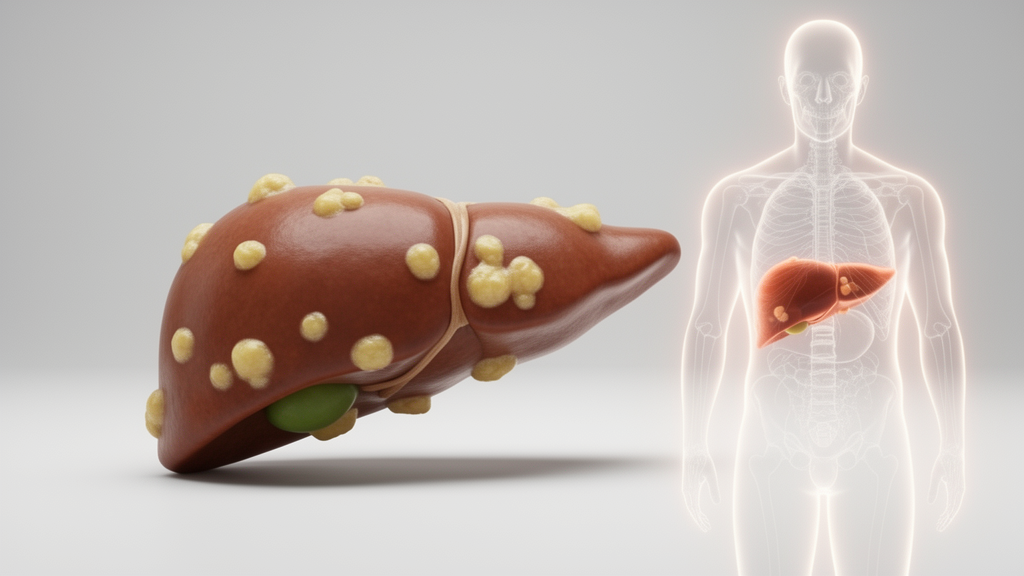
Obesity is usually described as a problem of eating too much and moving too little, but a new review argues that the disease cannot be understood without looking inside the liver. Writing in Pathology and Oncology Research, Miklós Csala and József Mandl of Semmelweis University in Budapest reframe obesity as a disorder of nutrient storage whose central organ is the liver, the body’s main site of both glucogenic and ketogenic metabolism. Their analysis follows a single molecular axis — glucose, NADPH, the endoplasmic reticulum and lipogenesis — to explain how the liver’s admirable efforts to conserve energy can, under chronic overfeeding, become the engine of fatty liver disease, insulin resistance and the metabolic syndrome.
The liver occupies a unique position in metabolism because almost everything absorbed from the gut, with the exception of dietary fat, is collected by the portal circulation and delivered directly to it. Glucose is of singular importance among these arrivals: it is the only nutrient that every cell in the body can consume. Yet it is a troublesome cargo. Its storage capacity as glycogen is limited, its precursors are scarce during starvation, and the kidneys actively retain it to prevent urinary loss. At the same time, excessive glucose exposure is actively harmful — a phenomenon the authors call glucotoxicity, which plays an important role in obesity-related diseases. The liver must therefore both lower and raise blood glucose, storing excess sugar after meals and replenishing it from glycogen or new synthesis during fasting, flexibly adapting to the body’s shifting needs.
Alongside glucose, the review places a second molecule at the heart of hepatic regulation: NADPH, the cell’s common source of reducing power. Although NADH and NADPH have essentially equivalent redox parameters, their metabolic roles are largely different. NADH mostly transports electrons harvested from fuel molecules to the mitochondrial respiratory chain for ATP production, while NADPH is a characteristically cytosolic carrier whose electrons feed reductive biosynthesis, antioxidant defense and the microsomal electron transfer chains that serve detoxification and fatty acid desaturation. The liver must maintain this supply of electrons in the face of wildly changing availability — and here lies the origin of the problem. Glycogen storage is limited, but fat can store a virtually unlimited amount of reducing power. In the fed state, when more glucose is available than the body can stockpile, the liver freely collects the hydrogens of glucose and synthesizes fatty acids to save as much as possible.
The structural basis for this glucose handling is a hepatocyte-specific functional unit the authors call the glycogenoreticular system, a tight interaction between glycogen particles and the endoplasmic reticulum. Glycogen granules are physically associated with the ER membrane and supply the organelle with glucose derivatives such as glucose-6-phosphate, UDP-glucose and UDP-glucuronic acid. Remarkably, the altruistic act by which a hepatocyte releases glucose from its phosphate trap — via a luminal glucose-6-phosphatase enzyme and three auxiliary transporters in the ER — is so unusual that only a few cell types can perform it. This makes the hepatocyte the only cell that can efficiently convert significant amounts of glycogen into blood glucose, and the same system channels glycogen-derived substrates into glucuronidation, the liver’s quantitatively most important detoxification reaction.
When glycogen stores are full and all demand-driven electron consumers — oxidative phosphorylation, biotransformation, antioxidant defense — are saturated, the only electron sink with virtually unlimited capacity is fatty acid synthesis. The arithmetic is striking. Each palmitate molecule produced by the fatty acid synthase complex consumes 14 NADPH molecules, and the process also skips the oxidation of 7 acetyl-CoA molecules in the citrate cycle, forgoing 28 electron pairs, while acetyl-CoA carboxylase raises ATP demand further. Hepatocytes thus store the excess chemical energy of glucose in the most reduced and least hydrophilic form possible. But the price is the irrevocable loss of glucogenic potential: there is no significant pathway from acetyl-CoA back to glucose in human cells, so fat storage is fundamentally the build-up of a ketogenic pool that can never again contribute to blood glucose in starvation.
The review also highlights the ER’s peculiar redox status. Throughout most of the cell, the NADPH and glutathione systems are shifted toward reduction, but the ER lumen maintains a thiol-oxidizing microenvironment to seal secretory proteins with disulfide bridges during oxidative protein folding. The absence of ER-luminal glutathione reductase, thioredoxin and thioredoxin reductase allows oxidized disulfides and reduced NADPH to coexist peacefully in the same compartment. Ascorbate and vitamin E, the authors note, play special roles in the electron transfer reactions of this folding machinery, and the liver’s outstanding capacity to synthesize and secrete glutathione — into plasma and bile — depends on the same glycogen-derived substrates that feed glucose production.
Pathology enters when the diet delivers electrons through enzymes that bypass tight regulation. Fructose is converted to triose phosphates while circumventing phosphofructokinase 1, the main regulatory step of glycolysis, and ethanol is oxidized to acetate regardless of the cell’s energy charge. Both produce a redox shift toward NAD(P)H and a dump of acetyl-CoA. VLDL formation and secretion cannot keep pace with fat synthesis, lipid droplets accumulate, and fatty liver develops. The authors liken the situation to a battery damaged by overcharging: adipose tissue, forced to hypertrophy because the number of fat cells hardly changes in adults, becomes strained and inflamed, with macrophages releasing mediators that interfere with insulin signaling.
That local inflammation often becomes mild systemic inflammation, spreading insulin resistance beyond the adipose tissue. A second mechanism, lipotoxicity, compounds the damage: in insulin-resistant adipocytes, lipogenesis and lipolysis are activated simultaneously, accelerating fat turnover and sustaining elevated plasma free fatty acid levels. Abundant FFAs coinciding with high insulin concentrations is a fundamentally unphysiological combination, and the resulting strain on cellular metabolism can generate oxidative and ER stress, accumulate biosynthetic lipid intermediates such as ceramides, aggravate insulin resistance, or even kill cells. The authors cite mounting evidence for lipotoxicity’s pathogenic role in the metabolic syndrome, type 2 diabetes and MASLD, which is considered the leading chronic liver condition globally.
The review’s conclusion is sobering: the liver’s central role in storing and utilizing excess glucose is both an essential physiological function and a potential vulnerability. Under chronic overnutrition, the regulatory mechanisms that normally accommodate dietary fluctuations become disrupted, and the hepatic fulfillment of metabolic goals — conserving glucose, maintaining NADPH, converting surplus into fat — contributes significantly to the pathogenesis of obesity-related disorders. What the body interprets as diligent energy conservation becomes, over years of abundance, the quiet mechanism by which fatty liver, insulin resistance and the broader metabolic syndrome take hold.
Subject of Research: Obesity from the perspective of the liver
Article Title: Obesity from the perspective of the liver
Article References: Csala, M., & Mandl, J. (2026). Obesity from the perspective of the liver. Pathology & Oncology Research, 32, Article 1612376. https://doi.org/10.3389/pore.2026.1612376
Image Credits: AI Generated
DOI: 10.3389/pore.2026.1612376
Keywords: liver, obesity, glucose metabolism, NADPH, endoplasmic reticulum, glycogen, lipogenesis, fatty liver disease, insulin resistance, metabolic syndrome, redox homeostasis, lipotoxicity
Cite Scienmag News
Daisy Hatcher. (October 17, 2026). Obesity from the perspective of the liver. Scienmag. https://scienmag.com/obesity-from-the-perspective-of-the-liver/
Daisy Hatcher. "Obesity from the perspective of the liver." Scienmag, 17 October 2026, https://scienmag.com/obesity-from-the-perspective-of-the-liver/. Accessed 17 October 2026.
Daisy Hatcher. "Obesity from the perspective of the liver." Scienmag. October 17, 2026. https://scienmag.com/obesity-from-the-perspective-of-the-liver/


