

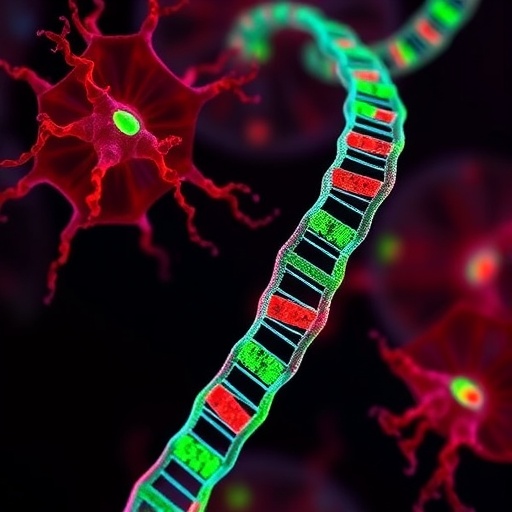
A revolutionary molecular tool that can snap a group portrait of every protein bound to a chosen DNA address is set to transform how scientists explore gene regulation, cellular memory, and diseases such as cancer. Developed by researchers at the Cancer Science Institute of Singapore (CSI Singapore) at the National University of Singapore, the method – named qChIP-MS – marries two workhorse technologies into a single quantitative workflow, allowing researchers to see not just which proteins are present on a particular chromatin region, but also how many of each are there. The work, published on 26 May 2026 in Nature Communications, is already offering fresh insights into the way cancer cells maintain their chromosome ends and could accelerate the hunt for new therapeutic targets.
Inside the nucleus, DNA is wrapped around histone proteins to form a fibre called chromatin. This packaging is far more than structural; it dynamically controls which genes are switched on or off, shields the genome from damage, and orchestrates responses to stress. When chromatin regulation goes awry, the consequences can include cancer, premature ageing, and developmental disorders. For decades, scientists have relied on chromatin immunoprecipitation (ChIP) to pull down a single protein alongside the DNA to which it binds, followed by sequencing or PCR to map its location. But gene control is a team sport: large protein complexes, transcription factors, and remodellers do not act in isolation. “Our DNA is not controlled by a single protein acting alone,” says Dr Yong Wai Khang, the study’s first author. “Many proteins work together in coordinated complexes. We wanted to develop a practical way to see the full cast of players present at a specific region of our genome.”
qChIP-MS tackles this by adding a quantitative mass spectrometry step after the chromatin enrichment. In a typical experiment, the researchers use a bait protein – or an antibody against a specific histone modification – to capture a genomic locus of interest. The enriched chromatin fragments are then processed, and the associated proteins are identified and quantified by high-resolution mass spectrometry in a label-free manner. By comparing the protein intensities between target and control pull-downs, the team can statistically distinguish genuine interactors from background noise. This label-free quantification is crucial because it avoids the need for chemical tags that might alter protein behaviour, and it allows the method to be applied to a wide range of sample types, from cultured cells to tissue biopsies.
To put qChIP-MS through its paces, the researchers focused on telomeres, the protective caps at the ends of chromosomes that are intimately linked to ageing and cancer. Telomeres are known to be coated by a dedicated protein complex called shelterin, along with many other accessory factors. The new workflow successfully identified not only the core shelterin components but also less abundant regulatory proteins, demonstrating its sensitivity and specificity. Importantly, the team also showed that qChIP-MS works on different biological samples and can be adapted to target other genomic regions, such as centromeres or gene promoters. The ability to quantify protein abundance at a specific locus, rather than just detecting presence, offers a deeper view of chromatin dynamics.
One of the biggest hurdles in chromatin proteomics is the high rate of false-positive identifications, stemming from the promiscuous binding of abundant nuclear proteins. The NUS team dedicated significant effort to benchmarking the workflow and developing rigorous filtering strategies. By using multiple controls and statistical cut-offs, they were able to dramatically reduce background, offering a much cleaner view of the local chromatin environment. This advance makes qChIP-MS a more reliable tool for researchers who need to interpret complex protein networks.
The immediate payoff is in cancer biology. The team is already applying qChIP-MS to investigate the Alternative Lengthening of Telomeres (ALT) pathway, a telomere maintenance mechanism used by around 10–15% of cancers, including some aggressive brain and bone tumours. Unlike most cancers that activate the enzyme telomerase, ALT-positive cells rely on homologous recombination to keep their telomeres long, and the process is poorly understood. By revealing the full protein landscape at ALT telomeres, qChIP-MS could pinpoint vulnerabilities that might be druggable. “This work provides researchers with a new way to study how chromatin is organised and regulated,” says Assistant Professor Dennis Kappei, the study’s senior author and Principal Investigator at CSI Singapore. “We hope it will become a useful addition to the toolbox for scientists investigating fundamental biology and diseases such as cancer.”
Kappei’s team is now refining the technology to boost its sensitivity further, aiming to shrink the required starting material so that it can be used on ever-smaller cell populations or even single cells. This would open the door to studying chromatin composition in rare primary tumour samples or in stem cells. The method’s quantitative nature also means that researchers could monitor how the protein ensemble at a given locus changes in response to drugs, nutrients, or disease states.
While qChIP-MS is not a clinical diagnostic itself, the insights it generates could eventually inform therapeutic strategies. By mapping the protein neighbourhoods that control oncogenes or tumour-suppressor genes, scientists may identify new drug targets or biomarkers. The technique also holds promise for ageing research, where understanding how chromatin composition shifts over time could reveal why cells lose their identity or become senescent. As a label-free, quantitative, and adaptable platform, qChIP-MS promises to make the invisible protein societies that govern our genome finally visible, one locus at a time.
Subject of Research: Development of qChIP-MS, a label-free quantitative method to map protein networks at specific chromatin regions
Article Title: qChIP-MS reveals the local chromatin composition by label-free quantitative proteomics
News Publication Date: 26 May 2026
Web References:
– https://www.nature.com/articles/s41467-026-73609-9
– https://csi.nus.edu.sg/
References: 10.1038/s41467-026-73609-9
Image Credits: Cancer Science Institute of Singapore, NUS
Keywords: qChIP-MS, chromatin, proteomics, telomeres, alternative lengthening of telomeres, cancer, gene regulation, mass spectrometry, chromatin immunoprecipitation, label-free quantification


