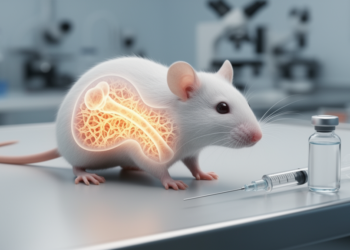
Researchers have established a new rat model of ovarian endometrioma by suturing homologous rat endometrial tissue onto the ovarian surface, and used single-cell RNA sequencing to map how the resulting lesions disrupt ovarian function. The study, published in the Journal of Ovarian Research, reports that the model reproduces key pathological features of the human condition and reveals a combination of granulosa cell dysfunction, stromal fibrosis, and immune dysregulation in affected ovaries.
Ovarian endometrioma is described by the authors as a leading cause of infertility in women of reproductive age, but the cellular and molecular mechanisms by which it impairs ovarian function remain poorly understood. Direct investigation in patients is hampered by the difficulty of obtaining clinical ovarian tissue samples, and the lack of stable animal models that faithfully simulate the pathological features of human ovarian endometrioma has been a critical bottleneck in the field.
In the new model, the researchers evaluated ovarian function through estrous cycle monitoring, serum hormone measurements, and histopathological staining. The OEM model rats showed disrupted estrous cycles. Enzyme-linked immunosorbent assays demonstrated significantly decreased serum AMH and estradiol (E2) levels, accompanied by elevated FSH levels in the OEM group compared with controls.
Histological confirmation supported the model’s validity. CD10 immunostaining confirmed the positive expression of endometrial tissue, and Prussian blue staining revealed markedly increased iron deposition in the ovaries of the OEM group, consistent with the presence of endometriotic lesions.
Single-cell RNA sequencing of ovarian tissue from the OEM and control groups identified a total of 70,041 cells, which resolved into seven major cell types. The analysis showed that OEM significantly altered the cellular composition of the ovary: the proportions of granulosa cells and endothelial cells decreased, while the overall proportion of immune cells increased. Within the immune-cell compartment, the proportions of macrophages and B cells decreased, whereas those of T cells and neutrophils increased.
Focusing on granulosa cells, the team found disrupted differentiation trajectories and attenuated intercellular AMH and estradiol signaling. The mRNA and protein expression of AMH, FSHR, and ESR2 was significantly downregulated in the OEM group, findings that were validated through histopathological staining, immunofluorescence, real-time reverse transcription PCR, and Western blot.
Stromal cell analysis demonstrated significant enrichment of TGF-β and collagen signaling pathways, with upregulated mRNA and protein expression of COL1A1, TGFB1, and ACTA2 in the OEM group. Masson’s trichrome and Sirius Red staining confirmed significantly increased fibrotic areas in the ovaries of the OEM group, pointing to a fibrotic remodelling of the ovarian stroma in the presence of endometriotic tissue.
Immune cell analysis revealed significant enrichment of chemokine signaling and IL-17 signaling pathways, along with enhanced CCL and CXCL chemokine communication networks. The mRNA and protein expression of inflammatory mediators, including CXCL1, CCL2, and IL1b, was upregulated in the OEM group, indicating a pro-inflammatory shift in the ovarian immune environment.
The authors conclude that the study successfully established a rat model simulating the key pathological features of ovarian endometrioma and that, using single-cell RNA sequencing, they constructed for the first time a comprehensive cellular landscape of the OEM-affected ovary. Their findings suggest synergistic effects of granulosa cell dysfunction, ovarian stromal fibrosis, and immune dysregulation in OEM-induced ovarian functional decline. As an animal model study, the work provides a platform for mechanistic investigation rather than direct evidence from human ovarian tissue, and the authors note that the difficulty of obtaining clinical samples is precisely what such models are intended to address.
Subject of Research: A rat model of ovarian endometrioma analysed by single-cell RNA sequencing to study effects on ovarian function.
Article Title: A novel rat model of ovarian endometrioma: single-cell RNA sequencing reveals its impact on ovarian function
Article References: JIA, Z., HU, G., GUO, Y., WANG, J., ZHOU, S., WANG, X., LIU, Y., & ZHAO, R. (2026). A novel rat model of ovarian endometrioma: single-cell RNA sequencing reveals its impact on ovarian function. Journal of Ovarian Research. https://doi.org/10.1186/s13048-026-02313-5
Image Credits: AI Generated
DOI: 10.1186/s13048-026-02313-5
Keywords: ovarian endometrioma, rat model, single-cell RNA sequencing, granulosa cells, ovarian fibrosis, immune dysregulation, AMH, TGF-beta signaling, chemokine signaling, infertility, ovarian function, Journal of Ovarian Research
Cite Scienmag News
Ophelia Keating. (October 28, 2026). New Rat Model of Ovarian Endometrioma Reveals Cellular Damage to the Ovary. Scienmag. https://scienmag.com/new-rat-model-of-ovarian-endometrioma-reveals-cellular-damage-to-the-ovary/
Ophelia Keating. "New Rat Model of Ovarian Endometrioma Reveals Cellular Damage to the Ovary." Scienmag, 28 October 2026, https://scienmag.com/new-rat-model-of-ovarian-endometrioma-reveals-cellular-damage-to-the-ovary/. Accessed 28 October 2026.
Ophelia Keating. "New Rat Model of Ovarian Endometrioma Reveals Cellular Damage to the Ovary." Scienmag. October 28, 2026. https://scienmag.com/new-rat-model-of-ovarian-endometrioma-reveals-cellular-damage-to-the-ovary/