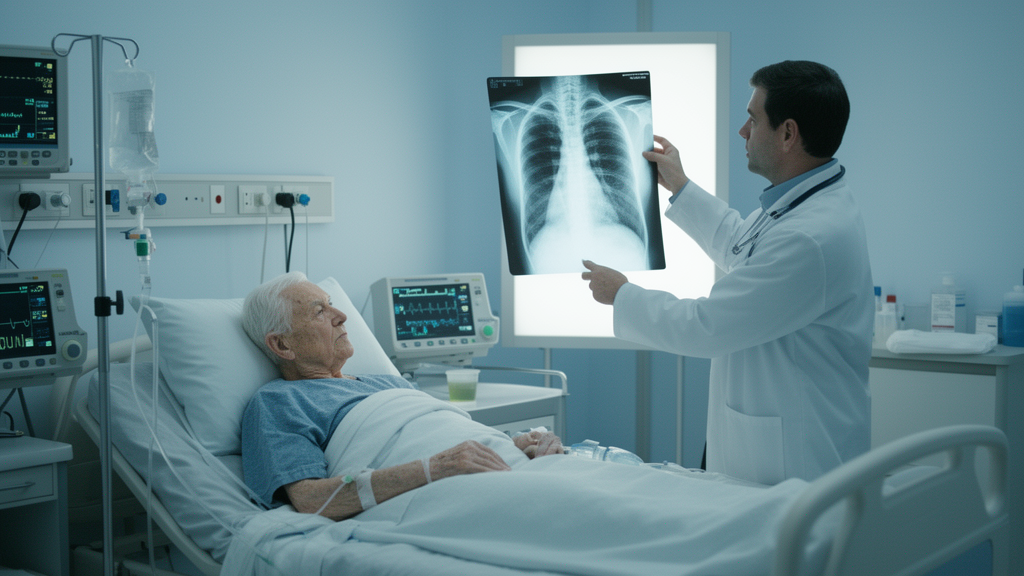
Older adults who break their sternum in an accident face a markedly higher risk of needing intensive care when they also sustain rib fractures, according to a retrospective study published in BMC Geriatrics. Among 127 patients aged 60 and over treated at a tertiary care hospital, those with concomitant rib fractures were admitted to the intensive care unit at more than three times the rate of patients whose sternal fracture occurred alone: 61.4 percent versus 18.6 percent, a difference the authors report as statistically significant.
The study analyzed patients admitted with radiologically confirmed sternal fractures, a type of thoracic injury the researchers describe as rare but with greater clinical impact in older adults, particularly those living with frailty and comorbidities. Data collected included demographics, clinical features, laboratory results, imaging findings and measures of overall injury severity.
Motor vehicle accidents were the most frequent cause of injury, accounting for 54.3 percent of cases, followed by falls at 26.8 percent. The patients had a mean age of 70.9 years, with a standard deviation of 8.5 years, and 70.9 percent were male. Nearly half of the cohort, 44.9 percent, had rib fractures in addition to the sternal injury. Beyond higher intensive care admission rates, these patients also experienced extended hospital stays and more severe laboratory and physiologic abnormalities, according to the study results.
Overall, 37.8 percent of patients required intensive care, and in-hospital mortality was 4.7 percent. Notably, every death in the study occurred among patients who had concomitant rib fractures, underscoring the outsized role that associated chest wall injuries appear to play in determining outcomes for this population.
When the researchers applied multivariate regression analysis, one measure stood out as the only independent predictor of intensive care unit admission: the New Injury Severity Score, or NISS, a tool that quantifies the overall severity of a patient’s injuries. Each point increase on the scale was associated with an odds ratio of 1.099 for intensive care admission, with a 95 percent confidence interval of 1.031 to 1.171 and a p-value of 0.004.
The authors conclude that in older adults with sternal fractures, rib fractures and more severe injuries significantly increase both intensive care use and mortality. They propose that the New Injury Severity Score may serve as an objective tool for retrospective risk stratification in this group, and that early identification of high-risk patients could help optimize intensive care resource allocation and improve outcomes in a vulnerable population.
The findings come with the limitations inherent to a single-center retrospective design, and the authors note that data on geriatric populations with these injuries remain limited. Because the study was observational, it identifies associations between injury patterns, severity scores and outcomes rather than proving causal effects of any particular intervention. The research was published as an open access article on 28 October 2026 and is listed as an early-release, peer-reviewed accepted manuscript that is citable and carries a permanent DOI, with a final version of record to follow.
As the authors suggest, systematic assessment of overall injury severity at admission could help identify which older adults with chest trauma are most likely to require intensive care, allowing hospitals to direct scarce critical care resources where they are needed most.
Subject of Research: Sternal fractures and injury severity in older adults
Article Title: Sternal fractures and injury severity score in older adults
Article References: Karakuş Kenan, N., & Duran, F. M. (2026). Sternal fractures and injury severity score in older adults. BMC Geriatrics. https://doi.org/10.1186/s12877-026-08459-7
Image Credits: AI Generated
DOI: 10.1186/s12877-026-08459-7
Keywords: sternal fractures, rib fractures, older adults, geriatric trauma, intensive care unit, New Injury Severity Score, in-hospital mortality, motor vehicle accidents, retrospective study, BMC Geriatrics, Sternal, fractures
Cite Scienmag News
Beatrice Stafford. (October 28, 2026). Rib fractures drive ICU admissions in older adults with sternal fractures. Scienmag. https://scienmag.com/rib-fractures-drive-icu-admissions-in-older-adults-with-sternal-fractures/
Beatrice Stafford. "Rib fractures drive ICU admissions in older adults with sternal fractures." Scienmag, 28 October 2026, https://scienmag.com/rib-fractures-drive-icu-admissions-in-older-adults-with-sternal-fractures/. Accessed 28 October 2026.
Beatrice Stafford. "Rib fractures drive ICU admissions in older adults with sternal fractures." Scienmag. October 28, 2026. https://scienmag.com/rib-fractures-drive-icu-admissions-in-older-adults-with-sternal-fractures/