

Friday, July 10, 2026
Science
No Result
View All Result
  • Login
  • HOME
  • SCIENCE NEWS
  • CONTACT US
  • HOME
  • SCIENCE NEWS
  • CONTACT US
No Result
View All Result
Scienmag
No Result
View All Result
Home Science News Medicine

New Discoveries in Eosinophil Subtypes Reveal Potential Therapeutic Targets

July 10, 2026
in Medicine
Reading Time: 2 mins read
0
New Discoveries in Eosinophil Subtypes Reveal Potential Therapeutic Targets

New Discoveries in Eosinophil Subtypes Reveal Potential Therapeutic Targets

65
SHARES
587
VIEWS
Share on FacebookShare on Twitter
ADVERTISEMENT

In a groundbreaking study published in Cell Death Discovery, researchers have unveiled new layers of complexity in eosinophil biology, shedding light on the diverse subtypes of these immune cells and highlighting promising therapeutic targets. Eosinophils, traditionally recognized for their roles in allergic reactions and parasitic infections, are now emerging as multifaceted players with distinct functional subpopulations that could revolutionize immunological research and treatment approaches.

Historically, eosinophils have been treated as a homogeneous group, primarily viewed through the lens of their involvement in asthma and other eosinophil-associated disorders. However, this new research challenges that paradigm by demonstrating that eosinophils are not a monolithic population but rather comprise several subtypes with unique phenotypes and functions. Using advanced single-cell sequencing technologies and flow cytometry, the team delineated eosinophil subsets based on differential expression of surface markers, transcription factors, and cytokine profiles.

One of the key technical breakthroughs in this study involved high-dimensional immune profiling, which allowed for the precise categorization of eosinophils at various stages of maturation and activation states within different tissue microenvironments. This nuanced understanding reveals that certain eosinophil subsets are pro-inflammatory and contribute to tissue damage, while others have regulatory roles that might mitigate excessive immune responses.

Moreover, the identification of subtype-specific molecular pathways opens new avenues for targeted interventions. The researchers highlighted particular signaling cascades and receptors that are selectively expressed by pathogenic eosinophil populations. Modulating these pathways could enable the development of therapies that selectively inhibit harmful eosinophil activity without compromising their beneficial functions, a significant advance over current broad-spectrum treatments.

This comprehensive eosinophil atlas also underscores the cell’s involvement beyond classic allergic mechanisms, implicating eosinophil diversity in various chronic inflammatory and fibrotic diseases. Enhanced mapping of functional heterogeneity provides critical insights into how eosinophils interact with other components of the immune system, including T cells and macrophages, and influence tissue remodeling processes.

Importantly, this research offers a conceptual framework for reinterpreting clinical data from conditions with eosinophilic involvement. By identifying biomarkers specific to eosinophil subtypes, clinicians could improve diagnostic accuracy and tailor therapies more precisely to patient-specific immune landscapes.

As eosinophil-targeted drugs are becoming increasingly popular, especially in the treatment of severe asthma and hypereosinophilic syndromes, these findings pave the way for next-generation biologics that could offer enhanced efficacy with reduced side effects. The molecular targets uncovered in this study warrant further preclinical and clinical investigation to realize their full therapeutic potential.

In conclusion, the diverse functionality of eosinophil subsets marks a new frontier in immunology, opening promising research directions and the possibility of precision medicine strategies to modulate eosinophil-driven pathology without compromising host defense. This study represents a significant step forward in appreciating the complexity of innate immune responses.

Subject of Research: Eosinophil diversity, subtypes, and their therapeutic implications.

Article Title: Eosinophil diversity and function: emerging insights into subtypes and therapeutic targets.

Article References: Khan, F.A., Raj, A., Khan, H. et al. Eosinophil diversity and function: emerging insights into subtypes and therapeutic targets. Cell Death Discov. (2026). https://doi.org/10.1038/s41420-026-03234-4

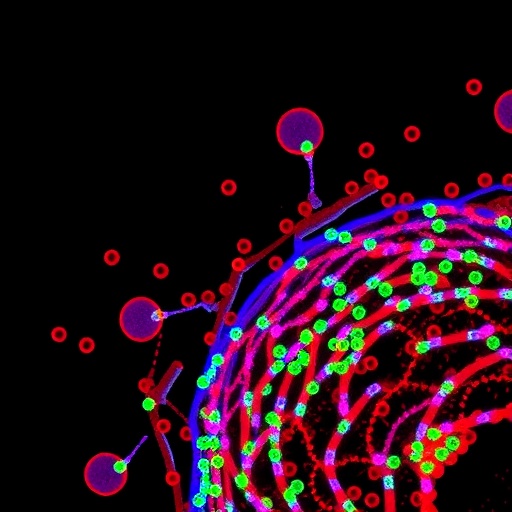
Image Credits: AI Generated

DOI: https://doi.org/10.1038/s41420-026-03234-4

Tags: cytokine profiling of eosinophilseosinophil heterogeneity in diseaseeosinophil involvement in parasitic infectionseosinophil role in allergic reactionsEosinophil subtypeseosinophil-targeted therapieshigh-dimensional immune profiling techniquesimmune cell diversityimmune cell phenotypingnovel therapeutic targets in immunologysingle-cell sequencing in immunologytissue-specific eosinophil functions
Share26Tweet16
Previous Post

AI Enhanced with Cerebellum-Like Function for Improved Learning

Next Post

Disrupted Brain Signal Balance Tied to Symptoms and Cognition in Schizophrenia

Related Posts

Journal of Nuclear Medicine Early Release Highlights July 10, 2026
Medicine

Journal of Nuclear Medicine Early Release Highlights July 10, 2026

July 10, 2026
Polyvinyl chloride boosts liver cancer radioresistance by blocking CD8⁺ T cells
Medicine

Polyvinyl chloride boosts liver cancer radioresistance by blocking CD8⁺ T cells

July 10, 2026
Insilico Medicine and Eli Lilly Lead 13th ARDD Meeting at Harvard
Medicine

Insilico Medicine and Eli Lilly Lead 13th ARDD Meeting at Harvard

July 10, 2026
Resting-State Electroretinography Detects Retinal Oscillations in Retinitis Pigmentosa
Medicine

Resting-State Electroretinography Detects Retinal Oscillations in Retinitis Pigmentosa

July 10, 2026
Insurance-Backed Integrative Oncology Program Eases Patient Symptoms
Medicine

Insurance-Backed Integrative Oncology Program Eases Patient Symptoms

July 10, 2026
Merlin Deficiency Promotes Immunosuppression in Breast Cancer Environment
Medicine

Merlin Deficiency Promotes Immunosuppression in Breast Cancer Environment

July 10, 2026
Next Post
Disrupted Brain Signal Balance Tied to Symptoms and Cognition in Schizophrenia

Disrupted Brain Signal Balance Tied to Symptoms and Cognition in Schizophrenia

  • Mothers who receive childcare support from maternal grandparents show more

    Mothers who receive childcare support from maternal grandparents show more parental warmth, finds NTU Singapore study

    27656 shares
    Share 11059 Tweet 6912
  • University of Seville Breaks 120-Year-Old Mystery, Revises a Key Einstein Concept

    1061 shares
    Share 424 Tweet 265
  • Bee body mass, pathogens and local climate influence heat tolerance

    682 shares
    Share 273 Tweet 171
  • Researchers record first-ever images and data of a shark experiencing a boat strike

    546 shares
    Share 218 Tweet 137
  • Groundbreaking Clinical Trial Reveals Lubiprostone Enhances Kidney Function

    531 shares
    Share 212 Tweet 133
Science

Embark on a thrilling journey of discovery with Scienmag.com—your ultimate source for cutting-edge breakthroughs. Immerse yourself in a world where curiosity knows no limits and tomorrow’s possibilities become today’s reality!

RECENT NEWS

  • Journal of Nuclear Medicine Early Release Highlights July 10, 2026
  • Mulberry Biochar Boosts Fish Gut Health and Aquaculture Water Quality
  • Hassen Elected Fellow of American Society for Nondestructive Testing
  • Dirk Leuffen Named Incoming Rector of University of Konstanz

Categories

  • Agriculture
  • Anthropology
  • Archaeology
  • Athmospheric
  • Biology
  • Biotechnology
  • Blog
  • Bussines
  • Cancer
  • Chemistry
  • Climate
  • Earth Science
  • Editorial Policy
  • Marine
  • Mathematics
  • Medicine
  • Pediatry
  • Policy
  • Psychology & Psychiatry
  • Science Education
  • Social Science
  • Space
  • Technology and Engineering

Subscribe to Blog via Email

Enter your email address to subscribe to this blog and receive notifications of new posts by email.

Join 5,146 other subscribers

© 2025 Scienmag - Science Magazine

Welcome Back!

Login to your account below

Forgotten Password?

Retrieve your password

Please enter your username or email address to reset your password.

Log In
No Result
View All Result
  • HOME
  • SCIENCE NEWS
  • CONTACT US

© 2025 Scienmag - Science Magazine

Discover more from Science

Subscribe now to keep reading and get access to the full archive.

Continue reading
