


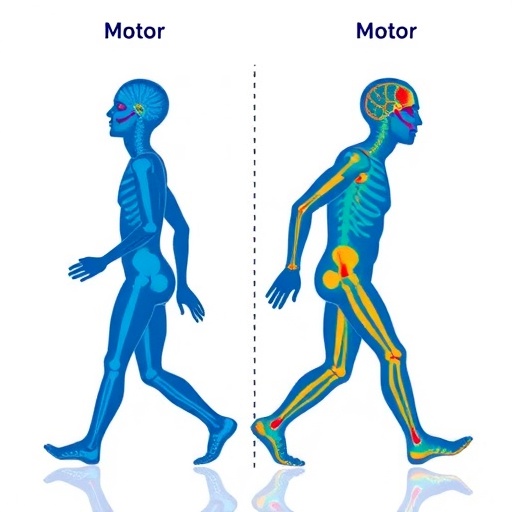
Parkinson’s disease is often introduced through its most visible symptoms: tremor, stiffness and slowed movement. Yet the condition can disrupt mobility in ways that are far less obvious, affecting how people plan an action, sustain attention, respond to obstacles, manage fatigue or feel confident enough to move through a crowded street. A study by Elisa Bianchini, Pauline Petit, Davide Rinaldi and colleagues, published in npj Parkinson’s Disease in 2026, examines how motor and non-motor symptoms influence different aspects of mobility. Its focus is a distinction that could reshape how clinicians evaluate movement: the difference between what a person is physically capable of doing under controlled conditions and what that person actually does in everyday life.
This distinction is known in rehabilitation science as the gap between capacity and performance. Capacity describes the upper level of function a person can demonstrate during a structured test, such as walking a measured distance, rising from a chair or maintaining balance while following instructions. Performance refers to mobility as it unfolds in real environments, where distractions, fatigue, anxiety, time pressure, uneven surfaces and social demands all compete for attention. Someone with Parkinson’s disease may therefore complete a laboratory walking test reasonably well while taking far fewer steps, moving more slowly or avoiding challenging routes during daily life. The study addresses these measures as related but not interchangeable windows into mobility.
The difference matters because Parkinson’s disease is not a single-symptom disorder. Its motor features arise largely from disturbances in neural circuits involved in movement selection, scaling and automatic control. Reduced amplitude of movement can shorten steps, bradykinesia can slow transitions and rigidity can restrict the fluid rotation of the trunk and limbs. Postural instability may make turning or negotiating stairs more difficult, while freezing of gait can interrupt walking suddenly, especially in narrow spaces or when a person tries to change direction. These problems may appear in a clinical examination, but their effect can vary sharply depending on the task and the surrounding environment.
Non-motor symptoms add another layer of complexity. Sleep disruption can reduce alertness and physical reserve; depression or apathy can lower motivation to leave home; anxiety may intensify hesitation in situations where falling feels possible. Cognitive changes can make it harder to divide attention between walking and another task, such as carrying a conversation, reading signs or navigating an unfamiliar building. Autonomic symptoms, including blood-pressure instability, may produce dizziness or weakness, while pain and fatigue can make movement feel costly even when basic muscle power remains relatively preserved. By examining motor and non-motor influences together, the research highlights mobility as a whole-person outcome rather than a simple readout of gait speed.
A central technical issue is that different mobility tests measure different physiological systems. A short walk may be sensitive to bradykinesia and stride regulation, whereas repeated chair rises place greater demands on leg force, postural transitions and coordination. Balance tasks probe the integration of visual, vestibular and somatosensory information. Longer walking assessments bring endurance and fatigue into view, while dual-task tests—walking while counting, talking or responding to cues—challenge executive control and attention. Wearable sensors can extend this assessment beyond the clinic by recording step counts, walking bouts, turning patterns and periods of inactivity over several days. Each method captures a particular domain, and the study’s premise is that no single measure can represent the entire mobility experience.
This framework also helps explain why two people with similar scores on a conventional neurological examination may have very different levels of independence. One individual might retain adequate walking capacity but rarely venture outdoors because of fear of falling. Another might walk frequently but experience subtle instability, frequent pauses or exhausting effort that is not captured by a brief test. In this context, performance is not merely a weaker version of capacity. It is the product of physical ability interacting with confidence, cognition, environment, habits and opportunity. The paper’s emphasis on separate mobility domains encourages researchers and clinicians to ask not only, “Can the patient perform this movement?” but also, “How is movement being used in daily life?”
The implications extend to treatment. Medication that improves rigidity or slowness may raise performance on a clinic-based test, but it may not automatically restore community mobility if anxiety, fatigue or executive dysfunction continues to limit activity. Conversely, a person whose basic motor capacity changes little could still become more active through targeted balance training, cueing strategies, occupational therapy, home modifications or interventions addressing sleep and mood. A precise assessment can therefore help match treatment to the mechanism limiting mobility. If the main barrier is step initiation, cueing and gait-focused rehabilitation may be appropriate; if the barrier is divided attention, cognitive-motor training and environmental strategies may be more relevant.
The research is also important for the design of clinical trials. A therapy can appear ineffective if investigators measure only one outcome that does not reflect the symptom it is designed to change. Likewise, an improvement in capacity may be mistaken for a meaningful improvement in independence if real-world performance is never monitored. Combining standardized tests with patient-reported outcomes and passive wearable measurements could provide a more complete picture. Such an approach may reveal whether an intervention changes walking speed, reduces inactivity, increases the number of daily walking bouts or enables people to participate in activities they previously avoided. These distinctions are increasingly valuable as Parkinson’s research moves toward personalized treatment and digital health monitoring.
For patients and families, the capacity-performance model offers a language for describing experiences that can otherwise be difficult to communicate. A person may say, “I can walk, but I cannot walk safely in the supermarket,” or, “I can manage stairs in the morning, but not after a tiring day.” Those statements are not contradictory; they describe different demands placed on the nervous system. Recognizing that gap can prevent underestimating disability when a clinic demonstration looks reassuring, while also avoiding an overly narrow focus on impairment. It places everyday participation—shopping, visiting friends, working, exercising and moving confidently at home—alongside conventional neurological measurements.
The work by Bianchini, Petit, Rinaldi and colleagues ultimately presents mobility in Parkinson’s disease as a multidimensional, context-dependent phenomenon. Motor symptoms remain fundamental, but they operate within a network that includes attention, mood, sleep, autonomic function, fatigue and the physical and social environment. By separating capacity-related and performance-related measures, the study provides a more refined way to interpret what mobility tests can—and cannot—tell us. The broader message is likely to resonate well beyond Parkinson’s clinics: meaningful recovery is not simply the ability to complete a movement when asked. It is the ability to use that movement safely, repeatedly and confidently in the unpredictable world where daily life takes place.
Cite Scienmag News
Cassandra Pierce. (August 14, 2026). Motor and Non-Motor Symptoms Shape Mobility Capacity and Performance in Parkinson’s Disease. Scienmag. https://scienmag.com/motor-and-non-motor-symptoms-shape-mobility-capacity-and-performance-in-parkinsons-disease/
Cassandra Pierce. "Motor and Non-Motor Symptoms Shape Mobility Capacity and Performance in Parkinson’s Disease." Scienmag, 14 August 2026, https://scienmag.com/motor-and-non-motor-symptoms-shape-mobility-capacity-and-performance-in-parkinsons-disease/. Accessed 4 September 2026.
Cassandra Pierce. "Motor and Non-Motor Symptoms Shape Mobility Capacity and Performance in Parkinson’s Disease." Scienmag. August 14, 2026. https://scienmag.com/motor-and-non-motor-symptoms-shape-mobility-capacity-and-performance-in-parkinsons-disease/


