


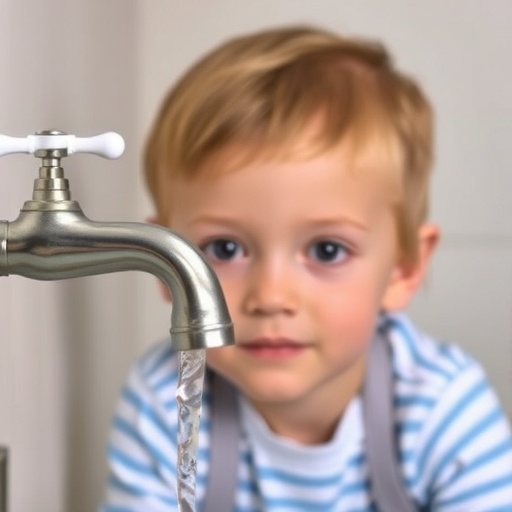
A new study has brought an unexpectedly ordinary source of exposure into the spotlight: the tap water children drink in homes and child-care settings. Research published in the Journal of Exposure Science & Environmental Epidemiology reports an association between lead detected in tap water and executive-function performance during early childhood, adding to growing evidence that even low-level environmental exposures may matter during the years when the brain is developing at remarkable speed. The findings are particularly significant because drinking water can be consumed daily, often without any visible warning. Unlike contaminated soil, peeling paint, or industrial pollution, water carrying trace metals may look, smell, and taste completely normal. The study by A.C. Wylie, M.T. Willoughby, K.N. Hudson and colleagues examined metals in tap water across both child-care and home environments, focusing on how those exposures may relate to children’s developing ability to control attention, remember instructions, manage impulses, and shift flexibly between tasks.
Executive function is not a single skill but a group of mental processes that support purposeful behavior. In young children, these processes include working memory—the ability to hold information in mind long enough to use it—inhibitory control, which helps a child resist an immediate impulse, and cognitive flexibility, which allows the child to adapt when rules or circumstances change. These abilities develop rapidly during early childhood and are closely connected to learning, social interaction, emotional regulation, and later academic performance. Because executive function is shaped by both biology and experience, researchers increasingly study whether environmental factors can influence its trajectory. Lead is of particular concern because it can interfere with neurological development even when exposure does not produce obvious symptoms. The new research places tap water within this larger developmental picture, suggesting that the environments where children spend their days may provide important clues about subtle differences in cognitive performance.
Lead can enter drinking water primarily through the plumbing system rather than the original water source. Older service lines, household pipes, solder, faucets, and fixtures may contain lead or materials capable of releasing it into water. Corrosion—the chemical breakdown of plumbing surfaces—can increase that release, especially when water remains stagnant for hours. Temperature, acidity, mineral content, water-treatment practices, and the age and composition of plumbing can all affect metal concentrations. This means that two homes connected to the same municipal water system may not deliver identical water at the tap. The same is true for child-care facilities, where building age, plumbing configuration, water-use patterns, and the frequency of flushing fixtures may differ substantially from nearby residences. Measuring water at both locations therefore provides a more realistic picture of children’s everyday exposure than relying only on broad regional estimates or water-quality data from treatment plants.
The study’s central finding is an association: children exposed to higher levels of lead in tap water showed differences in early executive-function outcomes. That wording is scientifically important. An association indicates that two patterns occur together, but it does not by itself prove that lead caused the observed differences. Children’s cognitive development is influenced by many overlapping factors, including nutrition, sleep, stress, family circumstances, educational experiences, socioeconomic conditions, air pollution, and exposure to other chemicals. Researchers must account for these potential influences as carefully as possible, yet no observational study can perfectly recreate a controlled experiment—or ethically expose children to a harmful substance. The value of the work lies in identifying a plausible environmental contributor and showing why it deserves closer investigation. The results do not mean that every child drinking tap water is at risk of measurable impairment, but they do reinforce the principle that preventable exposure should be reduced whenever practical.
Lead is especially troubling in childhood because the developing nervous system may be more vulnerable than the mature brain. After ingestion, lead can enter the bloodstream and reach tissues throughout the body, including the brain. It may disrupt signaling between neurons, alter calcium-dependent processes, contribute to oxidative stress, and interfere with pathways involved in synapse formation and learning. Lead exposure has also been linked in previous research to changes in attention, behavior, and academic performance. The biological effects can be subtle, cumulative, and difficult to distinguish from ordinary variation in childhood behavior. A child may not appear acutely ill, yet small shifts in attention control or working memory could influence how easily that child follows classroom instructions or copes with frustration. This is why researchers focus not only on severe poisoning but also on chronic, low-level exposure. In public-health terms, a small effect distributed across many children can become a major concern.
The comparison between home and child-care environments is one of the study’s most relevant features. Young children often drink water in multiple locations each day, and exposure assessments that examine only the family residence may overlook a substantial part of their routine. Child-care centers can have older plumbing, frequently used drinking fountains, bottle-filling stations, or taps that remain unused overnight. Some facilities may also prepare meals, infant formula, or beverages with water from specific fixtures, creating exposure patterns that differ from those in the home. Conversely, a residence may contain a particular faucet or service line that contributes more metal than the building’s other outlets. By considering both settings, the research highlights a practical challenge for environmental health: exposure is not a fixed label attached to a child’s neighborhood. It can vary from room to room, building to building, and even from one tap to another.
The findings are likely to intensify interest in simple interventions that can reduce contact with lead-bearing water. Public-health agencies commonly recommend using cold water for drinking and cooking, allowing the tap to run briefly after prolonged stagnation, cleaning faucet aerators, and using certified filters designed specifically to reduce lead. Boiling water does not remove lead and may concentrate it as water evaporates. Facilities serving young children may also benefit from systematic testing of drinking and food-preparation taps, replacement of outdated fixtures, and clear maintenance records. However, these measures are not substitutes for long-term infrastructure improvements. The most reliable solution is removing or replacing lead-containing service lines, plumbing components, and fixtures wherever they are found. Testing remains essential because water chemistry and building materials vary widely; assumptions based on a building’s appearance, neighborhood, or municipal supply cannot reliably identify which taps are safe.
The research also illustrates why environmental exposure science increasingly combines measurements from the physical world with detailed assessments of child development. A water sample captures a moment in time, while executive function reflects a complex and evolving biological process. Researchers must therefore consider sampling methods, the distinction between first-draw and flushed water, repeated measurements, the timing of exposure, and the ways children actually consume water. A single sample may not represent daily exposure, while a series of samples can reveal how concentrations change after stagnation or water use. Likewise, executive-function tests must be interpreted in the context of age and normal developmental variation. The study’s contribution is not a claim that one test or one water sample can define a child’s future. Rather, it connects a measurable environmental condition with a critical developmental domain and provides evidence for more comprehensive monitoring of the places where young children live, learn, eat, and drink.
For families and caregivers, the message is both serious and practical: clear tap water is not proof that it is free of lead, but concern can be converted into action through testing, targeted filtration, and plumbing improvements. The new findings do not justify panic or the abandonment of public water systems, which remain among the safest ways to deliver drinking water when properly managed. They do show why lead prevention must extend beyond dramatic contamination events and include the quieter risks created by aging infrastructure. As scientists continue to clarify how exposure levels, timing, and duration affect executive function, the study adds urgency to efforts that protect children before developmental effects become visible. In a field increasingly focused on the cumulative burden of everyday environmental hazards, the tap may be emerging as one of the most important places to look.
Cite Scienmag News
Ophelia Keating. (August 14, 2026). Lead in Tap Water Linked to Reduced Executive Function in Young Children. Scienmag. https://scienmag.com/lead-in-tap-water-linked-to-reduced-executive-function-in-young-children/
Ophelia Keating. "Lead in Tap Water Linked to Reduced Executive Function in Young Children." Scienmag, 14 August 2026, https://scienmag.com/lead-in-tap-water-linked-to-reduced-executive-function-in-young-children/. Accessed 4 September 2026.
Ophelia Keating. "Lead in Tap Water Linked to Reduced Executive Function in Young Children." Scienmag. August 14, 2026. https://scienmag.com/lead-in-tap-water-linked-to-reduced-executive-function-in-young-children/


