


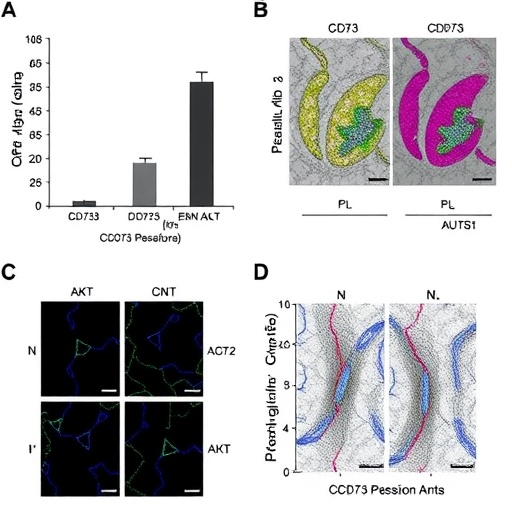
Lung adenocarcinoma, the most frequently diagnosed form of non-small-cell lung cancer, may be influenced by a gene better known for its role in regulating transcription than for its potential as a circulating cancer marker. A study by Dong, Zheng, Wang and colleagues reports that CDC73 can restrain lung adenocarcinoma through the PTEN/AKT signaling pathway, while also showing promise as a biomarker and functional molecule associated with extracellular vesicles. Published in Cell Death Discovery, the work places CDC73 at the intersection of tumor suppression, intracellular signaling and the increasingly important biology of vesicles released by cancer cells.
CDC73 encodes parafibromin, a protein involved in the human RNA polymerase II-associated factor 1 complex, or PAF1 complex. This molecular machinery helps coordinate transcription, the process by which DNA instructions are converted into RNA. CDC73 has also been linked to the control of cell proliferation and tumor development, and alterations in the gene are already recognized in several cancer contexts. The new study expands that picture by examining CDC73 in lung adenocarcinoma and connecting its activity to the PTEN/AKT pathway, one of the central signaling systems governing cell survival, metabolism, growth and resistance to stress.
The PTEN/AKT pathway behaves like a molecular balance system inside cells. PTEN is a tumor-suppressive phosphatase that reduces levels of phosphatidylinositol-3,4,5-trisphosphate, a lipid signal that helps activate AKT. When PTEN activity is lost or weakened, AKT signaling can become excessive. Activated AKT promotes programs that support proliferation, survival and changes in cellular metabolism, giving malignant cells a growth advantage. By reporting that CDC73 suppresses lung adenocarcinoma through this pathway, the researchers identify a possible mechanistic link between a transcription-associated protein and the signaling networks that directly control cancer-cell behavior.
The significance of this connection lies in the way cancer is built from several interacting layers of regulation. A gene may influence the production of messenger RNAs, while signaling proteins determine whether those instructions are translated into cell division or survival. CDC73 could therefore affect tumor progression not simply as an isolated molecular switch, but as part of a broader regulatory system linking transcriptional control to the PTEN/AKT axis. The study’s findings suggest that reduced or disrupted CDC73 activity may be associated with the conditions that allow lung adenocarcinoma cells to remain viable, multiply and acquire more aggressive characteristics.
The research also focuses on extracellular vesicles, membrane-bound particles released by cells into their surroundings and, in many cases, into body fluids. These vesicles include exosomes and other vesicle populations that can transport proteins, lipids and nucleic acids between cells. Unlike free-floating molecules, their cargo is enclosed within a protective lipid membrane, allowing biological signals to travel through the extracellular environment. Tumor-derived vesicles can help remodel nearby tissue, influence immune responses and prepare distant sites for cancer dissemination. Because they may retain molecular information about the cells that produced them, extracellular vesicles are being investigated as accessible sources of biomarkers.
In this context, CDC73 becomes potentially valuable in two different ways. First, its presence or abundance in extracellular vesicles could provide information about the biological state of a tumor without requiring repeated access to tumor tissue. A blood-based vesicle signal would be especially attractive in lung cancer, where imaging and tissue biopsies can be difficult, invasive or insufficient for capturing the full molecular diversity of a tumor. Second, vesicle-associated CDC73 may not merely be a passive indicator. If the protein or related molecular cargo can influence recipient cells, extracellular vesicles could act as vehicles through which CDC73 participates in communication between tumor cells and their surrounding microenvironment.
The distinction between a biomarker and a functional mediator is crucial. A biomarker helps detect, classify or monitor disease, whereas a functional molecule contributes directly to the biological processes being measured. The study’s description of CDC73 as having both biomarker and functional potential suggests that the researchers are positioning it beyond a simple correlation. Their findings indicate that CDC73 may reflect lung adenocarcinoma activity in extracellular vesicles while also being connected to the signaling mechanisms that suppress malignant behavior. Establishing both roles could make the protein more informative than a marker that merely rises or falls as a by-product of disease.
These findings could eventually support several lines of investigation, including whether vesicle-associated CDC73 can help distinguish malignant from nonmalignant lung conditions, identify clinically meaningful tumor subtypes or predict how disease may progress. It may also be useful in studies of treatment response, particularly for therapies that affect the PI3K/AKT signaling network. However, such applications require validation in larger and clinically diverse patient populations. A candidate biomarker must demonstrate reproducible detection, disease specificity and usefulness beyond established clinical tools. It must also be tested across variables such as smoking history, tumor stage, coexisting illnesses and the molecular heterogeneity that characterizes lung adenocarcinoma.
The report therefore offers a mechanistic and translational perspective rather than an immediate clinical solution. It links CDC73 to a well-established tumor-suppressive pathway and proposes extracellular vesicles as a route through which this relationship may be monitored or, potentially, manipulated. Future work will need to determine how CDC73 is packaged into vesicles, whether the vesicles deliver biologically active cargo to other cells, and how changes in CDC73 affect PTEN, AKT phosphorylation and downstream targets. Researchers will also need to establish whether restoring CDC73 activity, altering vesicle release or modifying vesicle uptake can suppress tumor growth in relevant experimental models. For now, the study highlights a promising molecular connection: a transcription-related tumor suppressor, a major cancer-signaling pathway and a circulating communication system may together provide new ways to understand and track lung adenocarcinoma.
Cite Scienmag News
Drew Townsend. (August 14, 2026). CDC73 Suppresses Lung Adenocarcinoma Through PTEN/AKT, Shows Extracellular Vesicle Biomarker Potential. Scienmag. https://scienmag.com/cdc73-suppresses-lung-adenocarcinoma-through-pten-akt-shows-extracellular-vesicle-biomarker-potential/
Drew Townsend. "CDC73 Suppresses Lung Adenocarcinoma Through PTEN/AKT, Shows Extracellular Vesicle Biomarker Potential." Scienmag, 14 August 2026, https://scienmag.com/cdc73-suppresses-lung-adenocarcinoma-through-pten-akt-shows-extracellular-vesicle-biomarker-potential/. Accessed 3 September 2026.
Drew Townsend. "CDC73 Suppresses Lung Adenocarcinoma Through PTEN/AKT, Shows Extracellular Vesicle Biomarker Potential." Scienmag. August 14, 2026. https://scienmag.com/cdc73-suppresses-lung-adenocarcinoma-through-pten-akt-shows-extracellular-vesicle-biomarker-potential/


