


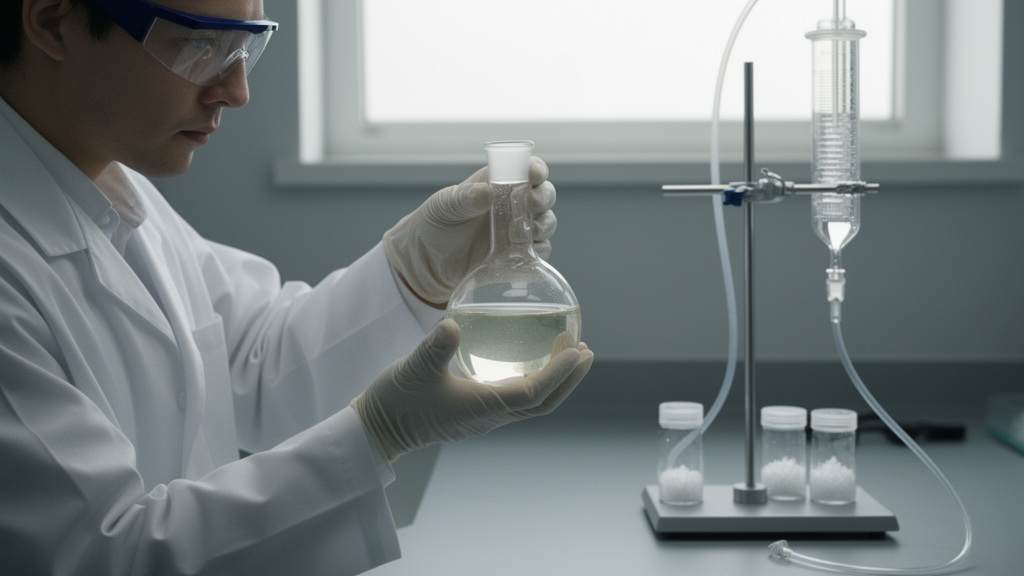
Chemists have combined a 130-year-old reaction with a modern silicon catalyst to build a family of molecules that can jam two enzymes implicated in Alzheimer’s disease, and the strongest of them rivals a marketed drug in potency against one of those enzymes. The study, published in Results in Chemistry, describes a one-pot synthesis of dihydropyrimidinethione derivatives promoted by trimethylsilyl chloride, followed by a full workup of their enzyme-blocking behavior, binding mechanics, and predicted drug-like properties.
Alzheimer’s disease remains the leading cause of dementia worldwide, and one of its defining features is the gradual collapse of the cholinergic system, the network of neurons that relies on acetylcholine to carry signals involved in learning and memory. Two enzymes, acetylcholinesterase and butyrylcholinesterase, break down acetylcholine in the brain. In healthy tissue, acetylcholinesterase does most of the work, but as the disease progresses, butyrylcholinesterase activity rises and accelerates neurotransmitter depletion. Blocking both enzymes at once has therefore been a validated therapeutic strategy for easing cognitive symptoms, and it is the strategy the new compounds were designed to pursue.
The scaffold at the heart of the study is the dihydropyrimidinethione, a nitrogen-rich ring system first accessible through the Biginelli reaction, a three-component condensation of an aldehyde, a beta-ketoester, and thiourea that Pietro Biginelli reported in 1891. The reaction is prized for its atom economy and the structural diversity it permits, but its efficiency depends heavily on the catalyst. Traditional protocols use strong Brønsted acids such as hydrochloric acid, which can over-protonate sensitive substrates and trigger side reactions. The Iranian research team, led by Sepideh Shirbina and colleagues at the University of Guilan and Shiraz University of Medical Sciences, turned instead to trimethylsilyl chloride, a milder Lewis acid that coordinates to the carbonyl oxygen of the aldehyde and enhances its electrophilicity without the harsh protonation that damages acid-sensitive molecules.
Under optimized conditions, the team mixed a substituted aromatic aldehyde, methyl or ethyl acetoacetate, and thiourea in refluxing ethanol with 10 mol% TMSCl. Within 30 minutes, the reaction delivered the target dihydropyrimidinethiones in isolated yields ranging from 70 to 92 percent. Thirteen derivatives were prepared, spanning electron-donating groups such as methyl and hydroxyl, electron-withdrawing halogens including fluorine, chlorine, and bromine, and combinations of both. The protocol tolerated all of these variations without significant loss of efficiency, confirming that the transformation is largely insensitive to electronic effects on the aromatic ring. Compared with previously reported Biginelli catalysts, the TMSCl method offers a practical balance of speed, yield, and substrate scope, with simple precipitation and recrystallization as the workup.
With the library in hand, the researchers tested each compound against both cholinesterases using the modified Ellman assay. The results revealed a clear structure-activity relationship. On the acetylcholinesterase side, replacing the methyl ester with an ethyl ester consistently improved potency, and halogenated aromatic rings outperformed unsubstituted ones in the order bromine greater than chlorine greater than fluorine. The two best inhibitors were compound 1l, bearing a para-methyl group on the ethyl ester scaffold, with an IC50 of 65.30 micromolar, and compound 1j, carrying a meta-bromo substituent, with an IC50 of 67.33 micromolar. Ortho-substitution, by contrast, was detrimental, likely because steric crowding near the ring junction prevents proper alignment within the enzyme’s narrow active-site gorge.
Against butyrylcholinesterase, the pattern shifted. Ethyl derivatives again dominated, but the standout was compound 1m, which carries both a hydroxyl and a bromine on its aromatic ring. This polar-halogen combination produced an IC50 of 10.35 micromolar, placing it within reach of donepezil, the reference inhibitor used in the assay, which showed an IC50 of 10.6 micromolar under the same conditions. The finding is notable because it suggests that a carefully positioned polar group can enhance binding to butyrylcholinesterase even when hydrophobic bulk alone would predict otherwise, possibly by forming additional hydrogen bonds within the enzyme’s spacious pocket.
To understand how compound 1m achieves its potency, the team turned to enzyme kinetics. Lineweaver-Burk analysis showed that the inhibition is competitive, meaning the molecule occupies the same active site as the natural substrate and blocks it directly. The derived inhibition constant, Ki, was 10.92 micromolar, closely matching the IC50 value and confirming tight, specific binding rather than nonspecific denaturation of the enzyme.
Computational studies then provided a structural rationale. Docking simulations using the induced-fit protocol in Schrödinger’s suite, validated by redocking the co-crystallized ligand tacrine with an RMSD below 2.0 angstroms, placed compound 1m in the butyrylcholinesterase active site with a binding energy of minus 7.64 kilocalories per mole. The pyrimidine-5-carboxylate core formed a hydrogen bond with His438, the 2-hydroxy-5-bromophenyl group engaged in pi-pi stacking with Tyr322, and the ethyl ester carbonyl hydrogen-bonded with Tyr332. Molecular dynamics simulations over 100 nanoseconds showed the complex remained stable, with backbone RMSD fluctuations of about 1.5 angstroms compared with 1.7 angstroms for the unbound enzyme. Throughout the trajectory, compound 1m maintained persistent contacts with the catalytic active site, the peripheral anionic site, the oxyanion hole, and the choline-binding site, anchoring itself through a network of hydrogen bonds involving Gly119, Tyr128, Gly439, Thr120, Ser198, and Asp70, alongside pi-pi stacking with Trp82. The Prime/MM-GBSA calculation yielded a binding free energy of minus 41.19 kilocalories per mole, further supporting the stability of the complex.
Beyond potency, the team evaluated whether compound 1m could plausibly become a drug. In silico predictions using PKCSM and ADMETmesh tools showed the molecule complies with Lipinski’s rule of five and the GSK rule, with a molecular weight of 371.256 daltons, a topological polar surface area of 70.59 square angstroms, a logP of 3.372, and high predicted intestinal absorption of 89.51 percent. The compound is not predicted to inhibit major cytochrome P450 isoforms, reducing the risk of drug-drug interactions, though it is predicted to be a substrate of CYP2A4. Predicted hepatotoxicity, genotoxic carcinogenicity, and skin sensitization were all absent. Crucially, an MTT cytotoxicity assay on SH-SY5Y human neuroblastoma cells showed that even at 100 micromolar, cell viability remained above 88 percent, indicating a favorable safety margin for neuronal tissue.
The authors caution that compounds 1l and 1m are preliminary hits requiring further structural optimization and biological validation before any therapeutic application. Nevertheless, the study demonstrates that a mild, operationally simple TMSCl-catalyzed Biginelli reaction can rapidly generate a coherent series of cholinesterase inhibitors whose activity trends are fully rationalized by docking, dynamics, and free-energy calculations. As the search for next-generation Alzheimer’s treatments intensifies, the ability to synthesize and screen such libraries in a single afternoon, using inexpensive reagents and straightforward purification, offers a practical template for medicinal chemists working at the interface of classical heterocyclic chemistry and modern computational drug design.
Subject of Research: Synthesis and cholinesterase inhibitory activity of dihydropyrimidinethione derivatives prepared by TMSCl-catalyzed Biginelli reaction for Alzheimer's disease drug discovery
Article Title: TMSCl-promoted Biginelli synthesis of dihydropyrimidinethione derivatives as cholinesterase inhibitors: SAR, molecular docking, and molecular dynamics studies
Article References: TMSCl-promoted Biginelli synthesis of dihydropyrimidinethione derivatives as cholinesterase inhibitors: SAR, molecular docking, and molecular dynamics studies. (n.d.). https://doi.org/10.1016/j.rechem.2026.103950
Image Credits: AI Generated
DOI: 10.1016/j.rechem.2026.103950
Keywords: Alzheimer's disease, cholinesterase inhibitors, Biginelli reaction, dihydropyrimidinethione, TMSCl catalysis, molecular docking, molecular dynamics, structure-activity relationship, butyrylcholinesterase, acetylcholinesterase, drug discovery, ADMET
Cite Scienmag News
Bethany Barker. (October 16, 2026). Mild Silicon Catalyst Turns Classic Reaction Into Assembly Line for New Alzheimer’s Drug Candidates. Scienmag. https://scienmag.com/mild-silicon-catalyst-turns-classic-reaction-into-assembly-line-for-new-alzheimers-drug-candidates/
Bethany Barker. "Mild Silicon Catalyst Turns Classic Reaction Into Assembly Line for New Alzheimer’s Drug Candidates." Scienmag, 16 October 2026, https://scienmag.com/mild-silicon-catalyst-turns-classic-reaction-into-assembly-line-for-new-alzheimers-drug-candidates/. Accessed 16 October 2026.
Bethany Barker. "Mild Silicon Catalyst Turns Classic Reaction Into Assembly Line for New Alzheimer’s Drug Candidates." Scienmag. October 16, 2026. https://scienmag.com/mild-silicon-catalyst-turns-classic-reaction-into-assembly-line-for-new-alzheimers-drug-candidates/


