


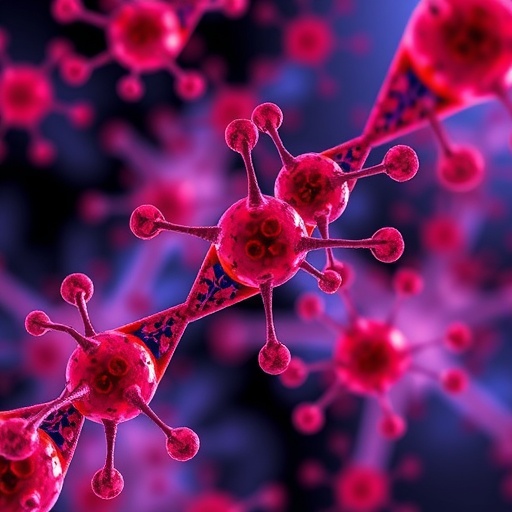
Over the past thirty years, the landscape of molecular biology has been transformed by the discovery and exploration of microRNAs (miRNAs), diminutive RNA molecules with outsized regulatory power. Initially identified as critical players in gene regulation, miRNAs have since been implicated in the complex pathogenesis of numerous diseases, most notably cancer. This progression from fundamental understanding to clinical application marks a significant leap forward in oncology, offering promising avenues for diagnosis and treatment. The latest review by Jurj et al., published in Nature Reviews Clinical Oncology, delves deeply into this exciting territory, unraveling the nuanced roles of miRNAs within cancer biology and examining how cutting-edge artificial intelligence (AI) is accelerating their translational potential.
MicroRNAs function as post-transcriptional regulators that fine-tune gene expression by binding to target messenger RNAs, typically resulting in degradation or translational repression. In cancer, this delicate balance is frequently disrupted, leading to aberrant miRNA expression profiles. Some miRNAs act as tumor suppressors, inhibiting pathways critical for cellular proliferation and survival. Conversely, others function as oncogenes, or “oncomiRs,” promoting oncogenic signaling networks. The dualistic nature of miRNAs emphasizes their context-dependent functions—an intricate characteristic that complicates therapeutic targeting but simultaneously offers specificity in modulating cancerous processes.
Extensive profiling of miRNA dysregulation across various tumor types has revealed specific signatures correlating with disease subtypes, stages, and prognosis. These findings underpin the burgeoning interest in employing miRNAs as biomarkers for cancer diagnosis, prognosis, and therapeutic response monitoring. Unlike traditional protein markers, miRNAs are remarkably stable in biofluids, such as blood and saliva, enabling non-invasive liquid biopsy approaches. Researchers have capitalized on this stability to develop miRNA-based molecular tests, some of which have already reached clinical trial phases, suggesting imminent integration into routine oncological practice.
Yet, translating miRNA research into clinical tools has not been without challenges. The heterogeneity of tumors, coupled with the multifactorial roles of individual miRNAs, demands sophisticated analytical frameworks. This is where the advent of artificial intelligence and machine learning has revolutionized the field. By leveraging AI algorithms, researchers can integrate vast, multidimensional datasets including genomics, transcriptomics, and epigenomics, to uncover subtle patterns and interactions that would elude conventional statistical methods. These computational approaches have dramatically enhanced the accuracy of miRNA biomarker identification and patient stratification strategies.
AI-driven platforms facilitate the identification of miRNA signatures not only associated with cancer presence but also predictive of treatment resistance and relapse. Such insights enable oncologists to tailor therapies based on an individual’s molecular profile, marking a step toward truly personalized medicine. Moreover, AI algorithms aid in the rational design of miRNA-based therapeutics by modeling target interactions and optimizing delivery systems, addressing previous bottlenecks related to off-target effects and bioavailability.
The integration of miRNA-based diagnostics and therapeutics is also spearheading combinatorial treatment approaches. By modulating miRNAs that regulate drug sensitivity pathways, researchers have demonstrated enhanced efficacy of conventional chemotherapies and targeted agents in preclinical models. This synergy opens avenues to mitigate resistance mechanisms that frequently limit clinical success, underscoring the promise of miRNAs as adjuncts to existing treatment modalities.
Importantly, the review emphasizes the evolving landscape of clinical trials involving miRNA technologies. Several ongoing studies investigate miRNA mimics or inhibitors as standalone or combinatorial agents, evaluating their safety and efficacy across various cancer types. Concurrently, trials deploying AI-guided biomarker panels aim to refine patient selection criteria, optimize dosing, and monitor treatment response in real time. This convergence of molecular biology and computational science is redefining clinical oncology paradigms.
Behind these advancements lies a convergence of multidisciplinary collaboration, with bioinformaticians, molecular biologists, clinicians, and data scientists contributing their expertise. The interdisciplinary nature of this research sphere is pivotal to overcoming existing hurdles and expediting the bench-to-bedside transition of miRNA applications. Moreover, ethical considerations regarding data privacy, algorithmic transparency, and regulatory approval pathways are being actively addressed to ensure responsible implementation.
Looking forward, the authors highlight emerging opportunities that promise to further accelerate miRNA translational success. Advances in single-cell sequencing and spatial transcriptomics promise unprecedented resolution in decoding miRNA functions within tumor microenvironments. Coupled with AI’s analytical prowess, these technologies will elucidate complex cell-cell communication networks and highlight novel therapeutic targets.
Simultaneously, the refinement of delivery platforms, such as nanoparticle-based vectors and exosome engineering, is overcoming historic challenges related to specificity and immunogenicity of miRNA therapeutics. These developments are vital to realizing the full clinical potential of miRNAs, transforming them from molecular curiosities into mainstays of cancer management.
Despite these promising strides, uncertainties remain regarding standardized protocols for miRNA biomarker validation and therapeutic administration. The review articulates the necessity of large-scale, multicenter validation studies and harmonized guidelines to ensure reproducibility and clinical applicability. It also underscores the importance of fostering collaboration between academia, industry, and regulatory bodies.
In conclusion, microRNAs have evolved from obscure regulatory molecules into powerful biomarkers and therapeutic agents with transformative potential in oncology. Enabled by the synergistic integration of artificial intelligence, molecular biology is entering a new epoch where comprehensive, data-driven insights catalyze precision cancer care. The visionary synthesis presented by Jurj and colleagues not only charts the current landscape but also maps a compelling roadmap for future innovation at the nexus of biology, technology, and medicine.
The dawn of AI-powered miRNA research heralds a paradigm shift—ushering in an era where the once-elusive goal of tailored, effective, and minimally invasive cancer management becomes an attainable reality. As this field matures, continued investment in technology, collaborative frameworks, and patient-centered research will be crucial to transforming these molecular marvels into tangible clinical triumphs.
Cite Scienmag News
Nathaniel Bowman. (January 15, 2026). MicroRNAs in Cancer: AI-Driven Translational Insights. Scienmag. https://scienmag.com/micrornas-in-cancer-ai-driven-translational-insights/
Nathaniel Bowman. "MicroRNAs in Cancer: AI-Driven Translational Insights." Scienmag, 15 January 2026, https://scienmag.com/micrornas-in-cancer-ai-driven-translational-insights/. Accessed 3 September 2026.
Nathaniel Bowman. "MicroRNAs in Cancer: AI-Driven Translational Insights." Scienmag. January 15, 2026. https://scienmag.com/micrornas-in-cancer-ai-driven-translational-insights/


