


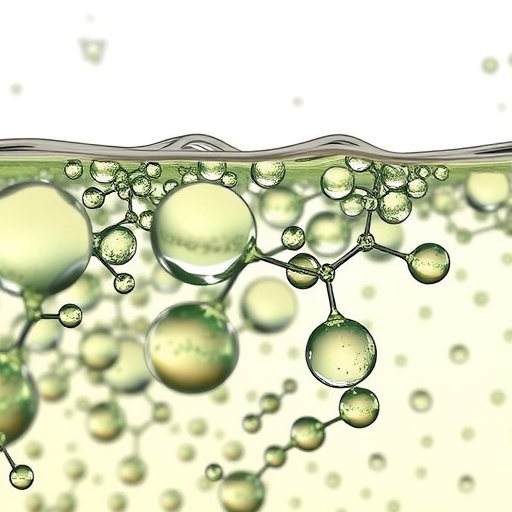
In a groundbreaking development poised to redefine the landscape of environmental chemistry and materials science, researchers have unveiled an innovative method for the selective polymerization of organic pollutants. This cutting-edge technique leverages iodine-mediated proton-coupled electron transfer (PCET) within an oxidant-free electrocatalytic system, offering unprecedented efficiency and sustainability in transforming hazardous organic compounds into useful polymeric materials. The implications of this technology are vast, promising a cleaner approach to pollutant remediation along with new avenues for sustainable polymer production.
Organic pollutants, particularly those emanating from industrial waste and agricultural runoff, pose persistent threats to ecosystems and human health. Traditional methods for degrading or removing these compounds often involve harsh oxidizing agents, high energy consumption, or result in incomplete degradation, producing secondary pollutants. The novel electrocatalytic system introduced in this study circumvents these limitations by utilizing iodine as a mediator, thus facilitating a selective and controlled polymerization process without the need for external oxidants, which frequently introduce environmental burdens.
At the heart of this breakthrough lies proton-coupled electron transfer, a fundamental chemical mechanism enabling the simultaneous movement of electrons and protons. This dual transfer mechanism is critical for activating organic molecules towards polymerization under milder conditions, making the process inherently more energy-efficient and environmentally benign. Using iodine as the central mediator enhances the reaction’s selectivity, ensuring that polymerization targets specific organic pollutants while minimizing undesired side reactions.
The electrocatalytic setup explores a finely tuned system where the electrode surfaces, reaction environment, and iodine species collaboratively drive the polymerization. The absence of an external oxidant not only reduces the risk of environmental contamination but also simplifies the reaction conditions. This allows for scalable operation and potential integration into existing water treatment or industrial waste management frameworks. Moreover, the method’s selectivity provides a pathway to design environmentally friendly polymers with tailor-made properties derived directly from hazardous waste feedstocks.
Delving into the mechanistic underpinnings, the researchers demonstrated that iodine plays a dual role: it acts both as a redox mediator and as a proton transfer agent. This dual functionality is what enables the PCET process to proceed efficiently. By facilitating electron and proton movements concurrently, iodine ensures that the reactive intermediate species generated during polymerization remain stable enough to prevent overoxidation or decomposition, which commonly plagues similar systems relying on harsher oxidants.
The selectivity aspect stands out as particularly significant. Organic pollutants often exist as complex mixtures, and indiscriminate polymerization could lead to a heterogeneous mass of polymers with limited application. However, the iodine-mediated PCET process exhibits a remarkable preference for the polymerization of specific functional groups prevalent in common pollutants. This precise targeting opens up possibilities for refining pollutant mixtures into high-value polymers, circumventing the need for extensive purification steps.
Extensive electrochemical characterization confirmed the fundamental role of the PCET mechanism. Cyclic voltammetry and spectroscopic analyses revealed distinctive redox peaks attributable to iodine species cycling between different oxidation states during the process. These transient iodine intermediates facilitate electron shuttling between the electrode surface and the organic substrates, making the entire system highly dynamic and responsive to the applied potentials. Such insights pave the way for fine-tuning the reaction parameters to achieve optimal polymer yields and molecular weights.
The energy profile of the reaction pathway, elucidated through computational modeling, suggests a significantly lowered activation barrier for polymerization when mediated by iodine in the PCET framework. This finding corroborates the experimental data, where reactions conducted at ambient temperatures and moderate voltages yielded polymers with controlled architecture. The mild reaction environment is a substantial advancement over conventional polymerization methods, which typically require elevated temperatures, toxic catalysts, or harsh reagents.
Importantly, the polymeric products obtained exhibit properties conducive to environmental and industrial applications. The researchers characterized these polymers for their molecular weight distribution, crystallinity, and mechanical strength. Variations in electrochemical parameters influenced polymer morphology, enabling a degree of tunability previously unattainable with waste-derived polymers. Potential applications include biodegradable packaging materials, filtration membranes, or precursors for advanced composites.
From a sustainability perspective, the elimination of external oxidants reduces hazardous waste generation and energy consumption. The use of iodine, a relatively abundant and recyclable element, further enhances the green credentials of this technology. The electrocatalytic approach permits continuous operation modes, potentially suitable for deployment in wastewater treatment plants or decentralized pollutant remediation units, where in situ polymerization of contaminants could capture and sequester harmful compounds effectively.
The interdisciplinary nature of this work, combining aspects of electrochemistry, materials science, and environmental engineering, underscores the collaborative efforts required to tackle complex environmental challenges. By harnessing the subtle interplay of proton and electron movements facilitated by iodine, this method represents a paradigm shift in how organic pollutants can be transformed from liabilities into resources, aligning with circular economy principles.
Looking forward, the research team envisions expanding the scope of this technique to a broader range of organic pollutants and exploring the integration of the polymerization process with downstream applications. For instance, functionalization of the polymer backbones during synthesis could impart catalytic or adsorptive properties, further enhancing their utility in environmental remediation or value-added products. Additionally, coupling this polymerization with renewable energy sources could amplify the sustainability and applicability of the method globally.
Scaling from laboratory demonstrations to real-world applications will require addressing challenges such as electrode material optimization, system durability, and regulation of polymer molecular weight at industrial scales. However, the foundational chemistry displayed in this research provides a robust framework for future innovations. Equally important is the potential to customize the polymerization process to selectively sequester or neutralize emerging contaminants, which often resist conventional treatment methods.
The societal impact of this technology holds promise for contributing significantly to cleaner water sources and reduced environmental pollution. With growing global awareness of ecological issues and stringent regulations on industrial effluents, innovative solutions like this iodine-mediated PCET system could become indispensable tools. Furthermore, the ability to generate valuable polymeric materials from pollutants may incentivize industries to adopt environmentally responsible practices, creating market-driven benefits.
In conclusion, the development of iodine-mediated proton-coupled electron transfer as a means for selective polymerization in an oxidant-free electrocatalytic system heralds a new era in sustainable chemistry. This technique combines fundamental insight into reaction mechanisms with practical applications that address pressing environmental challenges. Its publication in Nature Communications highlights the scientific community’s recognition of its potential impact, and ongoing research will likely refine and expand its applicability in the years to come.
Cite Scienmag News
Hazel Monroe. (June 15, 2026). Iodine-Driven Polymerization of Pollutants Without Oxidants. Scienmag. https://scienmag.com/iodine-driven-polymerization-of-pollutants-without-oxidants/
Hazel Monroe. "Iodine-Driven Polymerization of Pollutants Without Oxidants." Scienmag, 15 June 2026, https://scienmag.com/iodine-driven-polymerization-of-pollutants-without-oxidants/. Accessed 3 September 2026.
Hazel Monroe. "Iodine-Driven Polymerization of Pollutants Without Oxidants." Scienmag. June 15, 2026. https://scienmag.com/iodine-driven-polymerization-of-pollutants-without-oxidants/


