


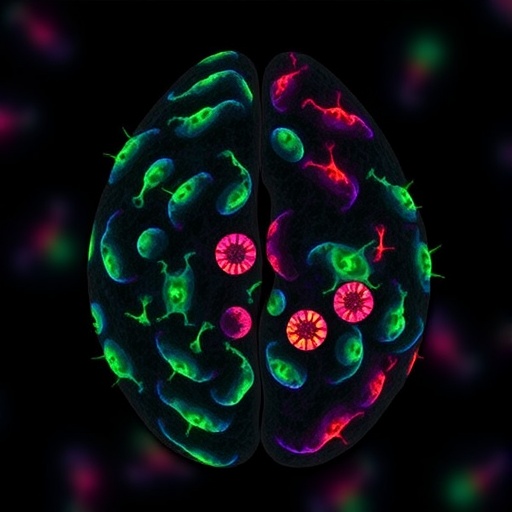
In a groundbreaking advancement poised to redefine cancer immunotherapy, researchers have surmounted one of the most formidable challenges in cell-based therapies: the direct genetic programming of neutrophils. Despite neutrophils being the most abundant white blood cells in circulation and critical mediators within the tumor microenvironment, their genetic modification has historically proven elusive. This limitation has hampered efforts to harness their potent immune functions against tumors. However, a novel platform named NeuSMRT now enables the targeted expression of chimeric antigen receptors (CARs) specifically in primary neutrophils, charting a new course for therapeutic intervention in glioma and beyond.
The ingenuity of NeuSMRT lies in its precise fusion of advanced molecular engineering and sophisticated delivery systems to achieve cell-specific translation control. Central to this innovation is the use of modified messenger RNA (mRNA) that encodes CARs tailored for neutrophil expression. Traditional approaches encounter low efficiency and off-target effects when attempting to genetically engineer neutrophils directly. NeuSMRT solves this by integrating a microRNA-responsive L7Ae:k-turn switch — a molecular regulatory device that restricts the translation of CAR-encoding mRNA exclusively within neutrophils, bypassing other immune cells and reducing unwanted systemic activity.
Delivery of these modified RNAs exploits breakthrough nanotechnology, utilizing either engineered extracellular vesicles or lipid nanoparticles. These carriers ensure effective transport and uptake into primary neutrophils without eliciting substantial immune clearance or toxicity. The extracellular vesicles employed are bioinspired nanoparticles that mimic natural intercellular communication vehicles, enhancing biocompatibility and cellular targeting. Lipid nanoparticles, meanwhile, offer scalable and tunable delivery platforms that fortify the mRNA payload while navigating biological barriers. Together, these delivery modalities optimize the stability and bioavailability of the therapeutic mRNA to unleash potent neutrophil reprogramming.
The therapeutic potential of NeuSMRT was put to rigorous test in a syngeneic glioma model, a physiologically relevant murine system that reproduces key facets of human brain tumors. Remarkably, neutrophils genetically reengineered in vivo using this platform demonstrated robust anti-tumor activity, significantly curtailing glioma progression and extending survival times. These CAR-neutrophils displayed enhanced recruitment and activation of endogenous T cells, fostering a synergistic cascade of anti-tumor immunity. Moreover, the tumor microenvironment exhibited marked attenuation of immunosuppressive myeloid cell populations, which typically thwart effective immune clearance.
Beyond their standalone efficacy, CAR-neutrophils augmented the therapeutic index of existing cancer treatments. When combined with conventional chemotherapy regimens, they amplified tumor regression compared to chemotherapy alone. Furthermore, they synergized powerfully with CAR-T cell therapies, which have revolutionized hematologic malignancies but have shown limited efficacy in solid tumors like gliomas. This indicates that off-the-shelf CAR-neutrophil infusions or in vivo generation may represent a critical adjunct to overcome solid tumor immunosuppression and resistance mechanisms.
Extending translational relevance, the research team employed a humanized glioblastoma mouse model to validate NeuSMRT’s functionality in a more clinically meaningful context. Human CAR-neutrophils generated via this platform demonstrated potent tumor cell killing, underscoring its feasibility for human application. Safety was rigorously evaluated in experimental canine models, which share immunological and physiological similarities with humans. Encouragingly, NeuSMRT-mediated neutrophil reprogramming exhibited favorable tolerability without inducing adverse inflammatory reactions or toxicity, a pivotal milestone for clinical translation.
NeuSMRT not only paves the way for cell-specific genetic programming but also challenges the entrenched dogma that neutrophils are difficult targets for immunotherapy. By harnessing these frontline immune effectors within tumors, the platform opens new frontiers for designing combinatorial regimens that tackle tumor heterogeneity and immune evasion. The ability to generate CAR-expressing neutrophils directly within patients via systemic administration could revolutionize immune cell engineering, moving from complex ex vivo manipulations towards streamlined in vivo therapies.
This platform represents a remarkable achievement in synthetic biology and nanomedicine, enabling precision control over protein translation through microRNA-responsive switches that function as intracellular “logic gates.” The L7Ae:k-turn switch mechanism exploits endogenous microRNA expression patterns distinct to neutrophils, ensuring that therapeutic CAR proteins are expressed exclusively where needed, thereby minimizing off-target effects and maximizing safety. Such elegant molecular programming heralds a new era of cell-type targeted gene therapies with broad potential beyond cancer, including infectious diseases and inflammatory disorders.
The success of NeuSMRT underscores the critical role of extracellular vesicles as versatile delivery systems that can be engineered to encapsulate and deliver nucleic acid payloads with exceptional efficiency. By tapping into vesicle-based communication networks inherent to the immune system, this platform surmounts longstanding obstacles related to RNA stability, cellular uptake, and immune recognition. These innovations align with rising interest in RNA therapeutics and nanoparticle engineering as convergent modalities for next-generation immunotherapies.
In the context of glioma, a notoriously recalcitrant cancer with dismal prognoses, NeuSMRT-generated CAR-neutrophils offer an urgently needed therapeutic avenue. Traditional strategies have been hampered by the blood-brain barrier, tumor-induced immunosuppression, and intrinsic tumor heterogeneity. The unique ability of neutrophils to infiltrate and modulate the tumor microenvironment empowers this platform to disrupt these defenses effectively. The resultant remodeling of the immune milieu—with heightened T cell activity and diminished suppressive myeloid populations—creates a multifaceted assault on tumor growth.
Looking ahead, the modularity of the NeuSMRT system suggests it could be adapted to target diverse tumor antigens and achieve personalized immunotherapy. By altering the CAR specificity encoded in the modified mRNA, neutrophils could be redirected against various cancer types or emerging resistant clones. Moreover, the platform’s combinatorial potential with chemotherapies and CAR-T cells offers a versatile toolkit for integrated cancer treatment paradigms.
In conclusion, NeuSMRT ushers in a new technological and therapeutic paradigm by enabling the in vivo generation of CAR-engineered neutrophils tailored for glioma immunotherapy. Its sophisticated molecular design, combined with innovative RNA delivery mechanisms, culminates in a powerful platform capable of overcoming longstanding barriers in neutrophil genetic engineering. This advancement not only enhances survival in preclinical glioma models but also promises safer, more effective immunotherapies across a breadth of challenging cancers. The clinical translation of NeuSMRT could transform current cancer treatment landscapes and invigorate efforts to exploit innate immune effector cells as programmable therapeutics.
Cite Scienmag News
Nathaniel Bowman. (April 25, 2026). In Vivo CAR-Neutrophils Developed for Glioma Treatment. Scienmag. https://scienmag.com/in-vivo-car-neutrophils-developed-for-glioma-treatment/
Nathaniel Bowman. "In Vivo CAR-Neutrophils Developed for Glioma Treatment." Scienmag, 25 April 2026, https://scienmag.com/in-vivo-car-neutrophils-developed-for-glioma-treatment/. Accessed 4 September 2026.
Nathaniel Bowman. "In Vivo CAR-Neutrophils Developed for Glioma Treatment." Scienmag. April 25, 2026. https://scienmag.com/in-vivo-car-neutrophils-developed-for-glioma-treatment/


