


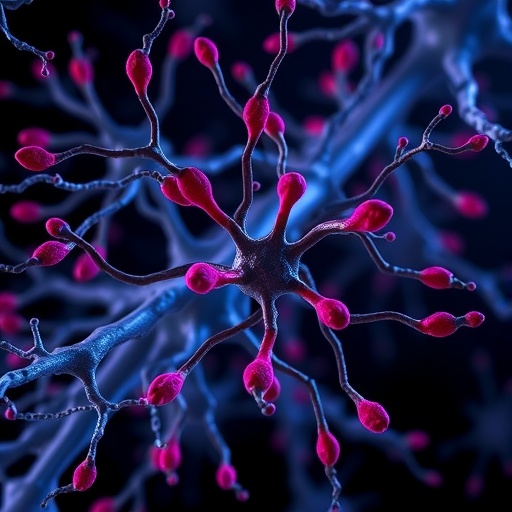
In a groundbreaking advance that promises to reshape the landscape of neurological disease research, a team of scientists has successfully developed an electrophysiological and proteomics roadmap tailored for human induced glutamatergic neurons. This innovation marks a pivotal step in refining cell culture conditions to better mimic the pathophysiological environment of human neurons, a challenge that has long impeded the fidelity and applicability of in vitro neural models. The research, spearheaded by Servetti, Parodi, Caramia and colleagues, offers unparalleled insights into the dynamic molecular and electrical activities that underpin glutamatergic neuron functionality, bringing us closer to understanding complex neurodegenerative and psychiatric disorders at a cellular level.
At the heart of this pioneering study is the meticulous fine-tuning of culture conditions. Traditional neuronal cultures often fail to recapitulate the nuanced milieu that neurons experience in vivo, resulting in inconsistencies that limit translational research. By optimizing parameters such as media composition, substrate coatings, and temporal sequencing of growth factors, the researchers achieved a culture environment that not only supports neuronal survival but also fosters electrophysiological properties akin to those observed in the human brain. This environmental precision has profound implications, opening avenues for pathophysiological investigations with significantly enhanced relevance.
Electrophysiological profiling, a cornerstone of the study, sheds light on the intrinsic electrical behavior of induced glutamatergic neurons. These excitatory neurons, crucial for synaptic transmission in the central nervous system, present unique firing patterns and synaptic plasticity. Through advanced techniques such as patch-clamp recordings combined with multielectrode arrays, the team meticulously charted action potential dynamics, synaptic currents, and network connectivity over defined developmental stages. This granular data not only affirms the functionality of the cultured neurons but also establishes baselines critical for detecting disease-associated electrophysiological aberrations in future research.
Complementing the electrophysiological data, the study’s proteomics approach offers a sweeping view of protein expression and modification landscapes that sculpt neuronal phenotype and function. Utilizing state-of-the-art mass spectrometry and bioinformatics pipelines, the team cataloged thousands of proteins, unveiling shifts in signaling pathways, cytoskeletal organization, and synaptic machinery components. These molecular fingerprints afford a multi-dimensional perspective on glutamatergic neuron maturation and vitality, rendering a powerful platform for dissecting molecular underpinnings of disorders linked to glutamate dysregulation such as epilepsy, schizophrenia, and Alzheimer’s disease.
This integrative roadmap capitalizes on human induced pluripotent stem cell (iPSC)-derived neurons, a model that surmounts many limitations posed by animal studies, including species-specific differences and ethical concerns. By focusing on induced glutamatergic neurons derived from human iPSCs, the research aligns experimental models closely with patient-specific biology, enhancing personalized medicine prospects. The optimized protocols enable reproducible generation of neuron populations that are electrophysiologically competent and proteomically representative, a dual validation seldom achieved with such rigor.
One of the standout features of this work is the attention given to temporal development within culture. Neurons were tracked across progressive maturation phases, revealing dynamic shifts in electrical and protein expression profiles that mirror in vivo neurodevelopment. This temporal mapping informs the ideal windows for experimental interventions, whether to model acute pathophysiology or chronic disease progression. Indeed, understanding the maturation timeline is indispensable for studies aiming to unravel disease onset mechanisms or test therapeutic efficacy at appropriate developmental stages.
The ramifications of this research extend profoundly into drug discovery pipelines. The established platform offers a high-fidelity human neuronal model to screen pharmacological agents targeting glutamatergic signaling with potential for heightened translatability. By monitoring functional electrophysiological changes alongside proteomic adaptations, researchers and pharmaceutical developers can better ascertain drug impact on neuronal networks and molecular pathways, minimizing reliance on less predictive animal models and accelerating bench-to-bedside transitions.
Additionally, the study emphasizes the importance of standardizing culture protocols across laboratories. Variability in neuronal induction and maintenance can lead to inconsistent data and hinder cross-study comparisons. The detailed methodological roadmap serves as a benchmark, encouraging harmonization of protocols that promises to unify efforts in the neuroscience research community. Such standardization is pivotal for advancing collaborative research and cumulative knowledge building.
Importantly, the integrative nature of combining electrophysiology and proteomics sets a new precedent for comprehensive neuronal characterization. Rather than relying solely on gene expression or electrical activity alone, this multidimensional approach captures the complex biology of glutamatergic neurons more holistically. This methodology stands to inspire future studies to embrace multi-omics strategies paired with functional assays, enriching mechanistic understanding and translational relevance.
Furthermore, the platform shows promise for modeling diverse neurological and psychiatric pathologies characterized by glutamatergic dysfunction. Conditions such as major depressive disorder, autism spectrum disorders, and neurodevelopmental delays can be studied in vitro with increased fidelity to human neuronal physiology. Customized patient-derived neurons cultured under these optimized conditions could unveil disease-specific electrophysiological anomalies and proteomic signatures, enabling the discovery of novel biomarkers and therapeutic targets.
The researchers also acknowledge that fine-tuning culture variables is a continuous process that can be further refined with emerging technologies and insights. Future directions may include integrating three-dimensional culture systems, co-culturing with glial cells to replicate brain microenvironments, and incorporating real-time imaging modalities to dynamically track neuronal activity and protein interactions. Such advancements could push the boundaries of in vitro modeling even closer to human physiological realities.
The implications for regenerative medicine are equally compelling. Understanding how to cultivate glutamatergic neurons that faithfully recapitulate human physiology is foundational for potential cell replacement therapies in neurodegenerative diseases. This roadmap provides critical benchmarks for quality and functionality of neurons destined for transplantation, improving prospects for successful integration and therapeutic benefit.
In summary, this landmark investigation by Servetti et al. heralds a transformative tool for neuroscience research. Through the meticulous integration of electrophysiological and proteomic analyses within refined culture conditions, they have provided a robust, reproducible, and insightful platform to study human glutamatergic neurons. This advance bridges existing gaps between in vitro models and human brain physiology, accelerating progress toward understanding and treating a host of devastating neurological conditions. The neuronal roadmap they have charted is not just a technical accomplishment but a beacon guiding future innovations in brain research.
Looking ahead, this study sets a formidable standard and inspiration for the field. As more laboratories adopt and build upon these protocols, the collective capacity to decode complex neuronal behaviors and pathologies will markedly increase. This, in turn, fuels the relentless scientific quest to unravel the mysteries of the human brain and translate discoveries into tangible clinical solutions that improve lives worldwide.
Cite Scienmag News
Cassandra Pierce. (June 6, 2026). Optimizing Glutamatergic Neurons for Disease Research. Scienmag. https://scienmag.com/optimizing-glutamatergic-neurons-for-disease-research/
Cassandra Pierce. "Optimizing Glutamatergic Neurons for Disease Research." Scienmag, 6 June 2026, https://scienmag.com/optimizing-glutamatergic-neurons-for-disease-research/. Accessed 4 September 2026.
Cassandra Pierce. "Optimizing Glutamatergic Neurons for Disease Research." Scienmag. June 6, 2026. https://scienmag.com/optimizing-glutamatergic-neurons-for-disease-research/


