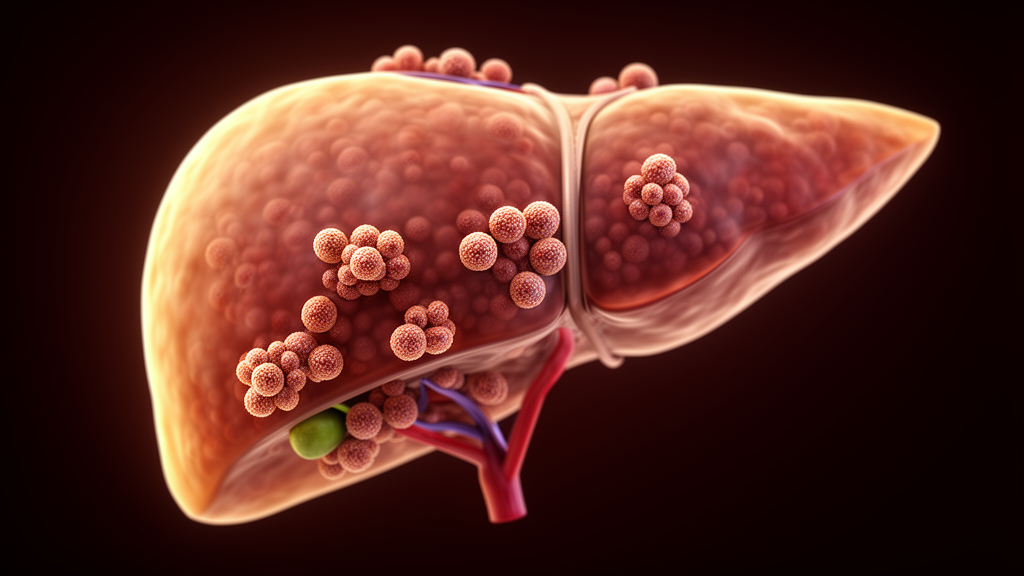
Patients with hepatocellular carcinoma who carry dense clusters of immune cells inside their tumours appear far more likely to benefit from immune checkpoint inhibitors, according to a retrospective single-centre study published in Cellular Oncology. The structures, known as intratumoral tertiary lymphoid structures, were associated with both first-assessment disease control and longer progression-free survival.
The research team, led by Weijie Ma, Liangxuan Ding and Minghe Zhang with senior author Yufeng Yuan, examined archival surgical resection specimens from 49 patients with hepatocellular carcinoma who later received immune checkpoint inhibitor therapy. The primary analysis focused on 45 patients whose specimens had been taken before immunotherapy began; four post-treatment specimens were excluded from the main cohort.
In this study, pathologists scored the specimens using a T-score, with a score above zero indicating the presence of these structures. Interobserver agreement was high, with a quadratic-weighted kappa of 0.974, suggesting the scoring method is reproducible across different assessors.
The results were striking. Disease control, assessed by modified Response Evaluation Criteria in Solid Tumours, occurred in 20 of 21 patients, or 95.2 percent, whose tumours had a T-score above zero, compared with 10 of 24 patients, or 41.7 percent, with a T-score of zero. The difference was statistically significant, with a P value below 0.001.
Progression-free survival also favoured patients with detectable tertiary lymphoid structures. After adjustment for intrahepatic metastasis and for treatment combining immune checkpoint inhibitors with targeted therapy, a T-score above zero was associated with longer progression-free survival, with a hazard ratio of 0.290 and a 95 percent confidence interval of 0.131 to 0.642, and a P value of 0.002. The cohort included 37 progression-free survival events and eight deaths.
The association proved robust to several sensitivity analyses. When the eight patients who had received anticancer treatment before their specimen was collected were excluded, the hazard ratio was 0.232, with a 95 percent confidence interval of 0.086 to 0.623 and a P value of 0.004. The association also persisted after adjusting for the interval between specimen collection and the start of immunotherapy, yielding a hazard ratio of 0.297, a 95 percent confidence interval of 0.129 to 0.681, and a P value of 0.004.
To explore the biology behind the association, the researchers performed transcriptomic analysis on nine pre-treatment tumours, six of which were positive for tertiary lymphoid structures and three negative, with a ten-sample comparison retained for sensitivity analysis. The analysis identified 129 strictly differentially expressed genes between the two groups.
Gene set enrichment pointed to one clear immune theme: B-cell proliferation was significantly enriched in tumours harbouring the structures, with a normalised enrichment score of 2.09 and a false-discovery-rate q value of 0.015. Other immune-related themes were either exploratory or did not remain significant after correction for multiple testing, so the authors treated those signals cautiously.
The authors are careful about interpretation. In their conclusion, they state that the retrospective findings are associative rather than predictive and require prospective validation. Because the specimens were collected before treatment in the primary cohort, the study cannot show that the structures cause the improved outcomes, only that their presence in archival tissue tracked with disease control and progression-free survival in this group of 45 patients.
Subject of Research: The association between intratumoral tertiary lymphoid structures and outcomes in hepatocellular carcinoma patients treated with immune checkpoint inhibitors
Article Title: Intratumoral tertiary lymphoid structures are associated with disease control and progression-free survival in patients with hepatocellular carcinoma receiving immune checkpoint inhibitors
Article References: Ma, W., Ding, L., Zhang, M., Wang, B., Liu, X., Wang, X., Guo, W.-W., Chen, Z., Xu, Z., Li, J., & Yuan, Y. (2026). Intratumoral tertiary lymphoid structures are associated with disease control and progression-free survival in patients with hepatocellular carcinoma receiving immune checkpoint inhibitors. Cellular Oncology. https://doi.org/10.1007/s13402-026-01310-6
Image Credits: AI Generated
DOI: 10.1007/s13402-026-01310-6
Keywords: hepatocellular carcinoma, tertiary lymphoid structures, immune checkpoint inhibitors, progression-free survival, disease control, B-cell proliferation, transcriptomics, immunotherapy, retrospective study, tumour immunology, mRECIST, pathology
Cite Scienmag News
Nathaniel Bowman. (October 28, 2026). Immune structures inside liver tumours linked to better immunotherapy outcomes. Scienmag. https://scienmag.com/immune-structures-inside-liver-tumours-linked-to-better-immunotherapy-outcomes/
Nathaniel Bowman. "Immune structures inside liver tumours linked to better immunotherapy outcomes." Scienmag, 28 October 2026, https://scienmag.com/immune-structures-inside-liver-tumours-linked-to-better-immunotherapy-outcomes/. Accessed 29 October 2026.
Nathaniel Bowman. "Immune structures inside liver tumours linked to better immunotherapy outcomes." Scienmag. October 28, 2026. https://scienmag.com/immune-structures-inside-liver-tumours-linked-to-better-immunotherapy-outcomes/