The ovary is one of the most dynamically remodeled organs in the human body, cycling through waves of follicle growth and regression for decades before its reserve is finally exhausted. But a new wave of research suggests that the clock governing female reproductive aging may not tick solely within the egg cells and their surrounding support cells. Instead, an overlooked cast of immune cells—macrophages—may be quietly scripting the decline, and understanding their behavior could open entirely new avenues for preserving fertility and delaying menopause.
A comprehensive review published in the Journal of Ovarian Research by Hongbo Wu, Zhao Zhang, Lidan Liu and colleagues synthesizes a rapidly growing body of evidence on macrophage polarization in what researchers call ovarian inflammaging—the chronic, low-grade inflammation that accumulates in the ovary with age. Drawing on single-cell transcriptomics, spatial mapping techniques, genetic mouse models and interventional studies, the review assembles a detailed picture of how these immune cells change with age and how those changes may accelerate follicle depletion, degrade oocyte quality and ultimately hasten the transition into menopause.
Macrophages are the tissue-dwelling sentinels of the innate immune system, and they are far from uniform. The classical dichotomy casts M1-like macrophages as pro-inflammatory fighters that release tumor necrosis factor alpha, interleukin-1 beta and interleukin-6, while M2-like macrophages act as pacifiers, promoting tissue repair, resolution of inflammation and homeostasis. In reality, macrophages exist along a vast spectrum of functional states, shaped by their origin, their local microenvironment and the signals they encounter. Some ovarian macrophages are embryonically seeded residents that self-renew locally, while others are monocyte-derived recruits that arrive from the bloodstream, particularly during inflammation or injury. As the ovary ages, the review finds, the balance between these resident-like and monocyte-derived programs shifts, tilting the organ’s immune landscape toward a more inflammatory configuration.
The consequences of that shift ripple through every compartment of the ovary. The authors document age-associated accumulation of multinucleated giant cells in the ovarian stroma of aged models—fused macrophage formations typically seen at sites of chronic, unresolved inflammation. They also note rising pyroptosis-associated signatures among ovarian immune cells. Pyroptosis is a fiery form of programmed cell death: unlike quiet apoptosis, it ruptures the cell membrane and spills inflammatory contents into the surrounding tissue, amplifying the alarm. In a finite organ like the ovary, where every follicle lost is gone forever, an inflammatory milieu that accelerates follicular attrition has profound implications for reproductive lifespan.
What drives macrophages toward these inflammatory states in the aging ovary? The review identifies several candidate upstream pathways. The cGAS-STING pathway, a cytosolic DNA sensor system, can be activated by mitochondrial and nuclear DNA fragments that leak into the cytoplasm as cells age and accumulate damage. Once triggered, STING signaling induces type I interferons and inflammatory cytokines, effectively telling the immune system that something is wrong. The NLRP3 inflammasome, a multiprotein molecular machine, assembles in response to cellular stress and activates caspase-1, which cleaves pro-inflammatory interleukins into their mature, tissue-damaging forms and triggers pyroptosis. A third axis involves S100A8 and S100A9, damage-associated molecular pattern proteins released by stressed cells, which engage the Toll-like receptor 4 on macrophages and ignite nuclear factor kappa B, a master transcriptional switch for inflammation. Together, these pathways form a self-reinforcing loop: aging cells release danger signals, macrophages respond with inflammatory programs, and the resulting milieu further stresses the ovarian cells, prompting more danger signals.
Downstream, the review links macrophage-associated inflammatory signaling to concrete failures in ovarian function. Granulosa cells—the somatic cells that nurse the developing oocyte—are particularly vulnerable. Inflammatory cytokines and reactive oxygen species can push granulosa cells into senescence, a state of permanent cell-cycle arrest accompanied by the senescence-associated secretory phenotype, in which senescent cells themselves pump out inflammatory mediators, compounding the problem. The stroma, meanwhile, undergoes fibroinflammatory remodeling: fibroblasts transition into myofibroblasts, extracellular matrix accumulates, and the delicate architecture that supports follicle development becomes stiffened and scarred. Follicular homeostasis—the careful choreography of follicle recruitment, selection and atresia—is disrupted, and the overall reserve dwindles faster than it otherwise would.
Perhaps most provocatively, the review highlights how modern environmental exposures may accelerate these processes. In experimental models, microplastics, fine particulate matter known as PM2.5 and metabolic stress have each been shown to amplify inflammatory signaling in the ovary, in some cases engaging the very same cGAS-STING, NLRP3 and TLR4-dependent pathways implicated in natural aging. This suggests that the inflammaging clock may not run at a fixed speed; it can be wound forward by the environments in which we live, breathe and eat. Metabolic stress in particular—obesity, insulin resistance and dyslipidemia—has emerged as a plausible amplifier, connecting whole-body metabolic health to the cellular ecology of the ovary.
The therapeutic implications are where the review becomes genuinely forward-looking. The authors survey a range of preclinical interventions that have shown promise by targeting macrophage polarization or its upstream drivers. Pharmacological agents that inhibit the NLRP3 inflammasome or dampen NF-kappaB signaling have preserved ovarian reserve in animal models of premature ovarian insufficiency and chemotherapy-induced damage, the latter including models using cyclophosphamide, a common and gonadotoxic chemotherapy drug. Metabolic interventions, notably caloric restriction, appear to restrain inflammaging systemically and within the ovary, shifting macrophages back toward reparative phenotypes. Small molecules such as chitosan oligosaccharides have been explored for their anti-inflammatory effects, and even electroacupuncture has been reported in some models to modulate ovarian immune signaling through neuroimmune pathways involving mediators like vasoactive intestinal peptide.
One of the most intriguing therapeutic frontiers involves extracellular vesicles—tiny membrane-bound parcels that cells use to shuttle proteins, RNAs and other signaling molecules to one another. Vesicles derived from stem cells or from macrophages themselves can carry anti-inflammatory cargo and reprogram recipient cells, and early studies suggest they may rescue granulosa cell function and follicle survival in damaged ovaries. Because extracellular vesicles can be engineered and delivered with increasing precision, they represent a potential way to rewrite the inflammatory conversation inside the aging ovary without systemic immunosuppression—a crucial consideration for any therapy intended for healthy women seeking to extend their reproductive window.
The authors are careful to temper enthusiasm with candor. Most of the evidence they synthesize comes from mouse models, cell cultures and a limited number of human correlative studies; macrophage biology in the human ovary remains difficult to access and study directly, and interventions that work in rodents frequently fail to translate. The review notes that findings remain model-specific and require validation in human ovarian aging before any clinical application can be contemplated. Yet the trajectory of the field is unmistakable. With single-cell RNA sequencing and spatial transcriptomics now capable of resolving individual macrophage states within intact ovarian tissue, researchers are for the first time able to map exactly which immune cells sit where, which signals they send and how those signals change with age. The reviewers predict that these approaches will refine mechanistic understanding and guide the development of biomarkers for ovarian inflammaging—and, ultimately, therapies that could help women extend both fertility and healthy hormonal lifespan. If the ovary’s aging clock is partly an immune phenomenon, then learning to retune its macrophages may prove one of the most consequential reproductive medicine breakthroughs of the coming decades.
Subject of Research: Macrophage polarization as a driver of inflammaging in the aging ovary and its therapeutic implications
Article Title: Macrophage polarization in ovarian inflammaging: mechanisms, mediators, and therapeutic targets
Article References: Macrophage polarization in ovarian inflammaging: mechanisms, mediators, and therapeutic targets. (n.d.). https://doi.org/10.1186/s13048-026-02308-2
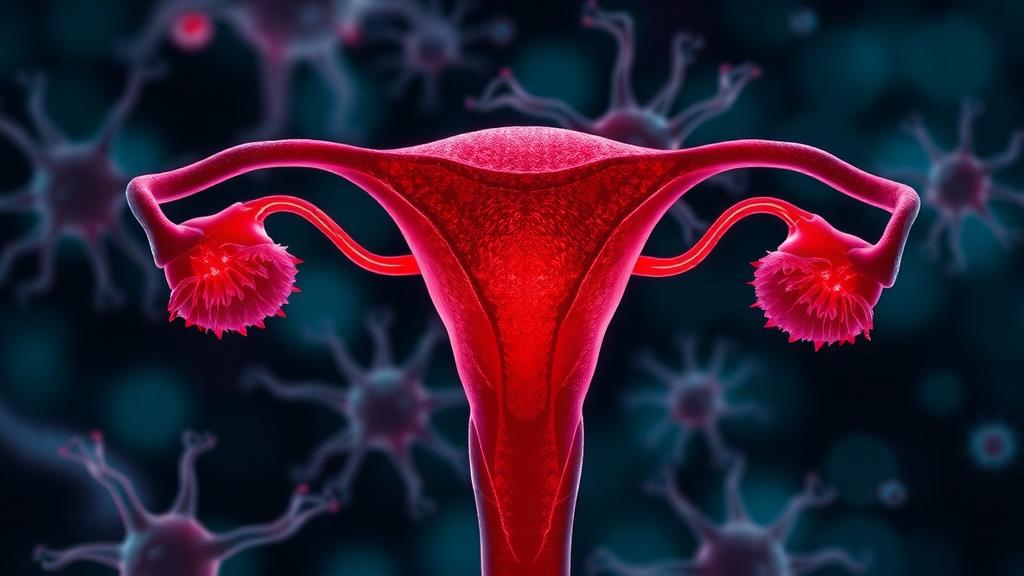
Image Credits: AI Generated
DOI: 10.1186/s13048-026-02308-2
Keywords: ovarian aging, macrophage polarization, inflammaging, NLRP3 inflammasome, cGAS-STING, granulosa cell senescence, follicle depletion, extracellular vesicles, pyroptosis, premature ovarian insufficiency, single-cell transcriptomics, reproductive longevity
Cite Scienmag News
Beatrice Stafford. (October 14, 2026). Immune Cells in the Ovary May Hold the Key to Slowing Female Reproductive Aging. Scienmag. https://scienmag.com/immune-cells-in-the-ovary-may-hold-the-key-to-slowing-female-reproductive-aging/
Beatrice Stafford. "Immune Cells in the Ovary May Hold the Key to Slowing Female Reproductive Aging." Scienmag, 14 October 2026, https://scienmag.com/immune-cells-in-the-ovary-may-hold-the-key-to-slowing-female-reproductive-aging/. Accessed 14 October 2026.
Beatrice Stafford. "Immune Cells in the Ovary May Hold the Key to Slowing Female Reproductive Aging." Scienmag. October 14, 2026. https://scienmag.com/immune-cells-in-the-ovary-may-hold-the-key-to-slowing-female-reproductive-aging/