


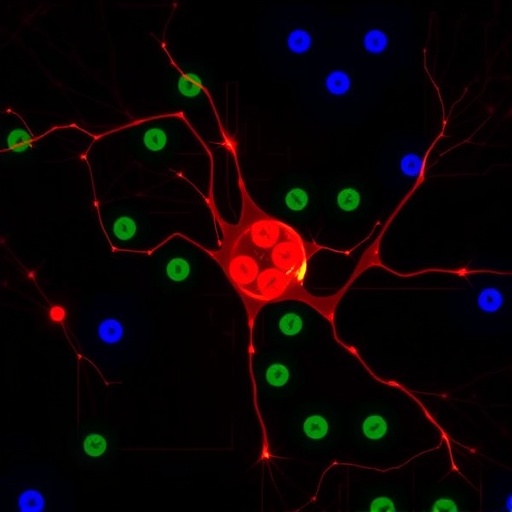
A molecular switch linking two key chromatin regulators may help explain why cells in Hutchinson–Gilford progeria syndrome (HGPS) age at extraordinary speed. In a study published in Nature Communications, Hu, Sun, Xiang and colleagues identify the HMGA1–HP1β axis as an important regulator of premature aging through chromatin remodeling. The findings place the disorder not only in the nuclear lamina, where the well-known progerin protein disrupts nuclear architecture, but also in the machinery that organizes DNA and controls which genes remain active or silent. By connecting these two levels of nuclear dysfunction, the research offers a more detailed view of how a single mutation can produce widespread cellular deterioration.
HGPS is an exceptionally rare genetic disorder characterized by accelerated features of aging, including growth failure, loss of subcutaneous fat, stiff joints, vascular disease and severe cardiovascular complications. Most cases are caused by a mutation in the LMNA gene, which encodes the nuclear structural proteins lamins A and C. The mutation creates an abnormal form of lamin A known as progerin. Because progerin retains a chemical modification that normally would be removed during protein maturation, it remains abnormally attached to the inner nuclear membrane. Over time, progerin distorts the nucleus, weakens its mechanical properties and interferes with essential processes such as DNA repair, replication and gene regulation.
The new work focuses on chromatin, the dynamic complex of DNA and proteins that packages the genome inside the nucleus. Chromatin is not arranged randomly: tightly packed regions, known as heterochromatin, generally restrict gene activity, while more open regions allow transcriptional machinery to access DNA. This organization must be constantly adjusted as cells respond to stress, divide or adopt specialized identities. In HGPS, progerin-associated nuclear damage has been linked to the loss or redistribution of heterochromatin. Such changes can expose genes at the wrong time, silence genes that cells need, and undermine the stable patterns of gene expression required for long-term cellular health.
HMGA1 and HP1β operate at different but complementary points in this process. HMGA1 is a small, non-histone chromatin protein that binds DNA and changes its shape, helping assemble larger regulatory complexes. It can influence transcription, DNA repair and the formation of specialized chromatin domains. HP1β, encoded by the CBX1 gene, is a member of the heterochromatin protein 1 family. These proteins recognize methylated histones, chemical tags on chromatin-associated proteins that are commonly associated with gene silencing and compact genome organization. HP1β can act as a molecular adaptor, helping recruit additional factors and stabilize regions of condensed chromatin.
According to the study, the relationship between HMGA1 and HP1β becomes disturbed in HGPS cells, contributing to abnormal chromatin remodeling and premature cellular aging. The significance of the finding lies in the idea that HMGA1 is not functioning in isolation. Instead, its activity appears to be connected to HP1β-dependent chromatin organization, creating an axis that can influence the physical structure of the genome and the transcriptional programs that preserve cellular identity. When this regulatory relationship is disrupted, cells may lose the ability to maintain normal heterochromatin, activate stress responses inappropriately and enter a senescent state, in which they remain alive but divide poorly and release inflammatory signals.
This proposed mechanism helps clarify why HGPS affects many tissues even though the initiating mutation is present in a single gene. The nuclear envelope is mechanically connected to chromatin, and chromatin is chemically connected to gene expression. A structural defect caused by progerin can therefore propagate inward, altering the placement and accessibility of genomic regions. If HMGA1 and HP1β fail to coordinate the response, the resulting changes may affect genes involved in proliferation, metabolism, DNA damage responses and inflammation. The effect is not simply a damaged nucleus or a collection of isolated gene-expression errors; it is a self-reinforcing breakdown in the systems that organize and protect the genome.
The researchers’ focus on an axis rather than a single protein is also important for potential treatment strategies. HGPS has no cure, although therapies such as farnesyltransferase inhibition can reduce some consequences of progerin processing and may improve outcomes for certain patients. However, correcting the abnormal lamin protein does not necessarily restore every layer of nuclear regulation. A therapy aimed at chromatin remodeling could, in principle, address downstream effects that remain after the primary structural defect has been reduced. Modulating HMGA1 activity, stabilizing HP1β-associated heterochromatin or restoring appropriate chromatin marks could represent future approaches, although such interventions would require exceptional precision because these proteins regulate fundamental processes in healthy cells.
The findings may also resonate beyond progeria. Several molecular features observed in HGPS—including heterochromatin loss, persistent DNA damage and cellular senescence—are also associated with ordinary aging and age-related disease. Progeria is often described as a “fast-forward” model of aging, but it is not simply normal aging at an accelerated pace. The disorder has a distinct genetic cause and produces unique pathological effects. Even so, studying its molecular circuitry can reveal how nuclear architecture, epigenetic regulation and cellular stress interact over time. The HMGA1–HP1β connection could therefore provide a framework for investigating whether similar chromatin failures contribute to vascular aging, tissue degeneration or chronic inflammation in the general population.
The research also underscores the importance of looking beyond DNA sequence when studying genetic disease. The mutation in LMNA supplies the initiating instruction, but its consequences unfold through protein processing, nuclear mechanics, chromatin chemistry and gene regulation. Epigenetic systems such as histone modification and chromatin compaction do not change the underlying genetic code; instead, they determine how that code is interpreted. In HGPS, the HMGA1–HP1β axis appears to be one of the regulatory circuits translating nuclear damage into altered genome behavior. Understanding that translation may help scientists identify biomarkers that reveal disease progression earlier and determine which cellular pathways are most responsive to treatment.
The study does not turn HGPS into a solved problem, and additional work will be needed to establish how the HMGA1–HP1β axis behaves across different cell types, tissues and stages of disease. Researchers must also determine whether restoring the pathway can reverse established cellular damage or mainly prevent further decline. Nevertheless, the work adds a crucial layer to the progeria story: premature aging may arise not only because progerin deforms the nucleus, but because that deformation disrupts the molecular partnerships that keep chromatin organized. By exposing this link, the study brings scientists closer to understanding how the genome loses its structural discipline—and how that failure might eventually be repaired.
Cite Scienmag News
Juliet Wilcox. (August 19, 2026). HMGA1–HP1β Chromatin Axis Regulates Premature Aging in Hutchinson-Gilford Progeria Syndrome. Scienmag. https://scienmag.com/hmga1-hp1%ce%b2-chromatin-axis-regulates-premature-aging-in-hutchinson-gilford-progeria-syndrome/
Juliet Wilcox. "HMGA1–HP1β Chromatin Axis Regulates Premature Aging in Hutchinson-Gilford Progeria Syndrome." Scienmag, 19 August 2026, https://scienmag.com/hmga1-hp1%ce%b2-chromatin-axis-regulates-premature-aging-in-hutchinson-gilford-progeria-syndrome/. Accessed 4 September 2026.
Juliet Wilcox. "HMGA1–HP1β Chromatin Axis Regulates Premature Aging in Hutchinson-Gilford Progeria Syndrome." Scienmag. August 19, 2026. https://scienmag.com/hmga1-hp1%ce%b2-chromatin-axis-regulates-premature-aging-in-hutchinson-gilford-progeria-syndrome/


