


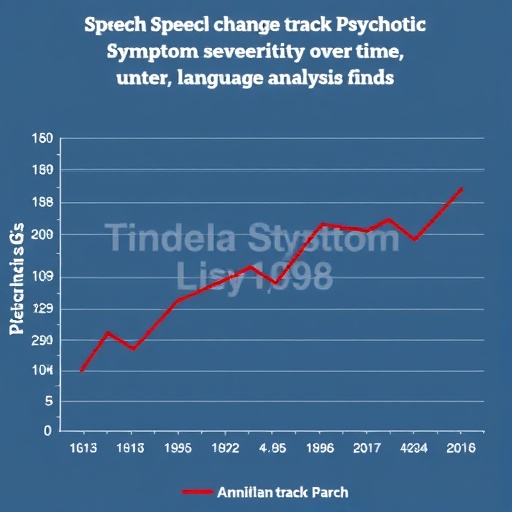
Psychotic symptoms may leave measurable traces in the way people speak, and a new longitudinal study suggests that those traces change as symptom severity changes. Published in Translational Psychiatry in 2026, the research by S.A. Just, S. Pandey, D. Stein and colleagues examines whether natural language processing can detect shifts in speech associated with the progression or improvement of psychotic symptoms. The study’s title, “Changes in speech reflect changes in psychotic symptom severity: a longitudinal natural language processing analysis,” points to a potentially important development in psychiatric research: using repeated language measurements to follow mental health over time rather than relying only on occasional clinical assessments.
Psychosis is not a single condition but a group of experiences and symptoms that can occur in disorders such as schizophrenia, schizoaffective disorder and severe mood disorders. These symptoms may include hallucinations, delusions, disorganized thinking, diminished emotional expression and difficulties with motivation or social engagement. Clinicians traditionally assess them through interviews, observations and standardized rating scales. Although these methods remain essential, they can be influenced by memory, communication style, the clinical setting and the limited amount of time available during an appointment. Speech analysis offers a possible additional source of information by examining how a person communicates across repeated encounters.
Natural language processing, or NLP, is a branch of artificial intelligence that enables computers to analyze human language. In psychiatric research, NLP systems can examine features such as vocabulary, sentence structure, semantic relationships, repetition, coherence and the organization of ideas. Some systems analyze the words themselves, while others examine patterns across a conversation. A longitudinal NLP study adds a crucial dimension: instead of comparing different people at one moment, it follows the same individuals across time. This makes it possible to investigate whether changes in language coincide with changes in clinically assessed symptoms.
The distinction between a single speech sample and a longitudinal record is scientifically significant. People naturally vary in how much they speak, how formal their language is and how coherent they sound depending on fatigue, stress, medication, social context or the subject of conversation. A single recording may therefore be difficult to interpret. Repeated samples can help researchers identify an individual’s baseline communication pattern and then observe deviations from it. If those deviations consistently track symptom ratings, speech could become a useful behavioral signal, especially when combined with clinical expertise rather than used as an isolated diagnostic test.
The work by Just, Pandey, Stein and their colleagues focuses specifically on whether speech changes reflect changes in psychotic symptom severity. That question moves beyond the idea that language might distinguish people with and without psychosis. Instead, it asks whether language can mirror the fluctuating course of symptoms within a person. This is a more demanding test of clinical usefulness. A tool that merely identifies broad group differences may have limited value in everyday care, whereas a system that detects meaningful change could help clinicians recognize worsening symptoms, monitor recovery and evaluate how an intervention is working.
From a technical perspective, such an analysis can involve converting recorded or transcribed speech into quantifiable features. Lexical measures may capture the diversity and frequency of words. Syntactic measures can describe sentence complexity and grammatical organization. Semantic methods can assess how closely successive words or ideas are related, while discourse analysis can examine whether a narrative follows a comprehensible structure. Acoustic information, including pauses, speech rate and intonation, may also be relevant when the study includes spoken recordings rather than text alone. The most informative signals may not be obvious to human listeners because algorithms can combine many subtle features across extended samples.
However, a statistical relationship between speech and symptom severity does not automatically reveal why the relationship exists. Psychotic symptoms can influence thought organization, attention, motivation and emotional expression, all of which may affect communication. At the same time, medication side effects, anxiety, depression, social withdrawal, cognitive impairment and physical health can also alter speech. A robust clinical model must therefore distinguish psychosis-related changes from other causes of variation. Longitudinal data can help, but it does not eliminate the need for careful study design, appropriate comparison measures and interpretation by qualified professionals.
The potential applications are generating interest because speech is relatively easy to collect. A patient may provide a sample during a clinical interview, through a structured task or, with appropriate consent and safeguards, through remote communication. Automated analysis could help organize large amounts of information and alert a treatment team when a person’s language pattern differs substantially from their previous observations. Such a system might be particularly valuable between appointments, when symptom changes can go unnoticed. Yet the technology would be most responsible as a monitoring aid, not as a replacement for a clinician or as a tool that makes definitive judgments about an individual without context.
The study also arrives at a moment when enthusiasm for AI in medicine is being matched by growing concern about privacy, fairness and transparency. Speech contains more than words: it can reveal identity, emotion, health status, cultural background and personal relationships. Any clinical NLP system would need strong data protection, informed consent and clear rules about who can access recordings and algorithmic outputs. Models trained on limited populations may perform less accurately for people with different accents, languages, educational backgrounds or communication styles. Before speech-based monitoring becomes routine, researchers will need to show that it works reliably across settings and that it improves care rather than increasing stigma or unnecessary intervention.
By linking changes in speech with changes in psychotic symptom severity, the research presents language as a dynamic clinical signal rather than a static label. Its importance lies not in suggesting that an algorithm can “read” a person’s mind, but in showing how measurable aspects of communication may contribute to a more continuous view of mental health. The findings could encourage further studies combining NLP with symptom ratings, cognitive testing, treatment records and other digital or biological measures. If validated in larger and more diverse populations, this approach may help psychiatry detect clinically meaningful change earlier and follow recovery with greater precision, while keeping human judgment at the center of care.
Cite Scienmag News
Glenn Wilkins. (August 19, 2026). Speech Changes Track Psychotic Symptom Severity Over Time, Language Analysis Finds. Scienmag. https://scienmag.com/speech-changes-track-psychotic-symptom-severity-over-time-language-analysis-finds/
Glenn Wilkins. "Speech Changes Track Psychotic Symptom Severity Over Time, Language Analysis Finds." Scienmag, 19 August 2026, https://scienmag.com/speech-changes-track-psychotic-symptom-severity-over-time-language-analysis-finds/. Accessed 4 September 2026.
Glenn Wilkins. "Speech Changes Track Psychotic Symptom Severity Over Time, Language Analysis Finds." Scienmag. August 19, 2026. https://scienmag.com/speech-changes-track-psychotic-symptom-severity-over-time-language-analysis-finds/


