


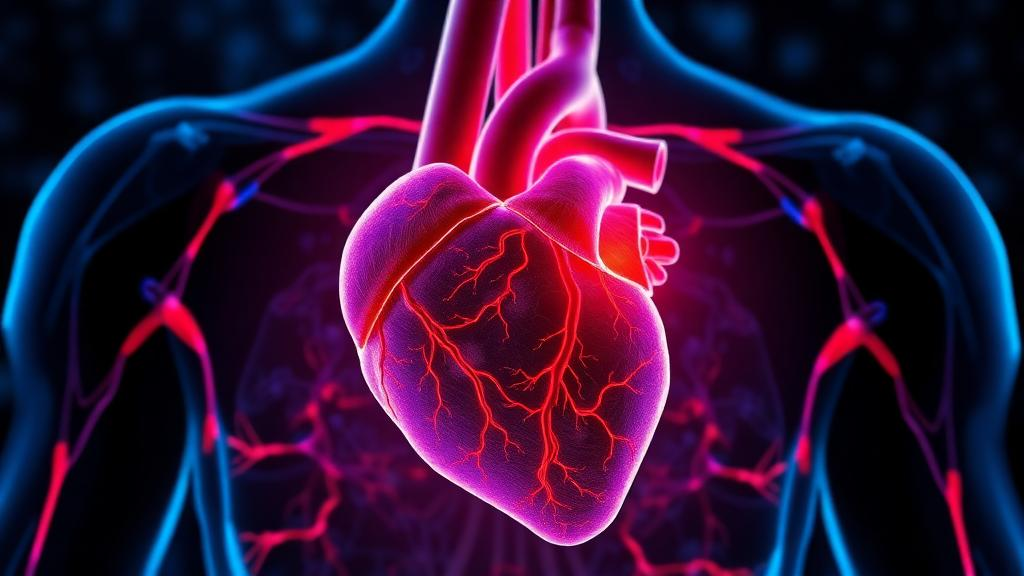
The adult human heart is one of nature’s most dependable engines. It beats roughly two and a half billion times over a lifetime, ramping up its output enough to power a sprint or sustain weeks of endurance racing, and it does so with remarkable reliability. Yet for all its resilience, the heart carries a devastating flaw: it cannot meaningfully repair itself after a heart attack. When cardiomyocytes, the muscle cells responsible for contraction, die in the wake of an ischemic event, the organ responds not with regeneration but with scarring, permanently replacing lost contractile tissue with fibrotic tissue that impairs pumping function for the rest of a patient’s life.
That lack of an internal mechanic has long frustrated cardiovascular scientists, because the machinery for repair is not entirely absent from mammalian biology. Neonatal mice, for example, can fully regenerate their hearts for roughly the first week after birth, seamlessly replacing lost muscle without scarring before that capacity vanishes as the animal matures. Humans and other mammals follow a similar trajectory, losing regenerative power early in development. The central question that has animated the field for years is whether that fix-it ability is destroyed outright or merely switched off and left dormant, waiting for the right signal to bring it back.
A new study suggests it is the latter, and it identifies a plausible way to flip the switch back on. Researchers at Sanford Burnham Prebys Medical Discovery Institute, working with collaborators across the United States, published findings on September 28, 2026 in Nature Cardiovascular Research showing that blocking a single metabolic enzyme in the heart triggers coordinated changes in gene regulation across multiple cardiac cell types, promoting cell proliferation, new blood vessel formation, reduced scarring and improved heart function in mice after heart attack. The target is succinate dehydrogenase, a key enzyme complex in the mitochondrial electron transport chain and the tricarboxylic acid cycle that sits at the heart of cellular energy production.
The team had previously shown that pharmacologically inhibiting succinate dehydrogenase with a metabolite called malonate rewires how adult heart cells generate energy, effectively resetting their metabolism to resemble that of neonatal heart muscle cells. In that earlier work, the metabolic reset prompted cardiomyocytes to re-enter the cell cycle and proliferate while supporting tissue regeneration. What remained unclear was exactly what was happening inside the cells, at the level of genes and their regulation, when metabolism was shifted in this way. Understanding that mechanism would be essential if the approach is ever to move from mouse studies toward clinical testing.
To dissect the mechanism, the investigators used sequencing techniques to measure changes in gene expression and DNA accessibility in mice treated with malonate. DNA accessibility refers to how loosely or tightly the genetic material is packaged inside the cell; when stretches of DNA are open, the cellular machinery that reads genes can reach them, and when they are closed, those genes stay silent. In cardiomyocytes, the analysis showed that regions of DNA associated with pro-regenerative genes and with the cell cycle became more accessible after treatment, making it easier for the cells to activate programs of proliferation and repair. Perhaps just as striking was what happened in a different population of cells entirely: in cardiac fibroblasts, the connective tissue cells of the heart, the treatment suppressed the gene programs that drive scar formation.
Those two observations raised an obvious question. Which of the two cell types was actually responsible for the regenerative benefit? A malonate injection circulates throughout the heart and vascular system, inhibiting succinate dehydrogenase everywhere at once, so the team needed a way to isolate the effect. Their answer came from two newly developed mouse models genetically altered so that succinate dehydrogenase activity was disrupted selectively, either in the heart’s muscle cells or in its connective tissue cells. Blocking the enzyme specifically in cardiomyocytes produced a transient increase in their proliferation, but that alone was not enough to improve heart function after a heart attack. Blocking it in cardiac fibroblasts, by contrast, suppressed their activation, reduced scar formation and resulted in improved cardiac function.
The result forced a revision of the team’s working assumptions. As co-first author Dakota Nuttall, a PhD student in the lab of senior author Ahmed Mahmoud, put it, the researchers were somewhat focused on cardiomyocytes in their initial hypotheses, but the results demonstrated the importance of both cell types for successful regeneration and recovery. Mahmoud, interim director and associate professor in the Center for Cardiovascular and Muscular Diseases at Sanford Burnham Prebys, described the process as a multicellular effect driving regeneration, something the team could not fully appreciate until the effects of metabolic reprogramming were isolated in the different cell types. In other words, regeneration is not a solo performance by heart muscle cells; it is an ensemble piece in which muscle and fibroblast populations respond together to a shared metabolic cue.
Timing, too, emerged as a critical variable in the new work. The genetic models disrupt succinate dehydrogenase activity continuously, whereas malonate inhibits the enzyme only temporarily. That difference matters, because a sustained metabolic shift could lock heart cells into a state incompatible with the mature metabolism they need for normal contractile function, while a transient pulse of inhibition could allow cells to enter a regenerative state and then return to their ordinary operating mode. The idea that a brief metabolic window might be sufficient to reawaken developmental repair programs, without permanently altering the heart’s energy economy, has significant implications for how such a therapy might one day be designed and dosed.
In a final round of experiments, the researchers returned to malonate treatment in mice to examine how the therapy changed the packaging and regulation of DNA itself. DNA is wound like thread around histones, the biological spools that organize the genome, and chemical tags added to or removed from those spools can tighten or loosen the coil, closing off nearby genes or opening them up for expression. In cardiomyocytes, the team observed activating histone modifications associated with genes important for regeneration being switched on. In cardiac fibroblasts, they saw changes in histone marks that turned down genes involved in scarring and fibrosis. The treatment, in other words, functions as a metabolic epigenetic switch, using energy metabolism as a lever to reconfigure the regulatory landscape of the injured heart across cell types simultaneously.
For Mahmoud, that breadth is what makes the strategy exciting. Rather than targeting a single regenerative pathway, he explained, the approach changes the metabolic state of the tissue in a way that coordinates responses across multiple cell types, reawakening several features of the regenerative response normally seen in the neonatal heart. The long-term goal is to translate the concept toward clinical testing and ultimately develop a therapy for the more than 800,000 people in the United States who experience a heart attack each year. There is still a long road from mouse models to human medicine, and Mahmoud disclosed competing interests that include co-founding a company, Mount Therapeutics, and co-inventing a US patent covering succinate dehydrogenase inhibition for cardiac regeneration. But the study provides a mechanistic foundation for a therapeutic idea that once seemed fantastical: that the mammalian heart’s lost capacity for self-repair is not gone, only silenced, and that the silencing can be reversed with the right metabolic signal at the right moment.
Subject of Research: Metabolic and epigenetic reprogramming of cardiac cells to promote heart regeneration after myocardial infarction
Article Title: Modifying heart cell metabolism unlocks self-repair system after heart attack
Article References: Modifying heart cell metabolism unlocks self-repair system after heart attack. (n.d.). Original publication
Image Credits: AI Generated
DOI: Not provided
Keywords: cardiac regeneration, heart attack, succinate dehydrogenase, malonate, cardiomyocytes, cardiac fibroblasts, metabolic reprogramming, epigenetics, histone modifications, scar formation, neonatal heart, Sanford Burnham Prebys
Cite Scienmag News
Daisy Hatcher. (October 12, 2026). Heart Cell Metabolism Switch Reactivates Dormant Repair After Heart Attack. Scienmag. https://scienmag.com/heart-cell-metabolism-switch-reactivates-dormant-repair-after-heart-attack/
Daisy Hatcher. "Heart Cell Metabolism Switch Reactivates Dormant Repair After Heart Attack." Scienmag, 12 October 2026, https://scienmag.com/heart-cell-metabolism-switch-reactivates-dormant-repair-after-heart-attack/. Accessed 12 October 2026.
Daisy Hatcher. "Heart Cell Metabolism Switch Reactivates Dormant Repair After Heart Attack." Scienmag. October 12, 2026. https://scienmag.com/heart-cell-metabolism-switch-reactivates-dormant-repair-after-heart-attack/


