

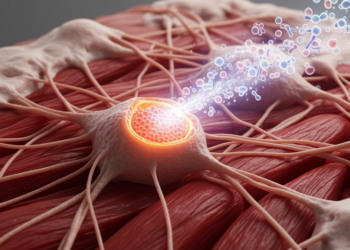
Atypical GPCR Signaling Pathway Drives Heart Scarring, Stanford Team Finds
Cardiac fibrosis has long been viewed as one of the most stubborn problems in cardiovascular medicine, largely because the cells ...
Cardiac fibrosis has long been viewed as one of the most stubborn problems in cardiovascular medicine, largely because the cells ...

Researchers at Sanford Burnham Prebys report that temporarily blocking the metabolic enzyme succinate dehydrogenase triggers an epigenetic switch in mouse ...
A single-cell atlas of nearly a quarter-million cardiac fibroblasts reveals eight distinct cell populations and identifies the metabolic enzyme PDK4 ...
New research in mice shows that the nucleolar protein GNL3, produced by cardiac fibroblasts, worsens doxorubicin-induced heart injury by driving ...
Stanford researchers have published a protocol for a high-throughput stem cell-based screening platform that identifies potential antifibrotic compounds for cardiac ...
An open-source Python package called ParTIpy scales archetypal analysis and Pareto task inference to millions of single cells, offering a ...
Deleting the RNA splicing factor PTBP1 in cardiac fibroblasts reshapes the profibrotic response by altering alternative splicing of key fibrosis-related ...
A new review proposes a staged, evidence-bound framework combining patient-specific iPSCs, atrial microphysiological systems and nanomedicine to model and potentially ...
Heart failure with preserved ejection fraction, or HFpEF, has become one of cardiology’s most difficult challenges. Patients retain a seemingly ...

Embark on a thrilling journey of discovery with Scienmag.com—your ultimate source for cutting-edge breakthroughs. Immerse yourself in a world where curiosity knows no limits and tomorrow’s possibilities become today’s reality!