

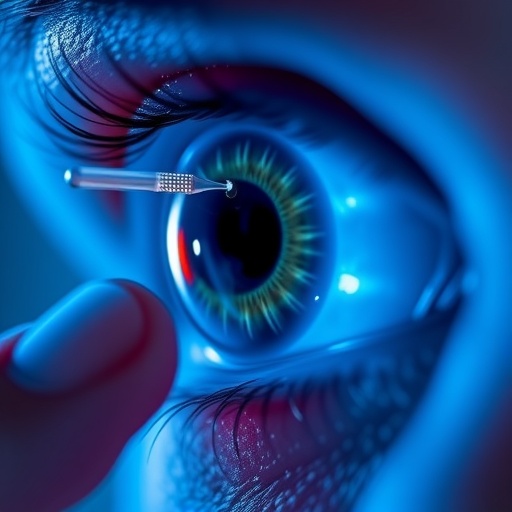
A revolutionary eye-drop platform that dramatically extends the residence time of therapeutics on the ocular surface has moved a significant step closer to human trials following a £2 million oversubscribed seed financing round. Healome Therapeutics, a spin-out from the University of Birmingham, announced the funding, which was led by Empirical Ventures with participation from DEBRA Research, Cure EB, Oshen Bio and existing backer SFC Capital. The investment will propel the company’s proprietary matrix technology through final preclinical development, manufacturing scale-up and regulatory preparations, with first-in-human studies targeted for 2027.
The core challenge in ophthalmic drug delivery is mechanical clearance. Conventional eye drops, regardless of their pharmaceutical cargo, are swept from the corneal surface by blinking and tear turnover within two to five minutes. For patients with chronic conditions such as severe dry eye disease, this vanishingly short contact time forces dosing frequencies that can reach twenty times per day, a regimen that erodes adherence and leaves the ocular surface inadequately protected for the vast majority of the day. Healome’s solution circumvents this bottleneck not through a new drug molecule but through a fundamental redesign of the delivery vehicle itself.
The technology hinges on a carefully engineered architecture of pharmaceutical- and food-grade polymers that are structured into what the team describes as a liquid-to-matrix transitioning system. In its resting state inside the bottle, the formulation behaves as a low-viscosity liquid that can be instilled as a standard drop. Upon contact with the ionic environment and temperature of the eye, however, the polymer chains undergo a conformational rearrangement, crosslinking spontaneously to form a thin, transparent, lubricious hydrogel-like layer. This structured matrix resists the shear forces of blinking and resists tear dilution, anchoring therapeutic payloads on the ocular surface for orders of magnitude longer than saline-based or simple viscous solutions.
Crucially, the approach does not rely on covalent chemical modification of the polymers, a common strategy that can introduce undefined degradation products, complicate toxicological profiling and create manufacturing hurdles that derail regulatory filings. Instead, Healome’s intellectual property, protected by five patent families, exploits supramolecular interactions and physical entanglements between well-characterised, off-the-shelf biomaterials. This design philosophy means that a broad spectrum of active molecules—from small-molecule anti-inflammatories to delicate biologic drugs—can be incorporated into the matrix without altering their molecular integrity, a feature that sets the platform apart from many sustained-release ocular systems that are limited to a narrow set of compatible chemistries.
Preclinical data underline the potential of the approach. In a standardised animal model of severely injured and infected corneas—a scenario that mimics the tissue destruction seen in battlefield trauma or advanced microbial keratitis—the matrix was loaded with an anti-scarring biologic agent. The treated eyes exhibited rapid re-epithelialisation with minimal stromal haze and negligible off-target effects, outcomes that are notoriously difficult to achieve when the same biologic is delivered in a conventional aqueous vehicle. The matrix not only prolonged drug exposure but also provided a protective mechanical cushion that reduced frictional damage from blinking, addressing the dual insult of biochemical inflammation and physical abrasion.
One of the most compelling applications, and a driver of the patient-advocacy investment, targets ocular complications of epidermolysis bullosa (EB), a devastating genetic disorder in which the skin and mucosal surfaces are so fragile that the slightest friction causes blistering and chronic wounds. An estimated 5 to 20 percent of the half-million people living with EB worldwide suffer from recurrent corneal abrasions that can result in excruciating pain, temporary blindness and sight-robbing scarring. Current management is brutal in its intensity: patients often require lubricating drops applied hourly around the clock simply to prevent the eyelids from ripping the corneal epithelium during micro-movements. A matrix that sustains lubrication and therapeutic delivery for several hours could transform quality of life, reducing the application burden and providing continuous protection through the night. This is why patient organisations such as DEBRA Research and Cure EB have placed a direct financial bet on the technology, seeing it as one of the few near-term strategies to address an agonising unmet need.
The broader market context is equally stark. Ocular surface disease, led by dry eye, affects over 350 million people globally, yet the pharmacopoeia has seen few genuine delivery innovations. Healome’s platform is being developed for a range of indications spanning dry eye disease, ocular surface inflammation, corneal injury, rare diseases and chronic drug delivery, with the versatility to load existing off-patent drugs as well as novel biologics entering the ophthalmology pipeline. The academic foundation is robust: the four co-founders, Professor Liam Grover, Professor Tony Metcalfe, Dr Richard Moakes and Dr Richard Williams, have more than eighty years of combined experience in biomaterials science, regenerative medicine and ophthalmic drug development, and the platform is underpinned by six peer-reviewed publications from Birmingham’s Healthcare Technologies Institute.
The company’s leadership acknowledges that the path to the clinic will require meticulous attention to sterilisation, preservative-free packaging and large-scale aseptic manufacturing of a formulation that transitions from liquid to structured gel, but the use of established, regulatory-friendly polymers derisks the chemistry, manufacturing and controls package considerably. If human studies confirm the preclinical promise, the technology could rewrite the rules of topical ocular therapy, converting the eye from a site of fleeting drug residence into one where a single morning dose provides day-long therapeutic cover. For millions of people whose vision depends on the constant, tedious ritual of eye drops, that would be nothing short of transformative.
Subject of Research: Development of a liquid-to-matrix transitioning eye-drop platform for extended drug residence on the ocular surface.
Article Title: Liquid-to-Matrix Eye Drops Could End the Tyranny of Hourly Dosing
News Publication Date: [Date not provided in the source material]
Web References: Healome Therapeutics; Matter of Time documentary; Healthcare Technologies Institute, University of Birmingham
References: 6 peer-reviewed publications underpinning the platform (specific citations not provided).
Image Credits: Not specified.
Keywords
Ophthalmology, Drug delivery, Eye drops, Ocular surface, Polymer matrix, Residence time, Epidermolysis bullosa, Corneal abrasion, Biologic delivery, Dry eye disease, Sustained release, Healome Therapeutics, Seed funding.


