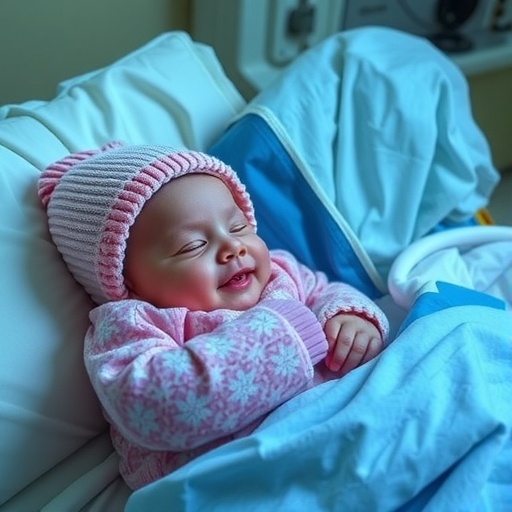
A sweeping new study suggests that infants who suffered oxygen deprivation at birth and received cooling therapy during the COVID-19 pandemic developed just as well as those born before the crisis, defying fears that disrupted healthcare and social isolation would deepen neurodevelopmental harm. The research, published in Pediatric Research, tracked babies treated for hypoxic ischemic encephalopathy across the years when lockdowns, masked faces, and strained hospital systems became the global norm. The findings offer a remarkable testament to the resilience of the newborn brain when a precisely timed neuroprotective intervention is delivered, even as the world outside the neonatal intensive care unit unraveled.
Hypoxic ischemic encephalopathy, or HIE, is a devastating birth complication in which the brain is starved of oxygen and blood flow, triggering a cascade of cellular energy failure, excitotoxicity, and inflammation that can lead to cerebral palsy, cognitive deficits, or death. For nearly two decades, the cornerstone of management has been therapeutic hypothermia: lowering an infant’s core body temperature to 33.5°C for 72 hours, a metabolic braking maneuver that slows apoptosis and suppresses secondary injury cascades. The treatment must begin within six hours of birth, and its success hinges on a tightly coordinated chain of transport, continuous electroencephalographic monitoring, and specialized follow‑up. Understandably, many clinicians worried that the pandemic would fracture this delicate chain and leave a generation of HIE survivors with worse outcomes.
The study, led by researcher S. Roychaudhuri and colleagues, compared two cohorts of infants with moderate‑to‑severe HIE who were cooled at a single tertiary center. One group was born in the years before the SARS‑CoV‑2 virus upended healthcare, while the other entered the world during the pandemic, when perinatal services were stretched, visitation was curtailed, and early intervention programs often went virtual. The investigators performed comprehensive developmental assessments at 18 to 24 months of age using the Bayley Scales of Infant and Toddler Development, a gold‑standard tool that parses cognitive, language, and motor skills into composite scores normalized to a mean of 100. Any score below 85 signals clinically meaningful delay.
Contrary to the worst predictions, the pandemic‑era toddlers showed no statistically significant decline in mean cognitive, language, or motor composite scores compared with their pre‑pandemic peers. The rates of severe disability—defined as a Bayley composite below 70 or the presence of cerebral palsy, blindness, or deafness—were virtually identical across epochs. Even analyses adjusting for maternal gestational age, birth weight, and severity of encephalopathy on admission magnetic resonance imaging failed to unmask a hidden disadvantage. If anything, a trend toward slightly lower language scores in the pandemic group halted at the threshold of significance, hinting at the profound role of social interaction in early word acquisition but not crossing into a systematic deficit.
How could this be? The authors point to the robust, protocol‑driven nature of therapeutic hypothermia. Because the therapy must be initiated within a narrow therapeutic window, neonatal teams around the world had already perfected a rapid‑response choreography—a kind of “code cool” that functions almost like a cardiac arrest protocol—more than a decade before the pandemic. That choreography turned out to be remarkably resilient to hospital strain because it relies on a small, dedicated team and a hard‑wired chain of command. While crowded emergency rooms and converted ICU spaces became emblematic of pandemic care, the hypothermia pathway remained largely intact, sheltered from the chaos by its urgency and its specialized equipment.
Moreover, the study raises a tantalizing physiological question about the role of maternal stress hormones versus postnatal environmental enrichment. The pandemic subjected pregnant individuals to unprecedented psychosocial stress, which is known to alter placental function and fetal brain development via glucocorticoid pathways. Yet the very stress that may have primed the fetal brain for vulnerability might also have triggered hormetic, protective adaptations—an epigenetic conditioning that left these infants more resilient to the deprivation of social stimuli after birth. The data are not yet fine‑grained enough to confirm this hypothesis, but the authors suggest that future work should examine epigenetic age acceleration and cortisol profiles in cooled infants, adding a new layer to our understanding of the interplay between prenatal risk and postnatal protection.
Another unexpected finding was the lack of disparity in the diagnosis of cerebral palsy, a motor disorder that often arises from injury to the basal ganglia and thalamus during the acute phase of HIE. Advanced neuroimaging from the study confirmed that the distribution and severity of brain injury on day‑of‑life‑ten MRI scans were comparable between the two time periods. This imaging‑outcome concordance strengthens the core message: when you effectively dampen the secondary energy failure in the first three days of life, you largely set the motor trajectory, and later environmental perturbations—no matter how drastic—may not easily derail it.
The study is not without caveats. It reflects the experience of a single high‑resource institution with deep expertise in neonatal neurology and might not generalize to low‑resource settings where cooling equipment, transport isolators, or staff became truly unavailable. Furthermore, follow‑up at two years captures early childhood functioning but cannot yet predict school‑age outcomes such as attention, executive function, or academic achievement, domains that may still show subtle pandemic‑era scars. The authors are planning a five‑year reassessment of the cohort.
Nonetheless, the work serves as a powerful narrative of resilience—both of infants who overcame a severe brain insult and of a healthcare team that held the line under extraordinary pressure. It suggests that the neuroprotective umbrella of timely hypothermia is sturdy enough to shield developing brains even when the sky is falling. For parents whose babies are born with HIE, the message is one of cautious optimism: a well‑executed 72‑hour cooling protocol has a durability that transcends the circumstances of its time.
Subject of Research: Developmental outcomes of infants with hypoxic ischemic encephalopathy treated with therapeutic hypothermia before and during the COVID-19 pandemic.
Article Title: Developmental outcomes in infants treated with therapeutic hypothermia before and during the COVID-19 pandemic.
Article References:
Roychaudhuri, S., Côté-Corriveau, G., Elshibiny, H. et al. Developmental outcomes in infants treated with therapeutic hypothermia before and during the COVID-19 pandemic.
Pediatr Res (2026). https://doi.org/10.1038/s41390-026-05245-4
Image Credits: AI Generated
DOI: 10.1038/s41390-026-05245-4
Keywords: hypoxic ischemic encephalopathy, therapeutic hypothermia, COVID-19 pandemic, neonatal neurodevelopment, brain injury, Bayley Scales of Infant Development