


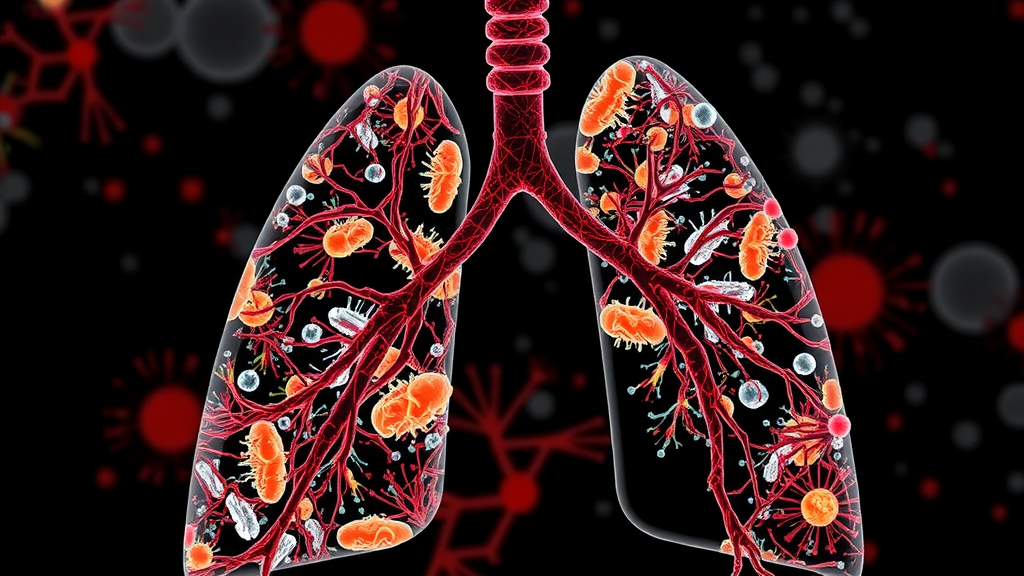
A mineral that healers in China have prescribed for centuries to calm the blood and quell vomiting may carry a hidden cost that travels from the gut to the lungs. In a new study published in the Journal of Translational Medicine, researchers at Hubei University of Chinese Medicine have assembled one of the most detailed mechanistic pictures yet of how Haematitum, a traditional medicine made from the iron-rich mineral hematite, can injure lung tissue when taken in high doses or over prolonged periods. Using single-cell RNA sequencing, gut microbiome profiling, and untargeted metabolomics, the team traced an unexpected chain of damage that begins with a collapsed intestinal barrier and ends with immune cells in the lung turning against the tissue they are meant to protect.
Haematitum occupies an unusual place in the Chinese Materia Medica. Classified as a mineral-based medicine rather than a plant or animal product, it is used clinically as a hemostatic and antiemetic, and classical texts warn that it should not be taken for long stretches. Modern toxicology has largely confirmed those warnings, documenting lung toxicity in both animal models and clinical observations, but the underlying biology has remained murky. Toxicity studies of mineral medicines often stop at the tissue level, leaving open the question of which cells fail first and which molecular signals carry the injury from one organ system to another.
To answer those questions, the researchers established a mouse model of Haematitum-induced lung injury and then interrogated it with three complementary technologies. Sixteen S ribosomal RNA sequencing mapped shifts in the gut bacterial community, untargeted metabolomics catalogued the small molecules accumulating in lung tissue, and single-cell RNA sequencing constructed a comprehensive atlas of the lung’s cellular landscape, capturing the gene-expression signatures of every major cell type simultaneously. This combined approach allowed the team to connect events at three scales at once: the microbial ecosystem of the intestine, the metabolic chemistry of the lung, and the behavior of individual immune cells within it.
The first domino to fall, according to the data, is the intestinal barrier. Mice receiving high-dose Haematitum showed clear disruption of the gut lining, the selective wall of epithelial cells that normally confines the trillions of microbes in the intestine while allowing nutrients to pass. With that wall compromised, the composition of the microbiome shifted dramatically, and the relative abundance of Klebsiella, an opportunistic bacterial genus notorious for its role in hospital-acquired infections, rose sharply. Microbial metabolites that should have remained sealed within the bowel began entering the bloodstream, hitching a ride through the circulation toward distant organs, including the lungs.
Once those metabolites reached the lung, correlation analysis revealed a striking statistical association between gut dysbiosis and disturbances in a single metabolic network: the glycerophospholipid pathway. Glycerophospholipids are the phospholipid building blocks of cellular membranes and the constituents of pulmonary surfactant, the fatty film that keeps the air sacs of the lung from collapsing. Disruption of this pathway implies that the injured lung was not merely inflamed but was also losing the lipid machinery required for structural integrity and normal immune signaling, creating a metabolically destabilized environment in which immune cells were primed to misfire.
The single-cell data then identified the two cell types at the center of the injury: macrophages and neutrophils. Macrophages, the lung’s resident sentinels, normally enforce calm by patrolling the tissue and suppressing excessive inflammation. The sequencing showed that the PPAR signaling pathway in these macrophages had been inhibited. PPAR, or peroxisome proliferator-activated receptor, is a nuclear receptor that regulates lipid metabolism and anti-inflammatory gene programs; when its activity drops, macrophages lose their anti-inflammatory identity. In the Haematitum-exposed mice, the silenced macrophages began releasing inflammatory factors, most notably tumor necrosis factor-alpha, a potent pro-inflammatory cytokine that functions as a broadcast alarm to the rest of the immune system.
TNF-alpha, in this model, acted as the messenger that recruited and reshaped the second cast member. Colocalization experiments confirmed the spatial relationship between macrophages and the cytokine, while the single-cell analysis showed that neutrophils exposed to the signal activated their own TNF signaling pathway. Neutrophils are the immune system’s shock troops, short-lived cells packed with destructive enzymes and reactive chemicals designed to annihilate pathogens. When appropriately activated, they are lifesavers; when triggered inappropriately, they shred healthy tissue. Under the influence of macrophage-derived TNF-alpha, the neutrophils in the injured lungs acquired what the authors describe as a highly destructive phenotype, and the synergy between the two cell types drove both inflammation and apoptosis, or programmed cell death, across the lung tissue.
Crucially, the team did not stop at correlation. By pharmacologically manipulating the axis they had identified, administering a PPAR-gamma agonist to restore the macrophage pathway, or a TNF-alpha inhibitor to block the cytokine signal, they showed that cellular abnormalities could be effectively reversed and lung injury significantly alleviated. That interventional rescue is the strongest evidence that the PPAR-gamma/TNF-alpha axis is not merely a bystander in the toxicity but its functional core. It also immediately suggests a therapeutic strategy: drugs that prop up anti-inflammatory macrophage programs or mop up excess TNF-alpha could, in principle, mitigate the pulmonary side effects of prolonged mineral medicine use.
The study also offered a solution rooted in the tradition itself. Haematitum is classically paired with Inula japonica Thunb., a flowering herb used in combination formulas for respiratory complaints, and the researchers evaluated this pairing in their model. The combination reduced lung toxicity, and computational prediction suggested that components within Inula japonica act as natural PPAR-gamma agonists, effectively replenishing the very pathway that Haematitum suppresses. Meanwhile, mice that received Haematitum at a common clinical dose rather than a high dose avoided the severe cascade altogether, reinforcing the traditional dosing guidance and suggesting that the toxicity is dose-dependent rather than intrinsic at all exposure levels.
Beyond its immediate implications for one traditional medicine, the work carries broader lessons for the toxicology of mineral-based drugs and for the rapidly growing field of gut-lung axis research. It demonstrates that organ toxicity can originate far from the organ that suffers it, with a disrupted intestinal barrier serving as the gateway for circulating microbial metabolites that rewire metabolism and immunity elsewhere in the body. It also provides a template for how single-cell transcriptomics, metabolomics, and microbiome sequencing can be braided together to resolve multi-organ toxicity mechanisms that no single technology could untangle alone. For clinicians and regulators weighing the safety of mineral medicines, the message is concrete: protect the gut, respect the dose, and watch the PPAR-gamma/TNF-alpha axis as a biomarker of trouble ahead. The authors note that these findings advance understanding of mineral medicine toxicology and offer a reference framework for the safe clinical application of traditional Chinese medicines whose ancient warnings, it turns out, described a molecular pathway that modern science has only now begun to read.
Subject of Research: Mechanism of Haematitum-induced lung injury mediated by gut dysbiosis and macrophage-neutrophil crosstalk along the gut-lung axis
Article Title: Single-cell transcriptomics reveals macrophage-neutrophil crosstalk in Haematitum-induced lung injury associated with gut dysbiosis
Article References: Lu, M., Zhu, H., Peng, Y., Zhu, S., Huang, B., & Cao, Y. (2026). Single-cell transcriptomics reveals macrophage-neutrophil crosstalk in Haematitum-induced lung injury associated with gut dysbiosis. Journal of Translational Medicine. https://doi.org/10.1186/s12967-026-08954-w
Image Credits: AI Generated
DOI: 10.1186/s12967-026-08954-w
Keywords: Haematitum, gut-lung axis, gut dysbiosis, Klebsiella, macrophages, neutrophils, TNF-alpha, PPAR signaling, glycerophospholipid metabolism, single-cell RNA sequencing, traditional Chinese medicine, lung injury
Cite Scienmag News
Morgan Morrow. (September 12, 2026). Gut Bacteria to Lung Damage: Single-Cell Map Reveals How a Traditional Mineral Medicine Turns Toxic. Scienmag. https://scienmag.com/gut-bacteria-to-lung-damage-single-cell-map-reveals-how-a-traditional-mineral-medicine-turns-toxic/
Morgan Morrow. "Gut Bacteria to Lung Damage: Single-Cell Map Reveals How a Traditional Mineral Medicine Turns Toxic." Scienmag, 12 September 2026, https://scienmag.com/gut-bacteria-to-lung-damage-single-cell-map-reveals-how-a-traditional-mineral-medicine-turns-toxic/. Accessed 18 October 2026.
Morgan Morrow. "Gut Bacteria to Lung Damage: Single-Cell Map Reveals How a Traditional Mineral Medicine Turns Toxic." Scienmag. September 12, 2026. https://scienmag.com/gut-bacteria-to-lung-damage-single-cell-map-reveals-how-a-traditional-mineral-medicine-turns-toxic/


