


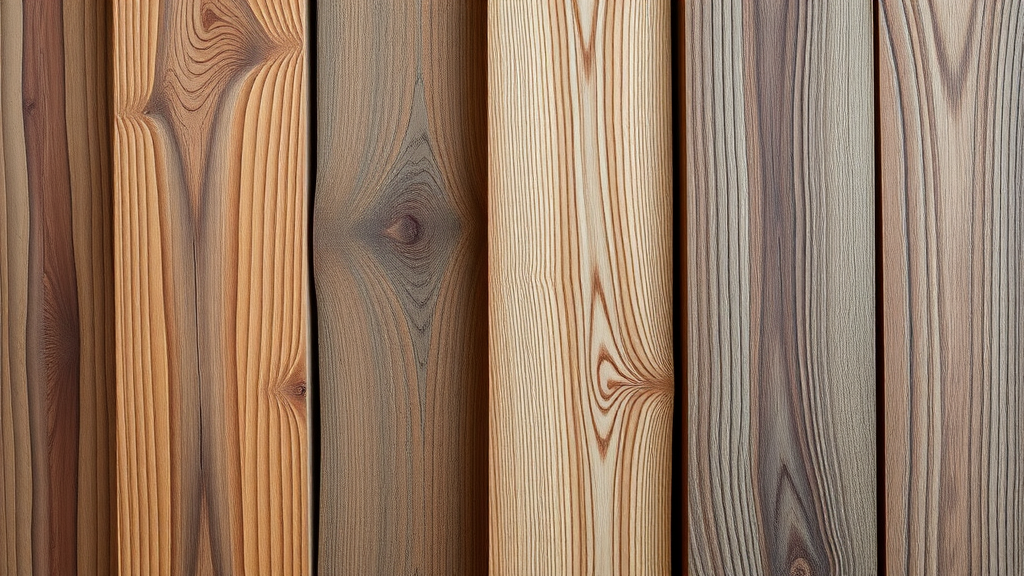
Wood has carried human culture for millennia. It forms the panels beneath Renaissance paintings, the carved figures of sacred art, the frames, furniture, musical instruments and sculptural objects that fill museums and historic houses. Yet wood is a material in perpetual, slow conversation with its environment, and few agents change that conversation as dramatically as light. Exposure to daylight and artificial illumination alters the color of wood surfaces, sometimes subtly and sometimes so visibly that the aesthetic and documentary integrity of an artistic object is compromised. A study published in the journal Heritage addresses this problem with unusual breadth: rather than examining a single familiar timber, it models light-induced discoloration across forty wood species that are actually used in artistic objects, combining colorimetric measurement with chemometric analysis to build a predictive framework for conservators and curators.
The scale of the undertaking is what sets the work apart. Most research on wood photostability has concentrated on a handful of commercially dominant species—oak, pine, walnut, cherry, beech—which are well represented in European furniture and panel painting. But artistic traditions worldwide drew on a far wider palette of timbers, chosen for grain, density, workability, symbolism or simple local availability. Forty species spanning that diversity were subjected to controlled light exposure, and their color response was tracked systematically. The result is a comparative dataset that reveals just how unevenly different woods surrender their original hues, and how risky it is to generalize from one species to another when planning display conditions.
Colorimetry sits at the heart of the methodology. Rather than relying on visual impression, which varies between observers and shifts with lighting conditions, the researchers quantified color using standardized parameters, most notably the CIELAB system in which color is expressed as coordinates on three axes: lightness, the green-red dimension and the blue-yellow dimension. By measuring these coordinates before, during and after exposure to a defined light source, the team could compute color differences with numerical precision, capturing changes far too small or too gradual for the human eye to register reliably in real time. Small shifts, accumulated over years of gallery illumination, are precisely what conservation science needs to detect and anticipate.
Colorimetric data alone, however, describes what happened; it does not explain why, and it does not by itself predict what will happen to an untested species or under different exposure regimes. This is where chemometrics enters. Chemometrics applies statistical and mathematical tools—principal component analysis, cluster analysis, regression modeling and related multivariate techniques—to complex chemical and physical datasets. In this study, chemometric methods were used to find structure in the discoloration behavior of the forty species, grouping woods with similar photic responses, identifying which measured variables best predict the direction and magnitude of color change, and constructing models that link a wood’s intrinsic properties to its expected fading or darkening trajectory.
The physical chemistry underlying the phenomenon is well established in broad outline, even if species-specific behavior has remained poorly mapped. Wood is a composite of cellulose, hemicelluloses, lignin and extractive compounds. Lignin, the aromatic polymer that stiffens plant cell walls, absorbs ultraviolet and visible light readily and undergoes photochemical reactions that generate chromophores—chemical structures capable of absorbing visible light and therefore altering perceived color. Extractives such as tannins, resins, flavonoids and quinones, which give many timbers their characteristic hues, are also photochemically labile. Depending on which pathways dominate, a wood may yellow and darken as lignin degradation products accumulate, or bleach and fade as colored extractives are destroyed. Two boards of different species exposed on the same gallery wall can therefore move in opposite chromatic directions under identical light doses.
This divergence has real consequences for collections management. Museums typically set illumination limits—expressed as lux levels and cumulative exposure budgets—for light-sensitive materials, and textiles, works on paper and photographs have long been treated with corresponding caution. Wood, however, has often been regarded as comparatively robust, an assumption that this kind of broad comparative study complicates. A polychrome sculpture whose bare wood support darkens beneath fragile pigments, a marquetry panel composed of contrasting timbers that drift out of visual harmony, or a musical instrument whose varnished surface sits over a photosensitive ground: each case demands knowledge of how the specific wood, not wood in general, responds to light. Aggregate exposure guidelines cannot capture that specificity without data of the kind assembled here.
The chemometric models offer a route from data to decision. By relating discoloration patterns to measurable material characteristics, the approach suggests that a conservator confronted with an undocumented timber could, in principle, predict its light sensitivity from a small set of measurements, rather than waiting for accelerated aging tests to run their course or, worse, for irreversible change to occur on the object itself. Predictive modeling of this sort also supports prioritization: when resources for monitoring and light control are finite, knowing which species in a collection are most vulnerable allows preventive conservation to be targeted where the risk is greatest. The study’s comparative framework thus functions as both a scientific contribution and a practical instrument for collection care.
The research also carries implications for attribution, dating and authenticity. Wood color changes over time not only through light exposure but through combined photochemical, oxidative and environmental processes, and understanding the kinetics of light-induced change contributes to distinguishing genuine age-related patina from later alteration, and to evaluating whether surface treatments or restorations have modified a wood’s appearance. In forensic and art-historical applications, documented species-specific discoloration behavior provides a reference against which the condition of a suspect object can be assessed. A data-rich atlas of how forty artistic timbers respond to light is, in that sense, a resource that extends beyond preventive conservation into scholarly interpretation.
Methodologically, the study exemplifies a broader trend in heritage science: the pairing of high-throughput instrumental measurement with multivariate statistics to extract decision-relevant patterns from complex datasets. Where earlier generations of conservation research might have reported fading in qualitative terms—slight yellowing, marked darkening—modern colorimetry plus chemometrics converts those impressions into quantitative, comparable, modelable phenomena. The approach is transferable to other photosensitive heritage materials, including dyed textiles, leathers, papers and natural resins, and it aligns with the field’s movement toward preventive conservation grounded in risk assessment rather than reactive repair. Because the research was published open access in Heritage, the underlying comparative framework is available to conservators, scientists and curators internationally.
The enduring value of the work lies in its refusal to treat wood as a monolith. Forty species, each with its own lignin content, extractive chemistry, density and figure, respond to light as forty distinct materials, and the colorimetric and chemometric tools applied here render those differences visible, measurable and predictable. For the museums and historic collections that safeguard wooden artistic objects, the study offers a foundation for smarter display decisions, earlier intervention and a more precise understanding of how the quiet chemistry of light rewrites the appearance of cultural heritage, one photon at a time.
Subject of Research: Colorimetric and chemometric modelling of light-induced discoloration in forty wood species used in artistic objects
Article Title: Modelling light-induced discoloration of 40 wood species used in artistic objects: a colorimetric and chemometric approach
Article References: Koochakzaei, A., & Askari-Hasanluie, S. (2026). Modelling light-induced discoloration of 40 wood species used in artistic objects: a colorimetric and chemometric approach. npj Heritage Science. https://doi.org/10.1038/s40494-026-02979-6
Image Credits: AI Generated
DOI: 10.1038/s40494-026-02979-6
Keywords: wood conservation, light-induced discoloration, colorimetry, chemometrics, heritage science, preventive conservation, wood species, CIELAB, photodegradation, lignin, museum collections, artistic objects
Cite Scienmag News
Margaret Porter. (September 12, 2026). Predicting How Light Fades Forty Wood Species: A Colorimetric and Chemometric Study for Art Conservation. Scienmag. https://scienmag.com/predicting-how-light-fades-forty-wood-species-a-colorimetric-and-chemometric-study-for-art-conservation/
Margaret Porter. "Predicting How Light Fades Forty Wood Species: A Colorimetric and Chemometric Study for Art Conservation." Scienmag, 12 September 2026, https://scienmag.com/predicting-how-light-fades-forty-wood-species-a-colorimetric-and-chemometric-study-for-art-conservation/. Accessed 4 October 2026.
Margaret Porter. "Predicting How Light Fades Forty Wood Species: A Colorimetric and Chemometric Study for Art Conservation." Scienmag. September 12, 2026. https://scienmag.com/predicting-how-light-fades-forty-wood-species-a-colorimetric-and-chemometric-study-for-art-conservation/


