


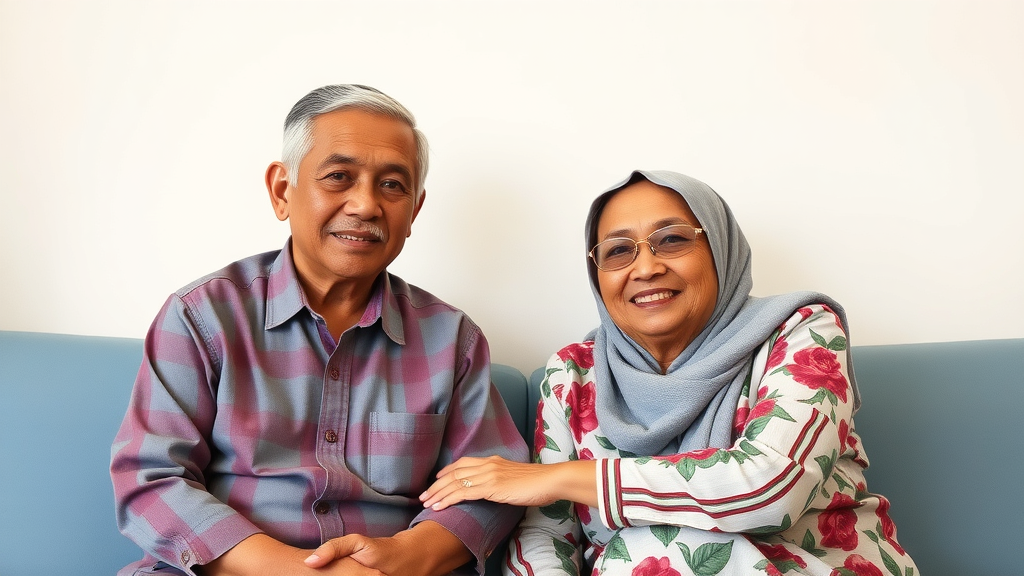
A new cross-sectional study from Indonesia suggests that when it comes to helping older adults manage chronic diseases, the encouragement of family and community may matter even more than how patients personally understand their illness. Researchers surveyed 115 older adults receiving care at six primary health centers in Surabaya and found that both illness perception and social support were significantly linked to self-management behaviors, but social support emerged as the stronger predictor. The findings, published in Ageing International, arrive at a moment when Indonesia’s population is aging rapidly and the burden of non-communicable diseases such as hypertension and diabetes is climbing in parallel, placing new pressure on a health system that has traditionally focused on acute and infectious conditions.
The research team, led by Ira Suarilah of Universitas Airlangga in collaboration with colleagues at Universitas Islam Sultan Agung, set out to examine two distinct classes of factors that shape how elderly patients care for themselves. The first is internal: illness perception, the cognitive and emotional framework through which a patient interprets symptoms, causes, consequences, and controllability of their condition. The second is external: social support, the perceived availability of help from family, friends, and significant others. Both constructs have well-established theoretical pedigrees. Illness perception is grounded in Leventhal’s common-sense model of self-regulation, which holds that patients act on their own lay representations of disease rather than on clinical descriptions alone. Social support, meanwhile, has been measured for decades using instruments such as the Multidimensional Scale of Perceived Social Support, which the researchers employed in an Indonesian-language version.
Methodologically, the study used a quantitative cross-sectional design with purposive sampling, recruiting participants aged 60 and older from six primary health care facilities in Surabaya, Indonesia’s second-largest city. Data were collected using validated Indonesian versions of standardized questionnaires, and the researchers applied stepwise multiple linear regression to determine which factors best predicted self-management behavior. The demographic profile of the sample is itself instructive: participants were dominated by those aged 60 to 65 years, most had completed only six years of formal education, and the majority reported no fixed income. These are precisely the socioeconomic characteristics associated with vulnerability in chronic disease management, since limited health literacy and financial insecurity can undermine medication adherence, dietary regulation, and consistent follow-up care.
The clinical picture of the cohort reflected the epidemiology of aging in Indonesia. More than half of the participants suffered from hypertension, the single most common chronic condition among older Indonesians and a leading driver of stroke and heart failure across Asia. When the researchers assessed how these patients perceived their illnesses, they found that more than half held negative perceptions of their conditions. Yet despite this pessimistic cognitive framing, the majority reported strong social support networks and demonstrated good self-management behaviors, a combination that hints at the compensatory power of social relationships when internal motivation or understanding may be lacking.
The statistical analysis sharpened this picture considerably. Illness perception and social support both showed significant correlations with self-management behaviors, confirming that these two constructs are meaningfully tied to how older patients eat, exercise, take medications, and monitor their conditions. But the regression coefficients revealed an asymmetry with important practical implications: social support carried a standardized beta of 0.811, while illness perception registered 0.553. In plain terms, the perceived availability of help from others exerted a substantially greater predictive influence on self-management than the patients’ own beliefs about their disease. For a study conducted in a collectivist society where family obligations and community ties remain central to daily life, the result is perhaps unsurprising, but quantifying that hierarchy provides an evidence base for intervention design.
Delving deeper into the illness perception data, the researchers identified five domains that participants perceived negatively: personal control, treatment control, concern, comprehensibility, and emotion. Among these, comprehensibility proved the most challenging, meaning that many older adults simply did not feel they understood their condition well enough to make sense of what was happening in their bodies. This finding is particularly consequential because comprehensibility is often treated as a prerequisite for effective self-regulation. A patient who cannot construct a coherent mental model of hypertension, its causes, and its trajectory is less equipped to recognize warning signs, adhere to complex medication schedules, or adjust behavior in response to symptoms. In a sample where the median education level was six years, low comprehensibility likely reflects both limited health literacy and insufficient patient education at the point of care.
The negative perceptions of personal control and treatment control are equally troubling from a clinical standpoint. When older adults believe they have little power over their illness or doubt the effectiveness of treatment, motivation for sustained self-care tends to erode. The emotional domain, encompassing worry and distress about the condition, adds another layer, since chronic anxiety can itself interfere with healthy behaviors and cardiovascular outcomes. Taken together, these five negatively perceived domains sketch a population that is cognitively and emotionally burdened by its illnesses, yet still managing to maintain good self-care, largely, the data suggest, because people around them are helping.
The authors argue that these findings point toward a clear policy direction: healthcare systems should prioritize community-based interventions that empower families to support their elderly members. In the Indonesian context, where multigenerational households remain common and community health posts known as posyandu for the elderly operate at the village level, there is existing infrastructure that could be leveraged. Programs that train family members in basic disease knowledge, medication reminders, dietary support, and blood pressure monitoring could convert the strong social support already present into a more structured and effective asset. The researchers also emphasize the need for culturally sensitive approaches within self-management programs, recognizing that health beliefs in Indonesia are shaped by a blend of biomedical information, traditional practices, and religious frameworks that generic education materials often fail to address.
The study’s implications extend beyond Indonesia. Aging populations across Asia and the developing world face similar convergences of rising non-communicable disease prevalence, limited formal care capacity, and heavy reliance on informal family caregiving. Evidence that social support outperforms illness perception as a predictor of self-management suggests that interventions targeting the social environment, rather than focusing exclusively on individual patient education, may yield disproportionate benefits in such settings. Previous research has shown that family involvement in chronic disease care improves adherence and outcomes, and community-based group interventions have demonstrated effectiveness for vulnerable populations elsewhere. The Surabaya findings add cross-cultural weight to this literature while highlighting a specific gap: the need to improve patients’ comprehension of their conditions even as their social networks are mobilized.
The researchers acknowledge the inherent limits of the cross-sectional design, which captures associations at a single point in time and cannot establish causal direction. It remains possible, for instance, that patients who self-manage well elicit more support from those around them, rather than the reverse, and longitudinal studies would be needed to disentangle these dynamics. The purposive sampling strategy and the modest sample of 115 participants also constrain generalizability beyond Surabaya’s primary care population. Nevertheless, the study offers a concrete, actionable hierarchy for intervention: strengthen the family and community systems that already surround older adults, while simultaneously investing in clearer, culturally attuned education that helps elderly patients truly understand their illnesses. As Indonesia formally enters its aging population era, the difference between a burdensome chronic disease epidemic and a manageable one may rest less on what seniors believe about their conditions than on who stands beside them.
Subject of Research: Illness perception and social support as predictors of self-management behavior in older Indonesian adults with chronic diseases
Article Title: Illness Perception and Social Support in Self-management Behavior of Older Adults with Chronic Diseases in Indonesia: A Cross-sectional Study
Article References: Suarilah, I., Haryanto, J., Zain, F. F. W. S., Azizah, I. R., Indarwati, R., & Sari, D. W. (2026). Illness Perception and Social Support in Self-management Behavior of Older Adults with Chronic Diseases in Indonesia: A Cross-sectional Study. Ageing International, 51(3), Article 31. https://doi.org/10.1007/s12126-026-09672-w
Image Credits: AI Generated
DOI: 10.1007/s12126-026-09672-w
Keywords: older adults, chronic disease, illness perception, social support, self-management, hypertension, Indonesia, aging population, primary health care, cross-sectional study, health literacy, family caregiving
Cite Scienmag News
Ophelia Keating. (September 12, 2026). Family Support Outweighs Personal Beliefs in Helping Indonesian Seniors Manage Chronic Disease. Scienmag. https://scienmag.com/family-support-outweighs-personal-beliefs-in-helping-indonesian-seniors-manage-chronic-disease/
Ophelia Keating. "Family Support Outweighs Personal Beliefs in Helping Indonesian Seniors Manage Chronic Disease." Scienmag, 12 September 2026, https://scienmag.com/family-support-outweighs-personal-beliefs-in-helping-indonesian-seniors-manage-chronic-disease/. Accessed 5 October 2026.
Ophelia Keating. "Family Support Outweighs Personal Beliefs in Helping Indonesian Seniors Manage Chronic Disease." Scienmag. September 12, 2026. https://scienmag.com/family-support-outweighs-personal-beliefs-in-helping-indonesian-seniors-manage-chronic-disease/


