

Thursday, July 9, 2026
Science
No Result
View All Result
  • Login
  • HOME
  • SCIENCE NEWS
  • CONTACT US
  • HOME
  • SCIENCE NEWS
  • CONTACT US
No Result
View All Result
Scienmag
No Result
View All Result
Home Science News Earth Science

Green Manure and Biochar Reduce Nitrogen Use, Enhance Soil Health

July 9, 2026
in Earth Science
Reading Time: 3 mins read
0
Green Manure and Biochar Reduce Nitrogen Use, Enhance Soil Health

Green Manure and Biochar Reduce Nitrogen Use, Enhance Soil Health

65
SHARES
587
VIEWS
Share on FacebookShare on Twitter
ADVERTISEMENT

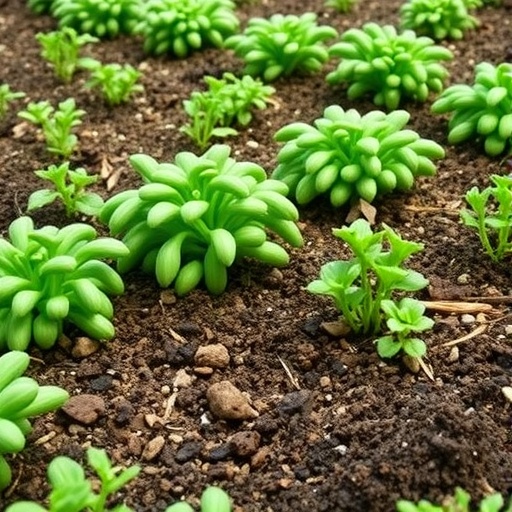
A groundbreaking study published in the journal Biochar reveals a promising agricultural practice that could revolutionize nitrogen management and soil health. By combining green manure with biochar, researchers demonstrated a synergistic effect that allows for reduced nitrogen fertilizer use without sacrificing crop yield or soil vitality. This innovative approach, tested over a three-year field experiment on the North China Plain, highlights a pathway toward sustainable intensification in maize production.

Nitrogen fertilizers are crucial for sustaining modern crop yields, yet their excessive application has long been implicated in soil degradation and environmental harm. Overuse leads to soil acidification, disrupted nutrient cycles, diminished microbial activity, and increased nitrogen losses to ecosystems. The study conducted by Lianhao Zhao and colleagues systematically evaluated how integrating organic amendments like green manure with biochar influences soil functions under different nitrogen management regimes.

The researchers investigated treatments including conventional fertilization, green manure alone, and a combination of green manure plus biochar, each subjected to controlled-release fertilizer reductions of varying intensities. Remarkably, the coupling of green manure and biochar under a 30% controlled-release fertilizer cut resulted in enhanced soil water retention, elevated carbon storage, improved nitrogen fixation, and increased microbial diversity. These improvements collectively bolstered soil quality and sustained maize yields.

Conversely, a more drastic 45% fertilizer reduction negatively impacted nutrient availability and crop production, emphasizing the need for calibrated nitrogen management strategies. The study underscores that moderate fertilizer reductions, supported by organic inputs, offer a balanced avenue to optimize productivity while mitigating environmental risks.

A notable methodological innovation was the application of multiple comprehensive soil quality assessment frameworks. By measuring 22 distinct soil indicators encompassing physical, chemical, and biological properties, the team developed an integrative evaluation system focused on five essential soil functions: water retention, carbon sequestration, nitrogen fixation, nutrient supply, and microbial diversity provision. Among tested frameworks, the function-based method achieved the highest accuracy, while principal component and network analyses offered efficient alternatives for soil quality monitoring.

Central to the observed benefits was the role of soil microbial diversity. The synergistic use of green manure and biochar appeared to primarily enhance microbial community complexity, which in turn facilitated key soil processes such as nutrient cycling and carbon storage. This biological revitalization is posited as a critical mechanism driving the improved soil resilience and productivity.

Corresponding authors Wen Yin and Qiu Zhao emphasize that healthy soil management transcends mere nutrient addition; it involves restoring intrinsic biological and physical processes that underpin ecosystem functions. Their findings pave the way for practical adaptations in maize cropping systems across the North China Plain and similar agroecosystems worldwide.

This study delivers a compelling case for integrating organic amendments with optimized fertilizer regimes to address the dual challenges of agricultural productivity and environmental sustainability. By fostering robust microbial communities and safeguarding essential soil functions, farmers can achieve a “win-win” scenario of reduced nitrogen inputs and enhanced soil health.

Subject of Research: Nitrogen management and soil health in maize production
Article Title: Synergistic effects of green manure and biochar for a win-win in nitrogen reduction and soil health: insights from multiple assessment frameworks
News Publication Date: July 2, 2026
Web References: DOI 10.1007/s42773-026-00638-4 (https://doi.org/10.1007/s42773-026-00638-4)
References: Zhao, L., Zhang, X., Ning, X. et al. Biochar 8, 123 (2026)
Image Credits: Lianhao Zhao, Xinjian Zhang, Xiaoguang Ning, Wen Yin, Qiu Zhao, Pan Li, Feier Wang, Hailong Qiu, Zhilong Fan, Falong Hu, Qiang Chai, Heyu Chen, Mohamed Abdalla, Saeed Karbin & Pete Smith
Keywords: nitrogen reduction, green manure, biochar, soil health, microbial diversity, sustainable agriculture, maize, soil functions

Tags: biochar soil amendmentcrop yield optimizationenvironmental impact reductiongreen manure benefitsnitrogen fertilizer reductionnitrogen managementnutrient cyclingorganic farming practicessoil carbon sequestrationsoil health improvementsoil microbial diversitysustainable agriculture
Share26Tweet16
Previous Post

BU Medical Student Awarded Prestigious Radiation Oncology Fellowship

Next Post

Wearable Devices Developed to Monitor Plant Health in Real Time

Related Posts

AI uncovers concealed movements along the San Andreas Fault
Earth Science

AI uncovers concealed movements along the San Andreas Fault

July 9, 2026
Wood-Based Device Generates Continuous Electricity from Wastewater Salts
Earth Science

Wood-Based Device Generates Continuous Electricity from Wastewater Salts

July 9, 2026
Nitrogen Retention Drives Eutrophication in US Lakes Today
Earth Science

Nitrogen Retention Drives Eutrophication in US Lakes Today

July 9, 2026
Early VOC Control Key to Aligning China’s Climate and Air Quality Goals
Earth Science

Early VOC Control Key to Aligning China’s Climate and Air Quality Goals

July 9, 2026
Dynamic Mixture-of-Experts Enhances and Explains Daily Streamflow Simulation
Earth Science

Dynamic Mixture-of-Experts Enhances and Explains Daily Streamflow Simulation

July 9, 2026
Small-Scale Ocean Turbulence Impacts Climate Beyond Surface Waters
Earth Science

Small-Scale Ocean Turbulence Impacts Climate Beyond Surface Waters

July 9, 2026
Next Post
Wearable Devices Developed to Monitor Plant Health in Real Time

Wearable Devices Developed to Monitor Plant Health in Real Time

  • Mothers who receive childcare support from maternal grandparents show more

    Mothers who receive childcare support from maternal grandparents show more parental warmth, finds NTU Singapore study

    27656 shares
    Share 11059 Tweet 6912
  • University of Seville Breaks 120-Year-Old Mystery, Revises a Key Einstein Concept

    1061 shares
    Share 424 Tweet 265
  • Bee body mass, pathogens and local climate influence heat tolerance

    682 shares
    Share 273 Tweet 171
  • Researchers record first-ever images and data of a shark experiencing a boat strike

    546 shares
    Share 218 Tweet 137
  • Groundbreaking Clinical Trial Reveals Lubiprostone Enhances Kidney Function

    531 shares
    Share 212 Tweet 133
Science

Embark on a thrilling journey of discovery with Scienmag.com—your ultimate source for cutting-edge breakthroughs. Immerse yourself in a world where curiosity knows no limits and tomorrow’s possibilities become today’s reality!

RECENT NEWS

  • Hidden Truths Social Media Creators Can’t Share About Their Jobs
  • Unmedicated Depressed Women Show Reduced Heat Tolerance Compared to SSRI Users
  • Scientists Identify Cause of Earth’s Largest Mass Extinction
  • Spontaneous Thought Patterns Reveal Positive and Negative Emotional States

Categories

  • Agriculture
  • Anthropology
  • Archaeology
  • Athmospheric
  • Biology
  • Biotechnology
  • Blog
  • Bussines
  • Cancer
  • Chemistry
  • Climate
  • Earth Science
  • Editorial Policy
  • Marine
  • Mathematics
  • Medicine
  • Pediatry
  • Policy
  • Psychology & Psychiatry
  • Science Education
  • Social Science
  • Space
  • Technology and Engineering

Subscribe to Blog via Email

Enter your email address to subscribe to this blog and receive notifications of new posts by email.

Join 5,146 other subscribers

© 2025 Scienmag - Science Magazine

Welcome Back!

Login to your account below

Forgotten Password?

Retrieve your password

Please enter your username or email address to reset your password.

Log In
No Result
View All Result
  • HOME
  • SCIENCE NEWS
  • CONTACT US

© 2025 Scienmag - Science Magazine

Discover more from Science

Subscribe now to keep reading and get access to the full archive.

Continue reading
