


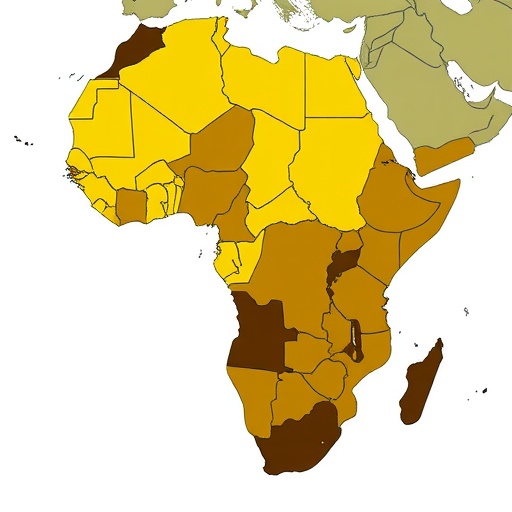
Soil may look like an inert layer beneath our feet, but it is one of Earth’s most complex living systems—and in Sub-Saharan Africa, scientists say its health can no longer be judged using a single global checklist. A new study introduces a region-specific soil health assessment protocol designed to reveal how African soils function, where they are under stress, and which management practices could help restore their productivity. Published in Communications Earth & Environment, the research addresses a problem that has quietly undermined agricultural planning for decades: soil assessment methods developed in one part of the world do not always translate accurately to another.
The study, led by M.K. Biru, M.R. Nunes, Mohkam-Singh and colleagues, focuses on the need for tools that reflect the extraordinary environmental diversity of Sub-Saharan Africa. The region contains humid tropical zones, drylands, savannas, highland systems and heavily cultivated landscapes, each with distinct combinations of climate, geology, vegetation and land-use history. A soil that is considered healthy in one environment may have very different chemical, physical and biological characteristics from a healthy soil elsewhere. Applying identical thresholds across these landscapes can therefore generate misleading diagnoses, making degraded soils appear productive or naturally resilient soils appear deficient.
Rather than treating soil health as a single measurement, the protocol approaches it as a multidimensional property. Soil health describes the capacity of soil to sustain plant growth, regulate water, cycle nutrients, support biodiversity and resist degradation while continuing to perform these functions over time. These processes depend on an interacting network of properties. Chemical indicators can reveal acidity, nutrient availability, organic carbon and salinity. Physical indicators can show whether soil is compacted, prone to erosion or capable of storing and transmitting water. Biological indicators offer insight into microbial activity, decomposition and the living organisms responsible for many essential soil processes. The strength of the new framework lies in combining these dimensions rather than allowing one measurement to dominate the assessment.
This distinction is crucial in Sub-Saharan Africa, where agricultural soils often face several pressures simultaneously. Repeated cultivation can reduce organic matter, while erosion removes the most fertile topsoil. Nutrient depletion may occur when harvests remove nitrogen, phosphorus and other elements without adequate replenishment. In some areas, intense rainfall rapidly carries sediments and dissolved nutrients away; in others, prolonged drought and high temperatures restrict biological activity and reduce the formation of soil organic matter. Compaction, poorly timed tillage and limited vegetation cover can further reduce infiltration, leaving fields vulnerable to runoff and water loss. Because these pressures vary from region to region, a useful assessment system must distinguish local limitations from universal signs of degradation.
The researchers’ protocol is intended to create that distinction by linking soil indicators to regional reference conditions and to the functions that matter most for local farming systems. In practical terms, this means that soil samples are not interpreted in isolation. Measurements can be compared with appropriate benchmarks, assessed alongside environmental context and combined into a structured soil health score or profile. Such a profile is more informative than a simple label because it can show why a soil is performing poorly. Two fields might receive similar overall evaluations, for example, while one is limited primarily by low organic carbon and another by acidity, compaction or inadequate nutrient availability. Their solutions would not be identical, and a regionally adapted protocol can help separate them.
The evaluation described in the study also highlights a central challenge in soil science: indicators must be scientifically meaningful without becoming too expensive or technically demanding for routine use. Highly sophisticated analyses can provide detailed information, but they may be difficult to deploy across millions of smallholder farms, where laboratory access, transport and funding are limited. A workable protocol therefore needs a balance between precision and practicality. Measurements should be sensitive enough to detect meaningful changes, consistent enough to compare sites and affordable enough to support repeated monitoring. Regular assessment is particularly important because soil health is not a permanent condition; it changes with cropping patterns, rainfall, residue management, grazing pressure, fertilizer use and conservation practices.
The researchers’ approach has implications beyond diagnosis. A reliable regional assessment system could help governments and development agencies target soil restoration investments, guide agricultural extension services and evaluate whether conservation programs are working. It could also strengthen the evidence base for practices such as adding organic amendments, retaining crop residues, planting cover crops, integrating trees, reducing unnecessary tillage and improving nutrient management. None of these interventions is universally effective under every condition, and some may create trade-offs if applied without local knowledge. By identifying the specific functions that are failing, soil health data can support more precise recommendations instead of promoting a single “best practice” across an entire continent.
The work is also relevant to climate adaptation and food security. Healthy soils generally store more organic carbon, absorb water more effectively and provide a more stable environment for roots and soil organisms. These properties can help crops withstand irregular rainfall and short periods of drought, although soil improvement alone cannot eliminate climate risk. At the same time, soil organic matter is part of the global carbon cycle, meaning that changes in land management can influence both agricultural productivity and greenhouse-gas dynamics. A regionally appropriate protocol could allow researchers to track whether climate-smart farming practices produce measurable improvements, while also revealing where local conditions limit their success.
Perhaps the most important message from the study is that soil health cannot be reduced to a universal score detached from place. The same indicators may be valuable across continents, but their interpretation depends on climate, parent material, land use and ecological history. By developing and evaluating a protocol specifically for Sub-Saharan Africa, Biru and colleagues offer a framework for turning soil science into a more locally relevant decision tool. The result is not a final answer for every landscape, but a foundation for better measurement, better policy and more targeted restoration. In a region where millions of livelihoods depend directly on the land, understanding what makes soil healthy may prove as important as understanding how to grow the crops planted in it.
Cite Scienmag News
Alan Morgan. (August 19, 2026). New Protocol Assesses Soil Health Across Sub-Saharan Africa’s Diverse Regions. Scienmag. https://scienmag.com/new-protocol-assesses-soil-health-across-sub-saharan-africas-diverse-regions/
Alan Morgan. "New Protocol Assesses Soil Health Across Sub-Saharan Africa’s Diverse Regions." Scienmag, 19 August 2026, https://scienmag.com/new-protocol-assesses-soil-health-across-sub-saharan-africas-diverse-regions/. Accessed 4 September 2026.
Alan Morgan. "New Protocol Assesses Soil Health Across Sub-Saharan Africa’s Diverse Regions." Scienmag. August 19, 2026. https://scienmag.com/new-protocol-assesses-soil-health-across-sub-saharan-africas-diverse-regions/


