


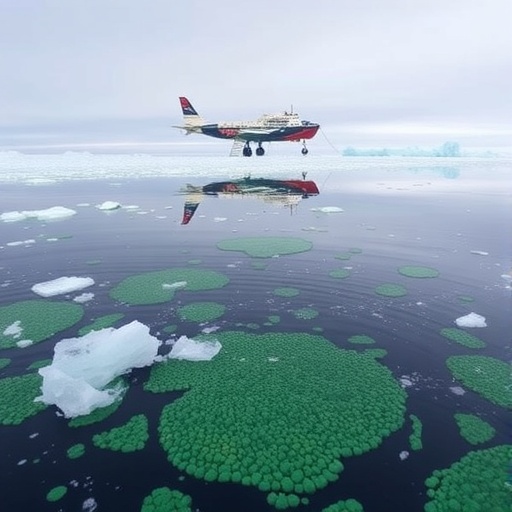
In a groundbreaking study led by Stimpfle, Koch, and Ebner, published in Commun Earth Environ, the scientists reveal that glacially derived iron presents a notably enhanced bioavailability to Antarctic phytoplankton when juxtaposed with other sources of iron. This revelation carries meaningful implications for understanding the complex interplay between iron bioavailability and ecosystem dynamics in polar oceans.
Iron, a crucial micronutrient, is integral to various biological processes including photosynthesis and nitrogen fixation. The challenge lies in its limited solubility in oceanic waters, particularly those of the Southern Ocean, which leads to iron deficiency in phytoplankton populations. This deficiency significantly influences primary productivity and, by extension, the entire marine food web, underpinning global biogeochemical cycles. By exploring the origins of bioavailable iron, the research findings could potentially alter how scientists perceive nutrient input in these ecologically sensitive regions.
The research team meticulously compared the bioavailability of iron from various sources, including lithogenic (rock-derived), aeolian (wind-blown), and glacial origins. Through controlled experiments, they measured how efficiently these different forms of iron could be utilized by Antarctic phytoplankton species—key players in carbon cycling. The experiments employed advanced analytical techniques to track the uptake of iron by phytoplankton, providing a clear illustration of how glacially sourced iron stands out in terms of bioavailability.
Results indicated that iron derived from glacial melt is preferentially taken up by phytoplankton, leading to faster growth rates compared to other sources of iron. This echoes the hypothesis that the physical and chemical forms of iron in the oceans significantly determine its accessibility to marine life. Such findings could redefine strategies aimed at enhancing marine productivity, especially in regions where glacial melting is anticipated to increase due to climate change.
Furthermore, the significance of these findings extends beyond mere nutrient dynamics. Understanding the sources of bioavailable iron will aid in predicting how climate-driven shifts in glacial melting could impact the Southern Ocean’s ecosystems. The research suggests that as glaciers continue to retreat, the influx of bioavailable iron could potentially stimulate phytoplankton blooms, which in turn may alter local and global carbon dioxide absorption rates.
The phenomenon of iron-induced phytoplankton blooms is not unprecedented. Historical data suggests that changes in iron supply, particularly from glacial meltwater, have played a pivotal role in shaping past oceanic productivity. The implications of these modern findings caution that future climate scenarios may facilitate the conditions for blooms—raising concerns about the ecological consequences of potentially unchecked primary production.
In conclusion, the research conducted by Stimpfle and collaborators not only provides vital insights into the dynamics of micronutrient availability but also emphasizes the interconnectedness of climate systems and marine ecosystems. The implications of their findings echo far beyond the icy waters of the Antarctic, suggesting that enhanced understanding of iron sources could aid in predicting and managing climate change impacts on a global scale.
As climate models predict rising temperatures, leading to accelerated glacial melting, the scoping of glacially sourced iron’s bioavailability will become increasingly crucial. The outcomes of this research will be instrumental in informing future studies focused on marine ecology, biogeochemistry, and climate science. The increasing influx of glacially derived nutrients may shift the paradigms of ecological balance in these sensitive environments, potentially enabling us to foresee the cascading effects on the marine food web.
The study emphasizes the necessity for continued research into biogeochemical cycles, particularly in polar regions where the impacts of climate change are most pronounced. With a growing need for sustainable management practices in marine ecosystems, understanding the nuances of nutrient availability will be paramount in devising strategies for conservation and ecosystem restoration.
This research underscores the urgency of global collaborations to monitor iron flux in polar oceans. As scientists work to understand the broader implications of nutrient dynamics on marine ecosystems, the study stands as a pivotal contribution to our understanding of the foundational elements that sustain life in our oceans. Addressing these complex interactions will require an interdisciplinary approach, encompassing climatology, marine biology, and biogeochemistry.
With the world on the brink of unprecedented changes, the insights gleaned from this research suggest a hopeful avenue towards understanding resilience in the face of climate change. By prioritizing the interconnectedness of iron availability and ecosystem health, we can better prepare for the future of our oceans.
Ultimately, this research provides not just answers, but raises further questions about the impacts of glacial melt and changing nutrient dynamics on the health of our planet’s oceans, ushering in a new era of research focused on the life-sustaining interactions between climate and the marine environment.
In sum, the findings of this study enlighten the scientific community about the significant role that glacially derived iron could play in Antarctic ecosystems, with far-reaching implications that could help formulate environmental policy and management strategies in an era of climate uncertainty.
Cite Scienmag News
Violet Maxwell. (January 28, 2026). Glacial Iron Boosts Antarctic Phytoplankton Bioavailability. Scienmag. https://scienmag.com/glacial-iron-boosts-antarctic-phytoplankton-bioavailability/
Violet Maxwell. "Glacial Iron Boosts Antarctic Phytoplankton Bioavailability." Scienmag, 28 January 2026, https://scienmag.com/glacial-iron-boosts-antarctic-phytoplankton-bioavailability/. Accessed 3 September 2026.
Violet Maxwell. "Glacial Iron Boosts Antarctic Phytoplankton Bioavailability." Scienmag. January 28, 2026. https://scienmag.com/glacial-iron-boosts-antarctic-phytoplankton-bioavailability/


