


Deep within the human genome lies a battlefield that has been raging for millions of years. Retrotransposons, the mobile genetic elements that make up roughly 42 percent of our DNA, are constantly poised to copy and paste themselves into new genomic locations, threatening the integrity of the very genetic blueprint that encodes life. A systematic review published in Medical Oncology has now brought renewed attention to the Human Silencing Hub, or HUSH complex, a molecular machine that stands guard over these restless elements. The review, led by Hawaida Ahmad and Khadija Tariq of the National University of Medical Sciences in Rawalpindi, Pakistan, synthesizes genome-wide transcriptional and epigenetic studies to clarify how this complex silences retrotransposons and how its failure may contribute to the development of cancer.
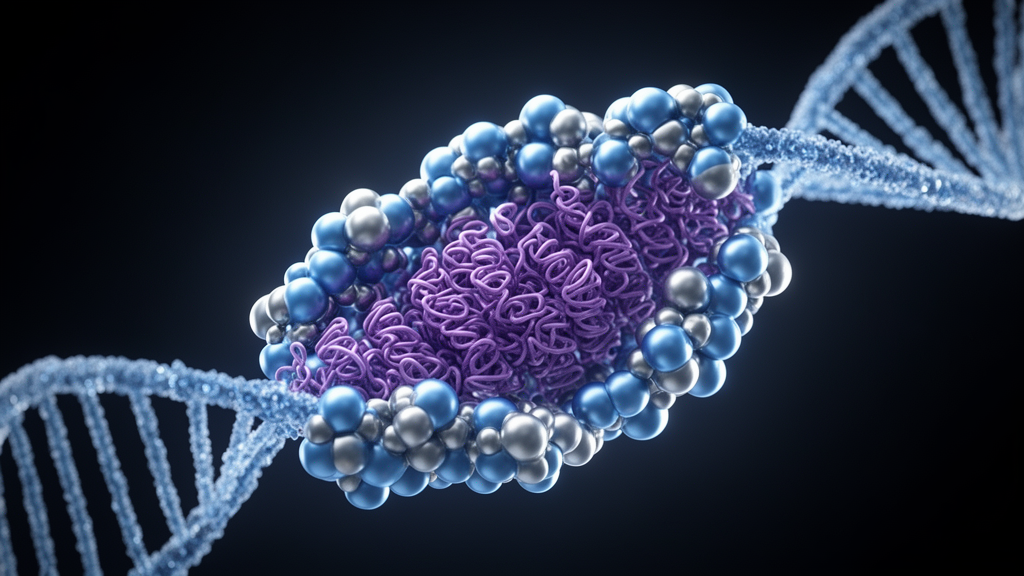
The HUSH complex is a multi-protein assembly whose core components include TASOR, MPP8, and Periphilin, working in concert with the histone methyltransferase SETDB1 and its partner ATF7IP. Its principal weapon is the deposition of trimethylated histone H3 at lysine 9, a chromatin mark known as H3K9me3, which compacts DNA into a transcriptionally inert state. When H3K9me3 is laid down across retrotransposon loci, the mobile elements are effectively locked away, unable to be transcribed into RNA and reverse-transcribed back into the genome. This epigenetic silencing is not a one-time event but a continuously maintained state, and the review emphasizes that the complex must be understood as a dynamic surveillance system rather than a static lock.
To reach their conclusions, the researchers conducted a comprehensive literature search across PubMed, ScienceDirect, ProQuest, and Lilac databases, initially retrieving 693 articles. After applying predefined inclusion and exclusion criteria, only six studies were selected for detailed analysis, a testament to the stringency of the review protocol and the relative youth of this research field. Data extraction focused on the relationship between the HUSH complex and retrotransposons, as well as the complex’s effects on cancer-related genes. The narrow yield of eligible studies underscores a central message of the review: while the evidence for HUSH-mediated silencing is compelling, the precise mechanisms by which the complex controls retrotransposon activity remain incompletely understood, and the authors explicitly call for further investigation.
The targets of this silencing machinery are among the most consequential elements in the genome. Long interspersed nuclear elements, particularly LINE-1, are the most active autonomous retrotransposons in humans and retain the capacity to mobilize through a copy-and-paste mechanism involving an RNA intermediate. Endogenous retroviruses, or ERVs, are the remnants of ancient viral infections and carry their own transcriptional control elements that can influence neighboring genes. When these elements escape repression, the consequences can be severe: new insertions can disrupt coding sequences, aberrant transcription can produce chimeric transcripts, and the accumulation of retrotransposon-derived nucleic acids can trigger innate immune signaling pathways. The review highlights that the HUSH complex efficiently silences both LINE-1 elements and ERVs, primarily through its H3K9me3 deposition activity.
One of the most striking findings assembled in the review concerns the immune dimension of retrotransposon regulation. Work cited in the article shows that the HUSH complex acts as a gatekeeper of type I interferon signaling through its epigenetic control of LINE-1 elements, meaning that when the complex is functioning properly, it prevents the spurious activation of antiviral responses by endogenous mobile elements. Conversely, in the context of cancer, this same relationship takes on a different character. Research on melanoma demonstrates that deletion of SETDB1 increases tumor immunogenicity, effectively making cancer cells more visible to the immune system. A related study found that loss of SETDB1 induces type I interferons and promotes immune clearance of melanoma, suggesting that pharmacological inhibition of this silencing pathway could render otherwise cold tumors susceptible to immunotherapy.
The hematological malignancies tell an equally intriguing story. In acute myeloid leukemia, knockdown of MPP8, the chromodomain protein that recognizes methylated marks and helps recruit the silencing machinery, caused differentiation of the leukemic cells. Independent work has established that silencing of LINE-1 retrotransposons is a selective dependency of myeloid leukemia, meaning that leukemic cells become reliant on the repression of these elements for their survival and proliferation. This creates a therapeutic paradox: in some cancers, dismantling the HUSH machinery may be beneficial by unmasking tumors to the immune system, while in others, the same dismantling could unleash genomic chaos. The review presents these findings side by side, illustrating that the clinical implications of HUSH dysregulation are likely to be context-dependent and tumor-type-specific.
The mechanistic details of how the complex assembles and finds its targets are also coming into focus. TASOR has been characterized as a pseudo-PARP protein that directs HUSH complex assembly and epigenetic transposon control, serving as a structural scaffold for the assembly. Periphilin’s RNA-binding activity has been shown to play an essential role in initiating silencing, hinting that the complex may identify its targets through nascent RNA transcripts rather than through DNA sequence recognition alone. The complex does not work in isolation: it cooperates with TRIM28 to repress young retrotransposons and newly integrated genes, partners with the RNA decay factor NEXT to restrict transposable element expression at the post-transcriptional level, and interacts with the MORC2 corepressor in a manner governed by DNA methylation status. DNA methylation, in particular, appears to determine which repeats are sensitive to restriction by the HUSH-MORC2 axis, adding another layer of epigenetic crosstalk to the regulatory network.
Beyond its role as a genomic guardian, the HUSH complex has attracted attention for its connection to viral infection. The complex has been implicated in the maintenance of HIV latency, linking intrinsic immunity to the silencing of an exogenous retrovirus. This dual role, suppressing both endogenous mobile elements and invading retroviruses, positions the HUSH complex at the intersection of genome defense and antiviral immunity. The review notes that this connection deepens the biological significance of the complex, since the same epigenetic logic that keeps ancient viral relics quiet also keeps active pathogens in a dormant state within infected cells.
The translational implications of this body of work are considerable. The review concludes that HUSH components, particularly SETDB1 and MPP8, present potential therapeutic and diagnostic biomarkers for different cancers. Supporting this diagnostic angle, recent research has demonstrated that DNA hypomethylation of LINE-1 retrotransposons can be used for noninvasive multicancer detection, and studies in colorectal and gastric cancer have linked lower LINE-1 methylation levels to distinct molecular features and patient survival outcomes. If the activity state of the HUSH complex can be read out through retrotransposon methylation patterns in circulating tumor DNA, it may become possible to monitor epigenetic dysregulation in cancer patients through simple blood tests. On the therapeutic side, a peptidomimetic ligand targeting the chromodomain of MPP8 has already been developed, demonstrating that chemical modulation of HUSH components is technically feasible.
What emerges from this systematic review is a picture of the genome as a landscape under constant epigenetic patrol. The HUSH complex, through SETDB1-mediated H3K9me3 deposition and the coordinating actions of TASOR, MPP8, and Periphilin, maintains the genomic stability that multicellular life depends upon. Yet the same machinery, when co-opted by tumor cells, can suppress the immunogenic signals that would otherwise alert the immune system to malignancy, and when disrupted in blood cancers, its loss can paradoxically drive leukemic cells toward differentiation. The authors acknowledge that ambiguity remains about the exact mechanisms by which the complex controls retrotransposon activity and how its dysfunction contributes to tumorigenesis. As the field matures beyond the handful of studies eligible for this analysis, the HUSH complex seems poised to move from a niche subject of chromatin biology to a central node in our understanding of cancer epigenetics, offering both new biomarkers and, potentially, new drug targets for a disease that continues to exploit every weakness in the genome’s defenses.
Subject of Research: Role of the HUSH complex in epigenetic silencing of retrotransposons and its implications for cancer development
Article Title: Silencing the genome: role of HUSH complex in retrotransposon regulation and cancer development
Article References: Ahmad, H., Tariq, K., Mehreen, A., Yousafzai, I. K., Mahmood, A., Aslam, S., Qazi, A. S., Akram, Z., & Saeed, R. F. (2026). Silencing the genome: role of HUSH complex in retrotransposon regulation and cancer development. Medical Oncology, 43(11), Article 323. https://doi.org/10.1007/s12032-026-03380-w
Image Credits: AI Generated
DOI: 10.1007/s12032-026-03380-w
Keywords: HUSH complex, retrotransposons, LINE-1, SETDB1, MPP8, H3K9me3, epigenetic silencing, genomic instability, acute myeloid leukemia, melanoma, tumor immunogenicity, cancer biomarkers
Cite Scienmag News
Nathaniel Bowman. (October 9, 2026). Genome’s Silent Guardian: HUSH Complex Emerges as Key Player in Cancer. Scienmag. https://scienmag.com/genomes-silent-guardian-hush-complex-emerges-as-key-player-in-cancer/
Nathaniel Bowman. "Genome’s Silent Guardian: HUSH Complex Emerges as Key Player in Cancer." Scienmag, 9 October 2026, https://scienmag.com/genomes-silent-guardian-hush-complex-emerges-as-key-player-in-cancer/. Accessed 9 October 2026.
Nathaniel Bowman. "Genome’s Silent Guardian: HUSH Complex Emerges as Key Player in Cancer." Scienmag. October 9, 2026. https://scienmag.com/genomes-silent-guardian-hush-complex-emerges-as-key-player-in-cancer/


