

Wednesday, October 21, 2026
Science
No Result
View All Result
  • Login
  • HOME
  • SCIENCE NEWS
  • CONTACT US
  • HOME
  • SCIENCE NEWS
  • CONTACT US
No Result
View All Result
Scienmag
No Result
View All Result
Home Science News Biology

Gene architecture predicts isoform diversity across four genomes

October 21, 2026
in Biology
Juliet Wilcox
By Juliet Wilcox Scienmag Editorial Profile - Human Genetics
Reading Time: 2 mins read
0
Gene architecture predicts isoform diversity across four genomes

Gene architecture predicts isoform diversity across four genomes

65
SHARES
587
VIEWS
Share on FacebookShare on Twitter
ADVERTISEMENT

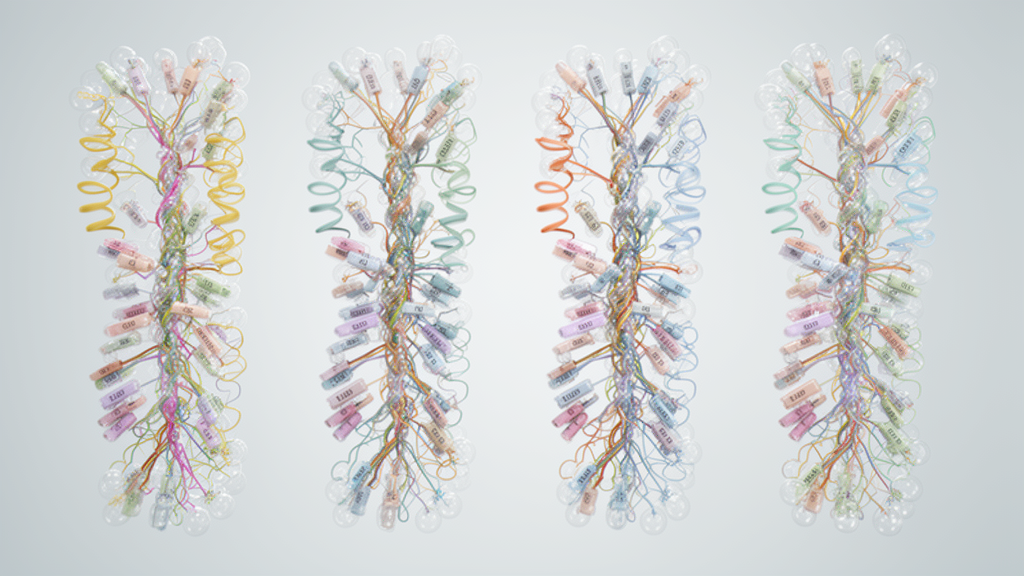
A comparative analysis of human, mouse, fly and zebrafish genomes found that genes producing more transcript isoforms consistently tend to have longer introns, shorter exons and more complex exon–intron organization. The study also identified differences among species and gene biotypes, indicating that conserved structural features shape transcript diversity while regulatory architecture can modify the pattern in particular evolutionary lineages.

Alternative splicing allows a single gene to generate multiple transcript isoforms, but the genomic features associated with isoform-rich genes have remained incompletely defined. Researchers examined curated transcript annotations alongside structural, regulatory, sequence-derived and functional gene-level features. The analysis covered four eukaryotic genomes, providing a cross-species test of whether relationships observed in humans are conserved elsewhere.

The results showed that isoform diversity was widespread in all four species, although its extent varied by genome and biotype. Longer introns, shorter exons and increased exon–intron organization were the clearest recurring associations with higher isoform counts. Relationships involving untranslated regions were less consistent, although 3′ UTR length had stronger positive associations in humans and Drosophila. In human genes, isoform count was negatively associated with GC content and CpG-island density but positively associated with the size of the gene’s protein–protein interaction network.

Machine-learning models predicted human isoform counts with strong performance, and the predictive signal was retained in mouse data, suggesting that some relationships may transfer between mammalian genomes. Principal component analysis and uniform manifold approximation and projection placed the isoform-associated features on a continuous, structured manifold rather than in clearly separated gene classes. Taken together, the findings support a model in which conserved gene structure provides a broad basis for transcript complexity, while lineage- and biotype-specific regulatory features help account for variation in how extensively that complexity is expressed.

The study is observational at the genome level, so its associations do not establish that particular structural features cause a gene to produce more isoforms. Its cross-species design nevertheless demonstrates that the central relationship is not confined to one genome. By combining predictive modeling, feature attribution and dimensionality reduction, the researchers offer a framework for understanding how the organization of eukaryotic genes is connected to the diversity of their transcript products.

Subject of Research: Comparative genomic analysis of the gene-structure features associated with transcript isoform diversity in four eukaryotic species.

Article Title: Gene body architecture predicts isoform diversity across eukaryotic genomes

Article References: Brohart, Q., & Mer, A. (2026). Gene body architecture predicts isoform diversity across eukaryotic genomes. BMC Genomics. https://doi.org/10.1186/s12864-026-13421-3

Image Credits: AI Generated

DOI: 10.1186/s12864-026-13421-3

Keywords: alternative splicing, isoform diversity, gene architecture, eukaryotic genomes, human genomics, comparative genomics, machine learning, exon–intron structure, transcriptomics, regulatory architecture, Gene, body

Cite Scienmag News

Juliet Wilcox. (October 21, 2026). Gene architecture predicts isoform diversity across four genomes. Scienmag. https://scienmag.com/gene-architecture-predicts-isoform-diversity-across-four-genomes/

Juliet Wilcox. "Gene architecture predicts isoform diversity across four genomes." Scienmag, 21 October 2026, https://scienmag.com/gene-architecture-predicts-isoform-diversity-across-four-genomes/. Accessed 21 October 2026.

Juliet Wilcox. "Gene architecture predicts isoform diversity across four genomes." Scienmag. October 21, 2026. https://scienmag.com/gene-architecture-predicts-isoform-diversity-across-four-genomes/


Tags: alternative splicingbodycomparative genomicscross-species genome comparisoneukaryotic genome analysiseukaryotic genomesevolutionary conservation of gene structureexon lengthexon-intron organizationexon–intron structuregenegene architecturehuman genomicsintron lengthisoform diversityMachine learningregulatory architectureregulatory featuresstructural gene featurestranscript isoform variationTranscriptomics
Share26Tweet16
Previous Post

Immature brain support cells linked to poorer reasoning in older adults

Next Post

Research report: Protein acylation in cancer: from regulatory networks to precision therapeutics

Related Posts

Efficacy of statistical and design interventions for improving reproducibility in biomedical research
Biology

Efficacy of statistical and design interventions for improving reproducibility in biomedical research

October 21, 2026
Alpine moth study separates two species using anatomy and DNA barcodes
Biology

Alpine moth study separates two species using anatomy and DNA barcodes

October 21, 2026
Radiation suppresses PiC, triggering mitochondrial dysfunction and glioma cell death
Biology

Radiation suppresses PiC, triggering mitochondrial dysfunction and glioma cell death

October 21, 2026
Uncultured Gut Microbes Offer Obesity Leads, Not Yet Causal Answers
Biology

Uncultured Gut Microbes Offer Obesity Leads, Not Yet Causal Answers

October 21, 2026
Routine monitoring rediscovers Switzerland’s tiny Stactobia caddisfly
Biology

Routine monitoring rediscovers Switzerland’s tiny Stactobia caddisfly

October 21, 2026
Targeting pyroptosis in intestinal and systemic inflammatory diseases: mechanisms and therapeutic opportunities
Biology

Targeting pyroptosis in intestinal and systemic inflammatory diseases: mechanisms and therapeutic opportunities

October 21, 2026
Next Post
Research report: Protein acylation in cancer: from regulatory networks to precision therapeutics

Research report: Protein acylation in cancer: from regulatory networks to precision therapeutics

  • Mothers who receive childcare support from maternal grandparents show more optimized

    Mothers who receive childcare support from maternal grandparents show more parental warmth, finds NTU Singapore study

    27656 shares
    Share 11059 Tweet 6912
  • University of Seville Breaks 120-Year-Old Mystery, Revises a Key Einstein Concept

    1061 shares
    Share 424 Tweet 265
  • Bee body mass, pathogens and local climate influence heat tolerance

    682 shares
    Share 273 Tweet 171
  • Researchers record first-ever images and data of a shark experiencing a boat strike

    546 shares
    Share 218 Tweet 137
  • Groundbreaking Clinical Trial Reveals Lubiprostone Enhances Kidney Function

    531 shares
    Share 212 Tweet 133
Science

Embark on a thrilling journey of discovery with Scienmag.com—your ultimate source for cutting-edge breakthroughs. Immerse yourself in a world where curiosity knows no limits and tomorrow’s possibilities become today’s reality!

RECENT NEWS

  • GES4SEAS turns cumulative ocean pressures into operational management tools
  • Research report: Protein acylation in cancer: from regulatory networks to precision therapeutics
  • Gene architecture predicts isoform diversity across four genomes
  • Immature brain support cells linked to poorer reasoning in older adults

Categories

  • Agriculture
  • Anthropology
  • Archaeology
  • Athmospheric
  • Biology
  • Biotechnology
  • Blog
  • Bussines
  • Cancer
  • Chemistry
  • Climate
  • Earth Science
  • Editorial Policy
  • Marine
  • Mathematics
  • Medicine
  • Pediatry
  • Policy
  • Psychology & Psychiatry
  • Science Education
  • Science News
  • Social Science
  • Space
  • Technology and Engineering

Subscribe to Blog via Email

Enter your email address to subscribe to this blog and receive notifications of new posts by email.

Join 5,150 other subscribers

© 2025 Scienmag - Science Magazine

Welcome Back!

Login to your account below

Forgotten Password?

Retrieve your password

Please enter your username or email address to reset your password.

Log In
No Result
View All Result
  • HOME
  • SCIENCE NEWS
  • CONTACT US

© 2025 Scienmag - Science Magazine

Discover more from Science

Subscribe now to keep reading and get access to the full archive.

Continue reading