Wednesday, October 21, 2026
Science
No Result
View All Result
  • Login
  • HOME
  • SCIENCE NEWS
  • CONTACT US
  • HOME
  • SCIENCE NEWS
  • CONTACT US
No Result
View All Result
Scienmag
No Result
View All Result
Home Science News Biology

Radiation suppresses PiC, triggering mitochondrial dysfunction and glioma cell death

October 21, 2026
in Biology
Nathaniel Bowman
By Nathaniel Bowman Scienmag Editorial Profile - Precision Oncology
Reading Time: 2 mins read
0
Radiation suppresses PiC, triggering mitochondrial dysfunction and glioma cell death

Radiation suppresses PiC, triggering mitochondrial dysfunction and glioma cell death

65
SHARES
587
VIEWS
Share on FacebookShare on Twitter
ADVERTISEMENT

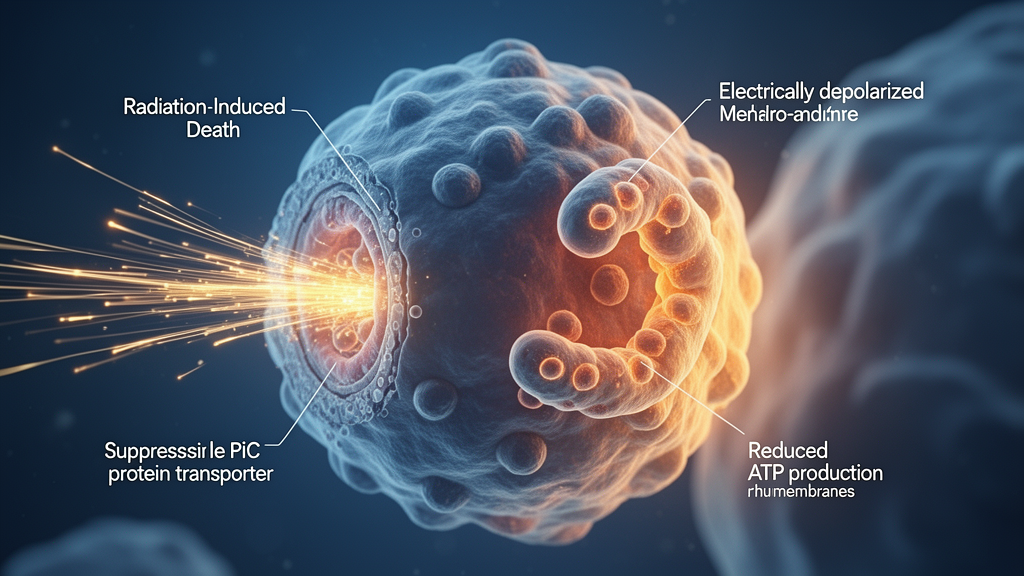
Radiation suppressed the expression of the mitochondrial phosphate carrier, known as PiC, in glioma cells, triggering mitochondrial energy-metabolism failure, collapse of membrane potential, dysregulation of mitochondrial DNA replication, and sustained opening of the mitochondrial permeability transition pore (MPTP), according to a mechanistic study in cells and mouse tumor models. The findings link the radiation-induced loss of PiC to a mitochondrial apoptotic pathway involving Bax/Bcl-2, cytochrome c, and caspase-3, and identify a possible molecular axis for improving glioma radiosensitivity. The study focused on the clinical challenge of radioresistance in glioma, for which the role of PiC during radiotherapy and the mechanisms connecting it to cell death were unclear.

PiC was described as a key protein in maintaining mitochondrial homeostasis, and earlier work had suggested that it may help regulate MPTP opening. The researchers reported that irradiation specifically reduced PiC expression in glioma cells. This suppression was followed by failure of mitochondrial energy metabolism and loss of mitochondrial membrane potential, providing evidence that radiation disrupts several linked features of mitochondrial function.

Experiments examining the underlying sequence placed mitochondrial DNA replication and MPTP activity at the center of the response. Radiation-induced PiC suppression was associated with dysregulation of mtDNA replication and significantly increased, sustained MPTP opening. Taken together, the reported results support a cascade in which radiation suppresses PiC, promotes persistent pore opening and mitochondrial dysfunction, and engages the mitochondrial apoptotic pathway that drives glioma cells toward programmed death.

Concordant changes in apoptotic markers were observed in murine tumor models, extending the cell-based findings to an intact biological setting. The in vivo results were consistent with the mechanistic observations made in glioma cells, although the supplied study summary does not provide numerical effect sizes, radiation doses, model details, or statistical estimates. The work therefore supports the relevance of the PiC–MPTP pathway in experimental glioma systems, but it does not by itself establish how much the pathway accounts for treatment response in people.

Beyond the reported findings, the authors proposed that targeting the PiC–MPTP axis could represent a potential strategy for overcoming radioresistance and enhancing radiosensitivity in glioma. That proposal remains a therapeutic hypothesis rather than a demonstrated clinical intervention. The evidence presented comes from glioma cells and murine tumor models, not a human trial, and does not show that manipulating PiC or MPTP would be safe or effective in patients.

Subject of Research: Radiation-induced PiC suppression, mitochondrial permeability transition, and apoptosis in glioma models

Article Title: The role of the mitochondrial phosphate carrier in modulating mitochondrial homeostasis and enhancing radiosensitivity in tumor cells

Article References: Shen, L., Liu, X., Lu, Y., Wang, K., Gu, H., Yuan, S., & Qian, J. (2026). The role of the mitochondrial phosphate carrier in modulating mitochondrial homeostasis and enhancing radiosensitivity in tumor cells. Molecular Biology Reports, 53(1), Article 1767. https://doi.org/10.1007/s11033-026-12779-7

Image Credits: AI Generated

DOI: 10.1007/s11033-026-12779-7

Keywords: glioma, radiotherapy, mitochondrial phosphate carrier, PiC, mitochondrial homeostasis, permeability transition pore, apoptosis, radiosensitivity, mitochondrial DNA, tumor models, role, mitochondrial

Cite Scienmag News

Nathaniel Bowman. (October 21, 2026). Radiation suppresses PiC, triggering mitochondrial dysfunction and glioma cell death. Scienmag. https://scienmag.com/radiation-suppresses-pic-triggering-mitochondrial-dysfunction-and-glioma-cell-death/

Nathaniel Bowman. "Radiation suppresses PiC, triggering mitochondrial dysfunction and glioma cell death." Scienmag, 21 October 2026, https://scienmag.com/radiation-suppresses-pic-triggering-mitochondrial-dysfunction-and-glioma-cell-death/. Accessed 21 October 2026.

Nathaniel Bowman. "Radiation suppresses PiC, triggering mitochondrial dysfunction and glioma cell death." Scienmag. October 21, 2026. https://scienmag.com/radiation-suppresses-pic-triggering-mitochondrial-dysfunction-and-glioma-cell-death/
Tags: apoptosiscaspase-3 activation in glioma apoptosiscytochrome c release in radiotherapygliomaglioma cell apoptosis mechanismsglioma radiosensitivitymechanisms of radioresistance in gliomaMitochondrialmitochondrial DNAmitochondrial DNA replication disruption in cancer therapymitochondrial energy metabolism failure in cancermitochondrial homeostasismitochondrial permeability transition pore in gliomamitochondrial phosphate carriermitochondrial phosphate carrier PiCpermeability transition porePICradiation-induced mitochondrial dysfunctionradiosensitivityradiotherapyrolerole of Bax/Bcl-2 in glioma cell deathtargeting mitochondrial pathways for glioma treatmenttumor models
Share26Tweet16
Previous Post

Shared Boundaries Reduce Escalation in Territorial Conflict Game

Next Post

Cross-sectional study maps AI literacy among first-year nursing students

Related Posts

Efficacy of statistical and design interventions for improving reproducibility in biomedical research
Biology

Efficacy of statistical and design interventions for improving reproducibility in biomedical research

October 21, 2026
Alpine moth study separates two species using anatomy and DNA barcodes
Biology

Alpine moth study separates two species using anatomy and DNA barcodes

October 21, 2026
Uncultured Gut Microbes Offer Obesity Leads, Not Yet Causal Answers
Biology

Uncultured Gut Microbes Offer Obesity Leads, Not Yet Causal Answers

October 21, 2026
Routine monitoring rediscovers Switzerland’s tiny Stactobia caddisfly
Biology

Routine monitoring rediscovers Switzerland’s tiny Stactobia caddisfly

October 21, 2026
Targeting pyroptosis in intestinal and systemic inflammatory diseases: mechanisms and therapeutic opportunities
Biology

Targeting pyroptosis in intestinal and systemic inflammatory diseases: mechanisms and therapeutic opportunities

October 21, 2026
Review maps hepatitis E receptor networks and immune evasion
Biology

Review maps hepatitis E receptor networks and immune evasion

October 21, 2026
Next Post
Cross-sectional study maps AI literacy among first-year nursing students

Cross-sectional study maps AI literacy among first-year nursing students

  • Mothers who receive childcare support from maternal grandparents show more optimized

    Mothers who receive childcare support from maternal grandparents show more parental warmth, finds NTU Singapore study

    27656 shares
    Share 11059 Tweet 6912
  • University of Seville Breaks 120-Year-Old Mystery, Revises a Key Einstein Concept

    1061 shares
    Share 424 Tweet 265
  • Bee body mass, pathogens and local climate influence heat tolerance

    682 shares
    Share 273 Tweet 171
  • Researchers record first-ever images and data of a shark experiencing a boat strike

    546 shares
    Share 218 Tweet 137
  • Groundbreaking Clinical Trial Reveals Lubiprostone Enhances Kidney Function

    531 shares
    Share 212 Tweet 133
Science

Embark on a thrilling journey of discovery with Scienmag.com—your ultimate source for cutting-edge breakthroughs. Immerse yourself in a world where curiosity knows no limits and tomorrow’s possibilities become today’s reality!

RECENT NEWS

  • Efficacy of statistical and design interventions for improving reproducibility in biomedical research
  • Alpine moth study separates two species using anatomy and DNA barcodes
  • Historical Portuguese bee collection adds 14 national records
  • Research report: Patient characteristics and the safety of stent placement for malignant vena cava syndrome in Japan: a nationwide analysis

Categories

  • Agriculture
  • Anthropology
  • Archaeology
  • Athmospheric
  • Biology
  • Biotechnology
  • Blog
  • Bussines
  • Cancer
  • Chemistry
  • Climate
  • Earth Science
  • Editorial Policy
  • Marine
  • Mathematics
  • Medicine
  • Pediatry
  • Policy
  • Psychology & Psychiatry
  • Science Education
  • Science News
  • Social Science
  • Space
  • Technology and Engineering

Subscribe to Blog via Email

Enter your email address to subscribe to this blog and receive notifications of new posts by email.

Join 5,150 other subscribers

© 2025 Scienmag - Science Magazine

Welcome Back!

Login to your account below

Forgotten Password?

Retrieve your password

Please enter your username or email address to reset your password.

Log In
No Result
View All Result
  • HOME
  • SCIENCE NEWS
  • CONTACT US

© 2025 Scienmag - Science Magazine

Discover more from Science

Subscribe now to keep reading and get access to the full archive.

Continue reading