


Atopic dermatitis, the most common form of eczema, affects hundreds of millions of people worldwide and is defined by two intertwined problems: chronic inflammation and a failing skin barrier. For years, research into the barrier defect has focused on genes that shape the outermost layers of the epidermis. Now a study published in the Journal of Translational Medicine has traced a surprising slice of that failure to an unexpected location — the microscopic contact points where the endoplasmic reticulum, the cell’s calcium warehouse, presses against mitochondria, its energy factories. The work, led by Lele Chen, Yu Wang, Ziying He and colleagues under corresponding author Fengli Xiao at Anhui Medical University, identifies the little-studied protein TMEM232 as a molecular saboteur that wrecks the tight junctions holding the skin’s cells together.
TMEM232 is not an arbitrary suspect. It is a known susceptibility gene for atopic dermatitis, meaning genetic variants in or near the gene are statistically linked to the disease in human populations. What has remained murky until now is what the protein actually does inside skin cells and how that activity could translate into the leaky, irritated skin that defines the condition. The research team set out to close that gap by combining patient tissue samples, primary human keratinocytes, laboratory-grown human adult low-calcium cutaneous keratinocytes, and mouse models of the disease.
The first clue came from expression analysis. TMEM232 levels were significantly elevated in lesional skin from atopic dermatitis patients, and the degree of upregulation tracked with the severity of tight junction dysfunction. Tight junctions are protein assemblies — including the claudins, occludin and zonula occludens proteins — that zip adjacent keratinocytes together and seal the paracellular route through which water, allergens and microbes would otherwise pass. When the researchers measured transepithelial electrical resistance, a standard readout of barrier tightness, and ran permeability assays using fluorescent tracers, keratinocytes with excess TMEM232 showed weakened resistance and increased leakage, while reducing the protein restored junctional integrity.
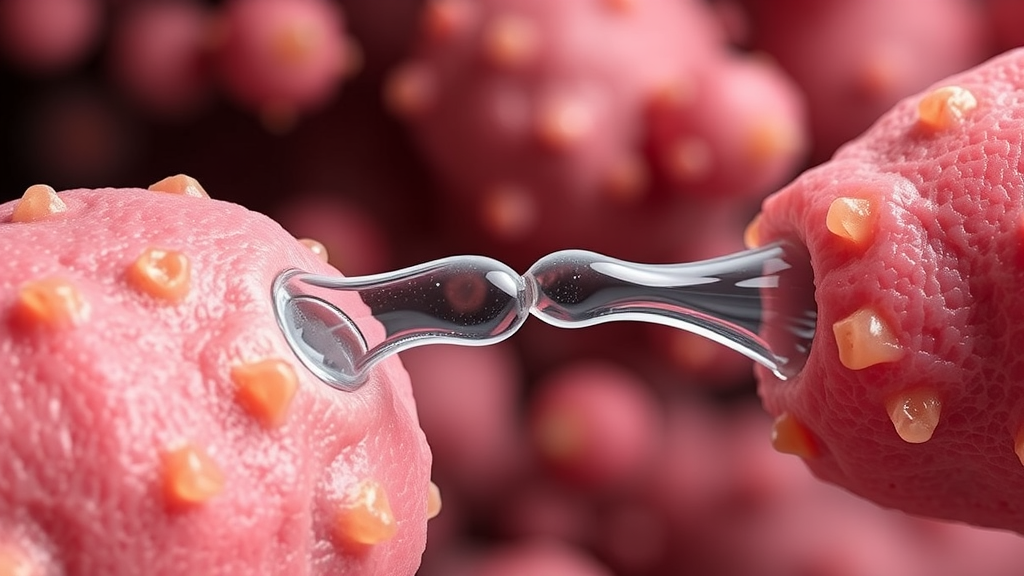
To find the mechanism, the team mapped where TMEM232 resides inside the cell. Immunofluorescence revealed that the protein accumulates in the perinuclear region and is selectively enriched at mitochondria-associated endoplasmic reticulum membranes, or MAMs — the specialized lipid and protein platforms where the reticulum and mitochondria come within nanometers of each other. MAMs are the cells’ principal conduits for calcium transfer: calcium released from the endoplasmic reticulum crosses into mitochondria through a well-characterized channel trio consisting of the inositol 1,4,5-trisphosphate receptor 3 on the reticular side, glucose-regulated protein 75 as the cytosolic linker, and voltage-dependent anion channel 1 on the mitochondrial outer membrane.
Using co-immunoprecipitation, proximity ligation assays and colocalization microscopy, the researchers showed that TMEM232 physically associates with this IP3R3-GRP75-VDAC1 complex and, critically, promotes its assembly. The functional consequence was measured directly with calcium-sensitive fluorescent dyes: Mag-Fluo-4 reported a drop in calcium stored within the endoplasmic reticulum, while Rhod-2 recorded a corresponding surge of calcium accumulating inside mitochondria. In other words, when TMEM232 is abundant, the calcium bridge between the two organelles runs wide open, draining the reticulum and flooding the mitochondria.
That calcium imbalance triggered a damaging cascade. Depletion of reticular calcium is a canonical activator of endoplasmic reticulum stress, and the team documented activation of the classic unfolded protein response sensors, including PERK and its downstream phosphorylation of eukaryotic translation initiation factor 2α, alongside other ER stress markers. Meanwhile, mitochondrial calcium overload stoked the electron transport chain into leaking electrons, which the researchers detected as elevated mitochondrial superoxide and increased total intracellular reactive oxygen species using mitochondrial superoxide indicators and H2DCFDA-based assays. Oxidative stress of this kind is well known to destabilize junctional proteins and disrupt cytoskeletal anchoring, providing a plausible route from organelle stress to broken tight junctions.
The causal chain was tested by interrupting it at multiple points. When the researchers disrupted the IP3R3-GRP75-VDAC1 complex, or when they relieved endoplasmic reticulum stress with the chemical chaperone 4-phenylbutyric acid, the tight junction damage caused by TMEM232 overexpression was effectively rescued. These rescue experiments matter because they show that the calcium-transfer complex and the resulting ER stress are not incidental byproducts but necessary links between TMEM232 and barrier failure. The team also employed tools such as thapsigargin and 2-aminoethoxydiphenyl borate to manipulate calcium handling, reinforcing the picture of a TMEM232-driven calcium leak as the upstream event.
The in vivo evidence strengthened the case further. In a mouse model of atopic dermatitis induced by the contact sensitizer 2,4-dinitrochlorobenzene, animals genetically engineered to lack Tmem232 developed milder dermatitis than wild-type controls. Importantly, a more translationally oriented approach — applying small interfering RNA topically to knock down Tmem232 in the skin — also ameliorated the AD-like disease. Together with the cell-based findings, these results position TMEM232 as a genuine driver of barrier pathology rather than a passive biomarker, and they suggest that silencing it at the skin surface could have therapeutic value.
The study reframes atopic dermatitis barrier dysfunction as an organelle-level disease. Rather than viewing the leaky epidermis purely as a consequence of failed structural proteins or inflammatory damage, the work inserts MAMs — and the calcium flux they regulate — into the causal pathway, connecting a genetic risk factor to ER stress, mitochondrial oxidative damage, and ultimately the disintegration of tight junctions. It also raises questions for future research: whether TMEM232 variants differ in their calcium-regulating activity between individuals, whether MAM-targeted interventions could complement existing biologics and barrier repair therapies, and whether similar mechanisms operate in other barrier tissues such as the gut and airways, where tight junction failure underlies distinct chronic diseases.
For patients, the practical hope is a new class of targets. Current atopic dermatitis treatments broadly suppress inflammation or repair lipids in the stratum corneum, but a therapy aimed at TMEM232 or its calcium-channel partners would intervene at a more fundamental point in the disease mechanism. Topical siRNA delivery, as validated in the mouse model, offers a plausible development route, and small molecules that stabilize ER calcium stores or dampen mitochondrial oxidative stress represent alternative strategies. The researchers conclude that targeting TMEM232 represents a potential therapeutic strategy for atopic dermatitis, and their demonstration that the pathway is rescueable in both cells and living animals provides the proof-of-concept needed to pursue it.
Subject of Research: The role of TMEM232 in ER-mitochondrial calcium transfer and tight junction dysfunction in atopic dermatitis
Article Title: TMEM232 associates with the IP3R3-GRP75-VDAC1 complex to enhance ER-Mitochondrial calcium transfer and impair tight junctions in atopic dermatitis
Article References: Chen, L., Wang, Y., He, Z., Xu, J., Zhang, Y., Wang, Z., Wang, M., Li, C., Cai, X., & Xiao, F. (2026). TMEM232 associates with the IP3R3-GRP75-VDAC1 complex to enhance ER-Mitochondrial calcium transfer and impair tight junctions in atopic dermatitis. Journal of Translational Medicine. https://doi.org/10.1186/s12967-026-08932-2
Image Credits: AI Generated
DOI: 10.1186/s12967-026-08932-2
Keywords: atopic dermatitis, TMEM232, tight junctions, mitochondria-associated ER membranes, calcium signaling, endoplasmic reticulum stress, IP3R3-GRP75-VDAC1 complex, skin barrier, keratinocytes, oxidative stress, siRNA, Journal of Translational Medicine
Cite Scienmag News
Juliet Wilcox. (September 12, 2026). Faulty Calcium Bridge Between Cell Powerhouses Drives Skin Barrier Breakdown in Eczema. Scienmag. https://scienmag.com/faulty-calcium-bridge-between-cell-powerhouses-drives-skin-barrier-breakdown-in-eczema/
Juliet Wilcox. "Faulty Calcium Bridge Between Cell Powerhouses Drives Skin Barrier Breakdown in Eczema." Scienmag, 12 September 2026, https://scienmag.com/faulty-calcium-bridge-between-cell-powerhouses-drives-skin-barrier-breakdown-in-eczema/. Accessed 4 October 2026.
Juliet Wilcox. "Faulty Calcium Bridge Between Cell Powerhouses Drives Skin Barrier Breakdown in Eczema." Scienmag. September 12, 2026. https://scienmag.com/faulty-calcium-bridge-between-cell-powerhouses-drives-skin-barrier-breakdown-in-eczema/


