


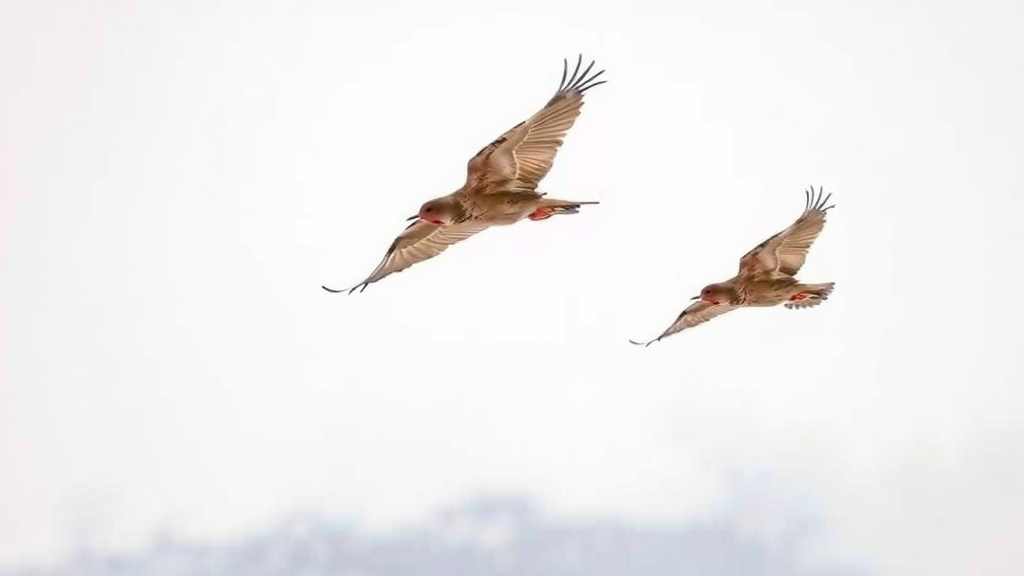
Every autumn, millions of redwings lift off from their Scandinavian and Baltic breeding grounds and pour southward across Europe in search of milder wintering latitudes. For decades, scientists assumed that by the time these thrushes made their late-autumn journeys, the season of the sheep tick, Ixodes ricinus, the principal vector of Lyme disease in Europe, had largely drawn to a close. A new study, published in the journal Parasites & Vectors, upends that assumption. Examining redwings caught during November migration in Belgium, researchers found that nearly three-quarters of the birds were carrying ticks, and that a substantial fraction of those ticks were infected with Borrelia bacteria, the agents of Lyme disease. The findings reveal a previously overlooked seasonal window during which infected parasites are actively dispersed across the continent.
The research team, led by Dieter J. A. Heylen of the Evolutionary Ecology Group at the University of Antwerp, together with colleagues from the Luxembourg Institute of Health and certified bird ringers in Belgium, examined 284 redwings captured during late-autumn migration in 2022 and 2024. Both years were marked by unusually mild autumn conditions, a detail that proved central to interpreting the results. Of the birds sampled, 72.9 percent were infested with ticks, a rate the authors describe as the highest ever reported for this species anywhere in Europe. The overwhelming majority of the parasites collected were Ixodes ricinus, the castor bean tick whose blood-feeding stages are responsible for transmitting the majority of tick-borne infections to humans and domestic animals across the European continent.
The scale of pathogen carriage among those ticks was equally striking. The team screened 698 ticks removed from the migrating birds and found that 12.9 percent carried Borrelia bacteria. The infections were not confined to a single lineage. Genetic screening identified multiple genospecies of the Borrelia burgdorferi sensu lato complex, including strains associated with birds and others associated with mammals, alongside Borrelia miyamotoi, a relapsing-fever spirochete increasingly recognized as a human pathogen. Perhaps most telling, infected ticks were found on nearly one-third of the birds examined, meaning that a large proportion of the migrating population was effectively functioning as a long-distance courier service for viable, pathogen-laden parasites.
Extrapolating from their field measurements to the size of the European redwing population, the researchers estimate that tens of millions of Borrelia-infected ticks may be transported southward each autumn on the backs of these migrating thrushes. Ticks attached to birds can detach at stopover sites hundreds or thousands of kilometers from where they were acquired, seeding new locations with both the arthropods themselves and the pathogens they carry. Because migratory birds travel enormous distances in short periods, they represent one of the most efficient dispersal mechanisms available to ticks, whose own locomotion over a lifetime rarely exceeds a few meters. The study thus adds a seasonal dimension to what ecologists already understood about birds as tick vectors: the phenomenon does not stop when summer ends.
The timing of the infestations is what gives the work its conceptual force. Migratory birds calibrate the onset and pace of their journeys primarily by photoperiod, the changing length of daylight, which is an astronomical cue immune to year-to-year weather. Tick activity, by contrast, is governed largely by ambient temperature, since ticks are ectotherms whose questing behavior halts when conditions become cold. Historically, late-autumn temperatures across much of western and central Europe fell low enough to push ticks into dormancy well before the main passage of redwings, minimizing the overlap between the two biological calendars. The Belgium study, conducted during two exceptionally mild Novembers, documents what happens when that buffer disappears: host and parasite schedules collide, and the birds depart with an unintended cargo.
This divergence between climatically driven parasite activity and photoperiodically driven migration is a textbook example of a phenological mismatch, and the study’s authors argue that continued climate warming is likely to widen it in the parasites’ favor. Migration timing is comparatively stable, anchored to day length, while the tick activity season expands at both ends of the year as winters warm. Each increment of autumn warming therefore extends the period during which questing ticks can board migrating hosts. The consequence, according to the researchers, is a strengthening seasonal window for long-distance parasite dispersal, one that epidemiological models of Lyme disease risk have largely failed to incorporate because they treat late autumn as an epidemiological dead zone.
The age structure of the infestations added a further layer of biological insight. Birds in their first calendar year, that is, individuals hatched the same summer and undertaking their first migration, carried significantly higher tick loads than older birds. The authors suggest several non-exclusive explanations, including the inexperience of young birds in grooming and preening parasites effectively, behavioral differences in habitat use that bring first-year birds into closer contact with questing ticks, and possible physiological differences in skin characteristics that affect how readily ticks attach and feed. Whatever the mechanism, the pattern means that a disproportionate share of the dispersing parasite burden travels on the youngest cohort, the very individuals that make up the bulk of many migratory populations and that colonize wintering areas before returning north in spring.
The pathogens detected on these birds are of more than academic concern. Borrelia burgdorferi sensu lato encompasses the genospecies responsible for the great majority of Lyme borreliosis cases in Europe, an infection that can produce erythema migrans rashes, neurological complications, arthritis and cardiac involvement when untreated. Borrelia miyamotoi, though historically overshadowed by its Lyme-causing relatives, has been implicated in human cases of a relapsing-fever-like illness and, in immunocompromised patients, severe meningoencephalitis. The identification of both avian-associated and mammalian-associated genospecies on migrating redwings underscores the role of birds in maintaining and redistributing genetically diverse pathogen reservoirs, with consequences for the local disease ecology of every stopover and wintering ground along the flyway.
It is important to note that the study does not claim that migrating birds directly infect humans. Ticks feeding on birds do not transmit Borrelia to their hosts in ways that pose immediate public-health danger at the moment of capture. The risk pathway is indirect: infected ticks detach in new environments, and if those environments support the tick’s life cycle and suitable reservoir hosts, the parasites and their pathogens can establish locally. A southbound redwing that drops an infected larva or nymph in a French hedgerow, an Iberian woodland or a Mediterranean scrubland effectively introduces Borrelia genetic material into a new ecological arena, where subsequent feeding cycles on local wildlife can amplify and maintain the pathogen. The study’s contribution is to show that this introduction channel remains open deep into the season previously considered safe.
The work also carries a methodological message for disease surveillance. Monitoring programs for tick-borne pathogens in Europe typically concentrate their efforts on spring and early summer, when human exposure risk peaks and tick activity is maximal. The Belgian findings argue for extending surveillance into the late-autumn migration window, particularly during warm years, to capture a dispersal event of continental significance. With both sampling years of the study falling among the mildest autumns on record, and with climate projections pointing toward more frequent such conditions, the overlap between southbound migration and active, infected ticks may shift from an anomaly to a routine feature of the European disease landscape. What the redwings reveal, in effect, is that the geography and seasonality of Lyme disease risk are being quietly rewritten at altitude, one migrating thrush and one hitchhiking tick at a time.
Subject of Research: Late-autumn dispersal of Borrelia-infected ticks by southward-migrating redwings and its implications for Lyme disease epidemiology under climate warming
Article Title: Lyme beyond the season: late-autumn dissemination of infected ticks by southward migrating redwings (Turdus iliacus)
Article References: Heylen, D. J. A., Ledegen, I., Grimon, M., Reteng, P., Hübschen, J. M., & Krawczyk, A. I. (2026). Lyme beyond the season: late-autumn dissemination of infected ticks by southward migrating redwings (Turdus iliacus). Parasites & Vectors. https://doi.org/10.1186/s13071-026-07673-x
Image Credits: AI Generated
DOI: 10.1186/s13071-026-07673-x
Keywords: Lyme disease, redwing, Turdus iliacus, Ixodes ricinus, Borrelia, bird migration, tick-borne pathogens, phenological mismatch, climate change, parasite dispersal, Borrelia miyamotoi, seasonal surveillance
Cite Scienmag News
Drew Townsend. (September 12, 2026). Migrating Redwings Carry Lyme-Infected Ticks South Long After Tick Season Ends. Scienmag. https://scienmag.com/migrating-redwings-carry-lyme-infected-ticks-south-long-after-tick-season-ends/
Drew Townsend. "Migrating Redwings Carry Lyme-Infected Ticks South Long After Tick Season Ends." Scienmag, 12 September 2026, https://scienmag.com/migrating-redwings-carry-lyme-infected-ticks-south-long-after-tick-season-ends/. Accessed 4 October 2026.
Drew Townsend. "Migrating Redwings Carry Lyme-Infected Ticks South Long After Tick Season Ends." Scienmag. September 12, 2026. https://scienmag.com/migrating-redwings-carry-lyme-infected-ticks-south-long-after-tick-season-ends/


