


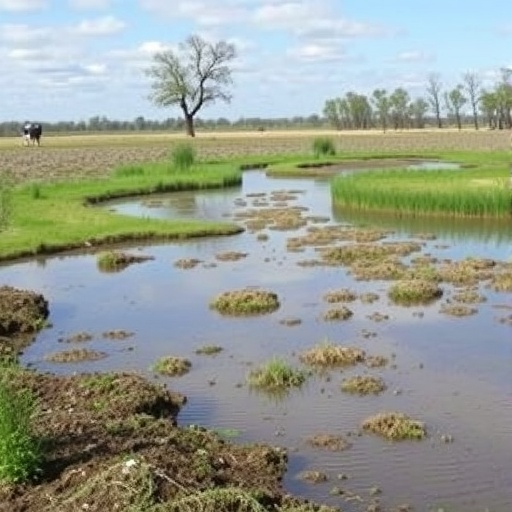
Recent research conducted by Mayora and Queimaliños sheds light on the intricate relationships between cattle grazing and the environmental dynamics of floodplain lakes. Their study delves into the complexities of dissolved organic matter (DOM) derived from cow dung and its implications for ecological health. As livestock farming intensifies across the globe, understanding the biochemical pathways altered by such activities has emerged as a critical area of inquiry.
One of the primary insights from this research is the spectroscopic analysis of the dissolved organic matter, which revealed a diverse array of compounds that significantly influence water quality. These compounds, originating from the decomposition of cow dung, play a vital role in the nutrient cycling within aquatic ecosystems. The detailed examination provided by the researchers highlights how DOM not only affects the chemistry of the water but also interacts with various biological processes, thereby linking terrestrial and aquatic environments.
Floodplain lakes, which serve as crucial ecosystems for biodiversity, are particularly vulnerable to the effects of agricultural runoff and livestock waste. The presence of DOM derived from cow dung can lead to an increase in nutrient load, which in turn may cause algal blooms. These blooms can deplete oxygen levels in the water, adversely affecting fish and other aquatic life. The study provides compelling evidence that managing cattle grazing practices is essential to ensure the sustainability of these vital ecosystems.
Moreover, the research emphasizes the necessity for integrating land-use practices with water management strategies. The scientists underscore that careful monitoring of nutrient levels in floodplain lakes is imperative, especially in areas heavily impacted by grazing. By utilizing advanced spectroscopic techniques, the researchers were able to identify specific organic compounds that serve as markers for the health of aquatic systems, facilitating more informed management decisions.
Through their rigorous analysis, Mayora and Queimaliños also bring attention to the phenomenon known as “brownification” of waters, which is the increased coloration often observed in bodies of water receiving high loads of DOM. This color change can alter light penetration, impacting photosynthetic organisms and reshaping the entire food web. Understanding these dynamics allows for a broader perspective on aquatic health, linking terrestrial animal management practices directly to water quality outcomes.
The implications of this study extend beyond the boundaries of academic inquiry; they resonate with policymakers and landowners alike. With the growing urgency to tackle climate change and biodiversity loss, re-evaluating cattle grazing practices presents an avenue for achieving better environmental outcomes. This study provides a robust framework for developing policies aimed at reducing the ecological footprint of livestock farming while safeguarding the integrity of floodplain ecosystems.
In summary, The research conducted by Mayora and Queimaliños offers a profound contribution to our understanding of the interconnectedness of agricultural practices and aquatic health. By unveiling the biochemical complexities of dissolved organic matter from cow dung, the study sets the stage for future investigations that could lead to innovative practices in livestock management and eco-friendly agricultural policies.
The findings highlight the critical need for further interdisciplinary studies that bridge the gap between agricultural productivity and environmental sustainability. The spectroscopic insights into DOM dynamics not only reaffirm the importance of managing grazing lands but also open the door to potential bioremediation strategies that leverage organic matter for improving water quality in polluted lakes.
As climate patterns shift, and with them the interactions between land use and water health, strategies based on scientific insights become more valuable. This research stands as a reminder that understanding and mitigating the effects of agriculture on aquatic ecosystems are crucial for fostering resilience in the face of environmental changes.
Ultimately, the study invites further inquiry into the sustainability of different agricultural practices, urging scientists and practitioners alike to prioritize research that promotes the health of our lakes. The environmental implications of cow dung-derived DOM may act as a catalyst for rethinking livestock management in ways that align with ecological stewardship.
In an age where the relationship between agriculture and ecology is under heightened scrutiny, this study serves as a wake-up call for the industry. It presents a pressing need for developing practices that not only satisfy economic demands but also safeguard the health of essential water systems. Through continued research and collaboration among scientists, policymakers, and farmers, sustainable solutions are within reach—offering hope for both ecosystems and human livelihoods.
To navigate the complex challenges of the future, embracing science-driven strategies will be paramount. As the revelations from Mayora and Queimaliños’ research underscore, the interplay between dissolved organic matter, cattle grazing, and water bodies is intricate and critical. Addressing these challenges can pave the way for more sustainable approaches that benefit both agriculture and the environment.
Cite Scienmag News
William Thompson. (November 12, 2025). Cow Dung’s Impact on Floodplain Lakes Explained. Scienmag. https://scienmag.com/cow-dungs-impact-on-floodplain-lakes-explained/
William Thompson. "Cow Dung’s Impact on Floodplain Lakes Explained." Scienmag, 12 November 2025, https://scienmag.com/cow-dungs-impact-on-floodplain-lakes-explained/. Accessed 4 September 2026.
William Thompson. "Cow Dung’s Impact on Floodplain Lakes Explained." Scienmag. November 12, 2025. https://scienmag.com/cow-dungs-impact-on-floodplain-lakes-explained/


