


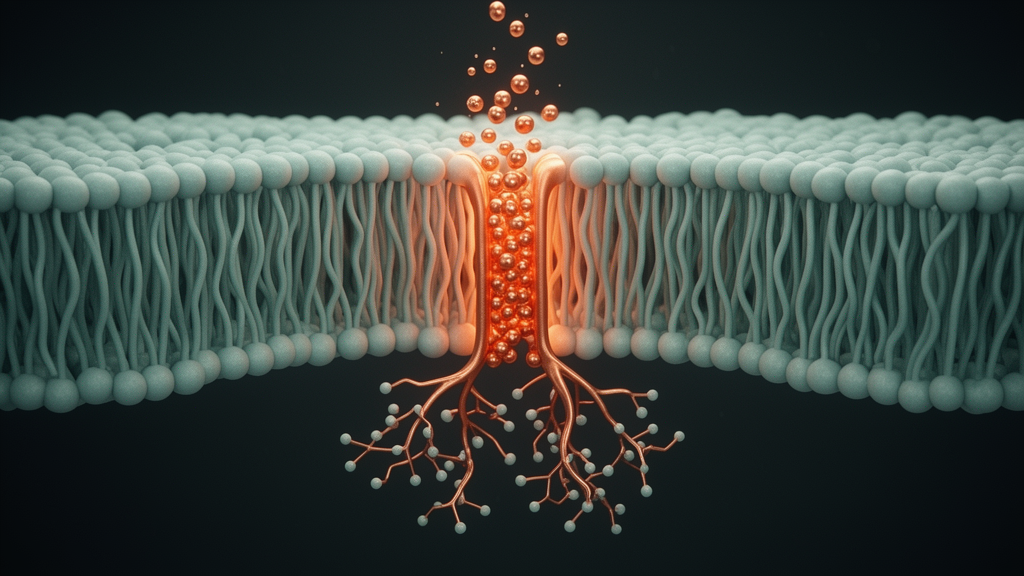
Copper transporter 1, the membrane protein long celebrated as the body’s high-affinity copper gateway, is emerging as something far more interesting: a signaling organizer that couples metal flux to protein interactions, trafficking decisions, and cellular state. A new review published in Cellular and Molecular Life Sciences by Meng-Hsuan Wen and Tai-Yen Chen of the University of Houston synthesizes recent evidence and proposes a testable framework that could reshape how biologists think about membrane transporters in general. The work, supported by the National Institute of General Medical Sciences under award R35GM161380 and by the University of Houston, argues that CTR1 should be understood not merely as a pipe for copper ions but as a transporter–organizer whose molecular state, local copper handling, specific protein partnerships, and trafficking history together determine its cellular outputs.
CTR1, encoded by the SLC31A1 gene, is best known for importing copper across the plasma membrane with high affinity. Copper is an essential trace metal that serves as a catalytic cofactor for enzymes involved in respiration, antioxidant defense, iron metabolism, and neurotransmitter synthesis. Yet the review highlights a puzzle: several CTR1-dependent signaling outputs cannot be readily explained by bulk intracellular copper abundance alone. CTR1 has been linked to growth-factor signaling, kinase regulation, redox control, intracellular trafficking, and copper-sensitive disease states. If CTR1 were simply a passive importer, its effects would track total cellular copper levels. Instead, the evidence points to a protein whose conformational state and interaction network actively shape signaling outcomes.
Two experimental observations provide the strongest foundation for the transporter–organizer framework. First, elevated intracellular copper rapidly remodels the oligomeric state of CTR1 before any detectable internalization of the protein occurs. This remodeling is associated with acute suppression of copper uptake, suggesting that the transporter’s quaternary structure acts as a fast molecular switch. Rather than waiting for the slower process of endocytosis to remove CTR1 from the membrane, the cell appears to tune the transporter’s activity by changing how CTR1 subunits associate with one another. This rapid structural plasticity implies that CTR1’s oligomeric state is a dynamic variable that the cell can adjust on timescales relevant to signaling, not just metal homeostasis.
Second, CTR1 engages vascular endothelial growth factor receptor 2, or VEGFR2, through a redox-sensitive interaction that supports receptor signaling and co-internalization. VEGFR2 is the primary receptor driving angiogenesis, the formation of new blood vessels, making this partnership potentially significant for vascular biology and disease. Crucially, transport-defective and redox-defective CTR1 mutants functionally separate proximal VEGF signaling from canonical copper transport. In other words, a CTR1 protein that cannot move copper can still support VEGFR2 signaling, and a CTR1 protein that cannot engage in redox-sensitive interactions loses signaling support even if its transport function remains intact. This genetic dissection demonstrates that CTR1’s transport role and its signaling-organizer role are mechanistically separable, a finding with major implications for how researchers design experiments targeting this protein.
Building on these observations, Wen and Chen propose two testable hypotheses. The first concerns local copper delivery: transport-competent CTR1 may generate local copper-delivery windows that favor copper capture and exchange in the immediate vicinity of the transporter. Rather than copper simply diffusing evenly throughout the cytoplasm, the model suggests that CTR1 creates microdomains of copper availability that proximal metallochaperones and target proteins can exploit. This concept of local copper handling echoes a broader theme in cell biology, where spatial organization within the cytoplasm often matters as much as bulk concentration. The second hypothesis concerns trafficking: Rab-directed trafficking may tune the persistence and resetting of CTR1-associated signaling states. Rab GTPases are the master regulators of vesicular transport, directing cargo between membrane compartments. If CTR1’s signaling outputs depend on which endosomal compartments it visits, then its trafficking itinerary becomes a variable that cells can manipulate to control signaling duration and reset.
The review emphasizes the importance of separating established observations from testable models, a discipline that distinguishes rigorous framework-building from speculation. The authors outline four variables for dissecting CTR1-dependent outputs: transport competence, local copper handling, specific protein interactions, and trafficking history. Each variable is experimentally addressable. Transport competence can be assessed with transport-defective mutants. Local copper handling can be probed with copper-sensitive probes and metallochaperone interactions. Protein interactions can be mapped with co-immunoprecipitation and proximity labeling. Trafficking history can be tracked with live-cell imaging and Rab-specific perturbations. By defining these variables clearly, the review provides a roadmap for researchers seeking to understand how CTR1 coordinates its multiple cellular roles.
The implications extend beyond copper biology. CTR1 provides a model for understanding how membrane transporters can coordinate metabolism, membrane traffic, and signal transduction within a single molecular entity. This concept challenges the traditional division of labor in cell biology, where transporters are often treated as separate from signaling proteins. If CTR1’s conformational state, interaction network, and trafficking itinerary all feed into its signaling outputs, then other transporters may operate similarly. The framework invites researchers to reconsider transporters across the genome as potential signaling organizers whose metal flux, protein partnerships, and membrane itineraries are coupled rather than independent.
The review also touches on disease relevance. Copper dysregulation has been implicated in a range of conditions, including neurodegenerative diseases, cancer, and cardiovascular disorders. The recent recognition of cuproptosis, a form of copper-dependent cell death, has intensified interest in how cells manage copper flux and signaling. If CTR1’s transporter–organizer framework holds up experimentally, it could offer new angles for therapeutic intervention. Rather than simply blocking copper uptake, future approaches might target CTR1’s interaction with VEGFR2, its oligomeric remodeling, or its trafficking itinerary. Such strategies could modulate signaling outputs without wholesale disruption of copper homeostasis, potentially reducing side effects associated with broad copper chelation.
Methodologically, the framework draws on membrane biophysics, live-cell imaging, and genetic perturbation. The rapid oligomeric remodeling of CTR1 in response to copper suggests that single-molecule or single-transporter measurements could reveal how individual CTR1 complexes transition between states. The redox-sensitive nature of the CTR1–VEGFR2 interaction points to the importance of the cellular redox environment in tuning signaling. The involvement of Rab GTPases in CTR1 trafficking suggests that endosomal sorting decisions are not just housekeeping but active determinants of signaling persistence. Together, these methodological threads weave a picture of CTR1 as a protein whose behavior emerges from the interplay of structural dynamics, chemical environment, and membrane traffic.
As research on CTR1 continues, the transporter–organizer framework offers a lens through which to view the protein’s many facets. The four variables identified by Wen and Chen provide a structured approach to future experiments, and the two testable hypotheses give researchers concrete directions to pursue. Whether CTR1’s local copper-delivery windows and Rab-directed trafficking tuning hold up under experimental scrutiny remains to be seen, but the framework itself represents a significant conceptual advance. By treating CTR1 as a coupled system rather than a collection of separate functions, the review opens new avenues for understanding how membrane proteins integrate metal transport, signaling, and cellular organization. The coming years of CTR1 research promise to reveal whether this framework generalizes to other transporters and how cells exploit the coupling between metal flux and signaling state.
Subject of Research: CTR1 as a transporter–organizer in copper signaling: molecular state, trafficking, and protein interactions
Article Title: CTR1 as a transporter–organizer in copper signaling: molecular state, trafficking, and protein interactions
Article References: Wen, M.-H., & Chen, T.-Y. (2026). CTR1 as a transporter–organizer in copper signaling: molecular state, trafficking, and protein interactions. Cellular and Molecular Life Sciences. https://doi.org/10.1007/s00018-026-06491-9
Image Credits: AI Generated
DOI: 10.1007/s00018-026-06491-9
Keywords: copper, CTR1, cell signaling, membrane transport, VEGFR2, cell biology, trafficking, metallochaperones, transporter, organizer, signaling, molecular
Cite Scienmag News
Drew Townsend. (October 17, 2026). Copper Transporter CTR1 Acts as Signaling Organizer, Not Just Importer. Scienmag. https://scienmag.com/copper-transporter-ctr1-acts-as-signaling-organizer-not-just-importer/
Drew Townsend. "Copper Transporter CTR1 Acts as Signaling Organizer, Not Just Importer." Scienmag, 17 October 2026, https://scienmag.com/copper-transporter-ctr1-acts-as-signaling-organizer-not-just-importer/. Accessed 17 October 2026.
Drew Townsend. "Copper Transporter CTR1 Acts as Signaling Organizer, Not Just Importer." Scienmag. October 17, 2026. https://scienmag.com/copper-transporter-ctr1-acts-as-signaling-organizer-not-just-importer/


