


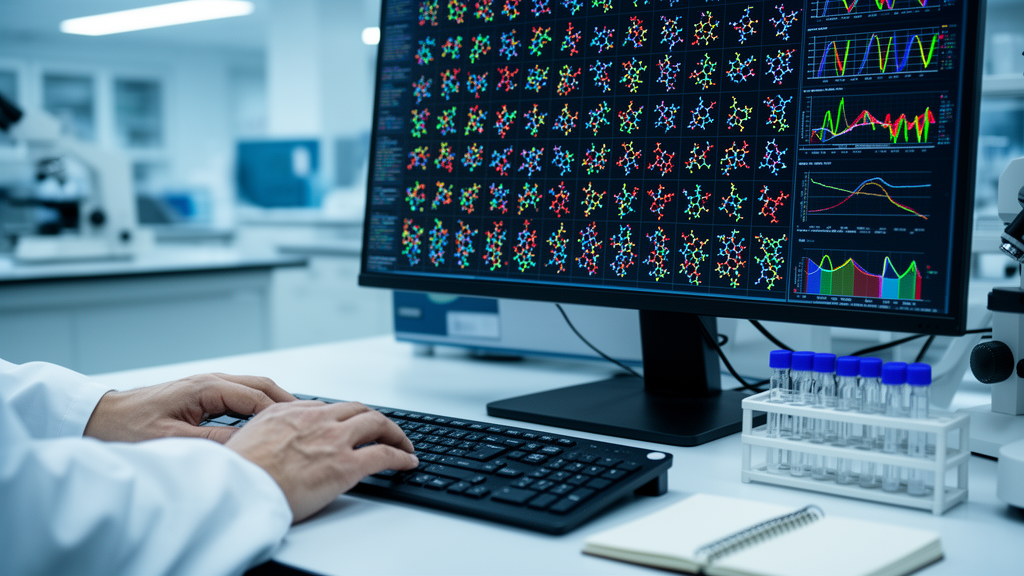
A team of bioinformaticians has screened roughly 1,500 antimicrobial peptides from animals and, through a chain of computational filters, narrowed them down to three candidates that bind two key breast cancer biomarkers, matrix metalloproteinase 1 and the epidermal growth factor receptor. The work, published in the Future Journal of Pharmaceutical Sciences, is entirely computational: no peptide has yet been tested against a living cancer cell. Its value lies in the pipeline itself, which shows how publicly available databases and prediction servers can compress an enormous search space into a handful of molecules worth carrying into a laboratory.
The researchers, led by Elijah Kolawole Oladipo with colleagues including Helen Onyeaka, began with the antimicrobial peptide database 3, a curated repository of naturally occurring antimicrobial peptides. Antimicrobial peptides have long interested oncologists because many of them display selective toxicity toward malignant cells while sparing healthy tissue. Cancer cell membranes carry a higher density of negatively charged molecules than normal cell membranes, and these small, cationic, amphipathic peptides adhere to them through electrostatic attraction, disrupting the membrane and triggering necrosis or apoptosis. That mechanism differs fundamentally from conventional chemotherapy, which largely poisons any rapidly dividing cell and frequently damages healthy tissue in the process.
The first filter addressed a central safety concern: destruction of red blood cells. The team passed the retrieved sequences through the Hemolytik database, which catalogues experimentally validated hemolytic and non-hemolytic peptides, and separated out 255 non-hemolytic candidates. These were then screened for toxicity with ToxinPred2, a machine-learning web server trained on known toxins, and for allergenicity with AllerTop. According to the results section, 141 peptides survived both screens as predicted non-toxic, non-allergenic sequences. Each filtering step trades breadth for confidence, and the authors note that the stepwise selection criteria and their rationale are documented in a supplementary table.
Physicochemical screening imposed further constraints drawn from what makes a peptide drug-like: a molecular weight between 1.7 and 3.1 kilodaltons, an instability index of 28 or below, and a net positive charge between +2 and +7. Only five peptides met all three criteria. The sequences were then modified by adding tryptophan, glycine and valine residues to their side chains, and later by substituting amino acids associated with cancerous properties, such as glycine and glutamic acid, with histidine and phenylalanine respectively. Such substitutions are a standard tactic in peptide engineering, aimed at improving stability and activity, though their actual effect remains untested until laboratory work is done.
The five survivors were then interrogated by two independent machine-learning predictors of anticancer activity, AntiCP 2.0 and ACPred. AntiCP 2.0 flagged four peptides as potential anticancer agents; ACPred flagged three. The three peptides identified by both servers were taken forward, an intersection strategy that reduces the risk of acting on a single model’s false positives. The finalists span a striking taxonomic range: Metalnikowin IIA (AP00363) from the green shield bug Palomena prasina, Guentherin (AP00584) from the frog Hylarana guentheri, and P-10 (AP02393) from the sea squirt Ciona intestinalis.
Two molecular targets anchored the docking analysis. Matrix metalloproteinase 1 is an enzyme whose elevated expression has been associated with poor prognosis and increased metastatic potential in breast cancer patients, while the epidermal growth factor receptor drives cellular proliferation, differentiation, migration and survival through downstream signaling pathways. The researchers retrieved the three-dimensional structures of both proteins from UniProt, using the entries P03956 for MMP1 and P00533 for EGFR, and modeled the peptide structures with Colab AlphaFold2, the deep-learning system that predicts protein structures from amino acid sequence, multiple sequence alignments and homologous structures. As a benchmark, they modeled Buserelin, an anticancer peptide drug listed in the Database of Cancer Therapy Peptides under the identifier DCTPepD0009 and approved by the US Food and Drug Administration and the European Union for the treatment of breast and prostate cancer.
Docking was performed with two protein–protein docking servers, HDock and ClusPro. HDock generated ten models for each peptide–receptor pair and ranked them by docking score, with model 1 of each complex, bearing the lowest score, selected as the best model because lower scores indicate higher binding affinity. ClusPro likewise treated the lowest energy scores as the strongest predicted binding. Across both platforms, Metalnikowin IIA emerged as the strongest binder, scoring −235.61 against MMP1 and −271.70 against EGFR. The PDBsum web server was then used to profile the residue-level interactions within each docked complex, mapping which amino acids on the receptor chains make contact with the peptide ligands.
Molecular dynamics simulations added a dynamic dimension to the static docking picture. Using the CABS-flex 2.0 server, the team analyzed the flexibility of the docked complexes with the highest binding affinity, measuring root mean square fluctuation in angstroms for each residue and comparing Metalnikowin IIA’s complexes against the Buserelin controls. In the MMP1 complex, most residues of chain A fluctuated between 0.5 and 2.5 angstroms, typical of structured protein regions, with flexible binding-related regions at A60–A80, A110–140, A160–A180 and A310–A330. For the EGFR complex, the strongest flexibility appeared around residues A600–A620, reaching roughly 6.5 angstroms, with binding-related regions at A100–A200, A500–A620 and A900–A1000. The authors interpret high flexibility as evidence of strong interaction between ligand and receptor, and they report that Metalnikowin IIA showed more favorable binding energies than Buserelin in both docking and simulation.
The discussion is candid about what such predictions cannot deliver. Off-target interactions may arise when peptides predicted to bind cancer-associated targets also bind structurally related or ubiquitously expressed host proteins, potentially causing unintended cytotoxicity. In silico tools operate under simplified assumptions and may not capture peptide degradation, serum binding, variable cellular uptake or the heterogeneity of the tumor microenvironment; dataset bias during model training can further skew predictions. Manufacturing adds another layer of difficulty, since large-scale peptide synthesis can be limited by cost, sequence complexity, yield and batch-to-batch reproducibility, although strategies such as truncation, residue substitution, cyclization and non-natural amino acids can improve stability and manufacturability.
The authors lay out a concrete validation roadmap. In vitro work would begin with well-characterized human breast cancer cell lines such as MCF-7, MDA-MB-231 and T47D, tested alongside non-cancerous mammary epithelial cells like MCF-10A to assess selectivity, using standard cytotoxicity and antiproliferative assays and flow-cytometry-based apoptosis assays to establish mechanisms of cell death. Western blotting or RT-qPCR could then probe modulation of cancer-related signaling pathways, and in vivo testing in xenograft or orthotopic mouse models would evaluate tumor growth inhibition, survival and systemic toxicity. Until those experiments are run, the three peptides remain hypotheses generated by computation rather than therapies, but the study demonstrates a reproducible, low-cost route for turning a database of 1,500 animal peptides into a short list of testable breast cancer drug candidates.
Subject of Research: Bioinformatic screening of animal-derived antimicrobial peptides as candidate therapeutics targeting MMP1 and EGFR in breast cancer
Article Title: Bioinformatic design of optimized therapeutic peptides for targeted breast cancer therapy
Article References: Oladipo, E. K., Adegboye, O. O., Adeyemo, S. F., Akinboade, M. W., Iwalokun, B. A., Ajani, O. F., Ariyo, O. E., & Onyeaka, H. (2026). Bioinformatic design of optimized therapeutic peptides for targeted breast cancer therapy. Future Journal of Pharmaceutical Sciences, 12(1), Article 79. https://doi.org/10.1186/s43094-026-01009-3
Image Credits: AI Generated
DOI: 10.1186/s43094-026-01009-3
Keywords: breast cancer, anticancer peptides, antimicrobial peptides, bioinformatics, molecular docking, MMP1, EGFR, molecular dynamics simulation, peptide design, drug discovery, in silico screening, AlphaFold2
Cite Scienmag News
Nathaniel Bowman. (October 30, 2026). Computer screen sifts animal peptides for breast cancer drug leads. Scienmag. https://scienmag.com/computer-screen-sifts-animal-peptides-for-breast-cancer-drug-leads/
Nathaniel Bowman. "Computer screen sifts animal peptides for breast cancer drug leads." Scienmag, 30 October 2026, https://scienmag.com/computer-screen-sifts-animal-peptides-for-breast-cancer-drug-leads/. Accessed 4 November 2026.
Nathaniel Bowman. "Computer screen sifts animal peptides for breast cancer drug leads." Scienmag. October 30, 2026. https://scienmag.com/computer-screen-sifts-animal-peptides-for-breast-cancer-drug-leads/




