


Computer screen sifts animal peptides for breast cancer drug leads
A computational pipeline filtered about 1,500 animal-derived antimicrobial peptides down to three candidates that dock strongly against the breast cancer ...
A computational pipeline filtered about 1,500 animal-derived antimicrobial peptides down to three candidates that dock strongly against the breast cancer ...

A small exploratory study found 15 cell-free miRNAs in plasma that differed between patients whose first unprovoked seizure remained isolated ...

A new bioinformatics and experimental study identifies twelve candidate genes for polycystic ovary syndrome and shows that the metabolic enzyme ...

A new review maps how machine learning, molecular docking and subtractive genomics are being combined to explain drug resistance in ...
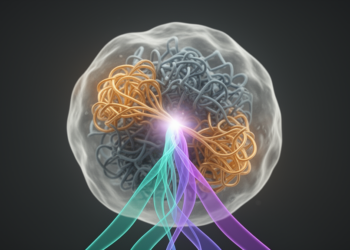
A weighted-voting ensemble called fourSynergy outperformed individual 4C-seq algorithms in leave-one-group-out cross-validation, reaching a mean F1-score of 0.31 and mean ...

A capsule neural network model called AMP-CapsNet achieved 97.29 percent test accuracy in classifying antimicrobial peptides when using dipeptide composition ...

Computer scientists have developed paired-block bit vectors and flattened bit vectors that cut rank-query memory overhead to 1.6 percent and ...

A compact deep-learning model called minisplice learns splice signals across vertebrates and insects and, when integrated into minimap2 and miniprot, ...
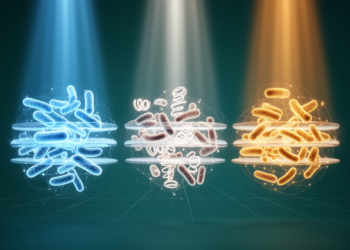
Taxonova, a deep learning classifier, achieved high species-level accuracy across short- and long-read ribosomal amplicons in benchmark tests.

An integrative bioinformatics study of 3,180 Hodgkin Lymphoma-associated genes identified TP53, STAT3, AKT1, EGFR and IL6 as the most highly ...


Embark on a thrilling journey of discovery with Scienmag.com—your ultimate source for cutting-edge breakthroughs. Immerse yourself in a world where curiosity knows no limits and tomorrow’s possibilities become today’s reality!