


In an era where chronic inflammatory diseases pose significant challenges to modern medicine, groundbreaking findings emerge from the realm of immunology that deepen our understanding of psoriasis relapse mechanisms. A recent pivotal study has illuminated the role of a specialized subset of dendritic cells characterized by the expression of CCR7 molecules alongside the pro-inflammatory cytokines IL-23A and IL-12B. This discovery not only advances the fundamental understanding of psoriasis pathophysiology but also opens promising avenues for therapeutic interventions aimed at preventing disease recurrence.
Psoriasis, a complex autoimmune skin condition, is notorious for its recurrent flare-ups, which significantly impair patients’ quality of life. The molecular orchestration that drives these relapses has remained elusive, impeding the development of targeted, long-lasting treatments. This novel research focuses on the immunological players that prime the skin microenvironment for resurgence by identifying specific dendritic cells expressing both IL-23A and IL-12B, molecules deeply implicated in the inflammatory cascade characteristic of psoriasis.
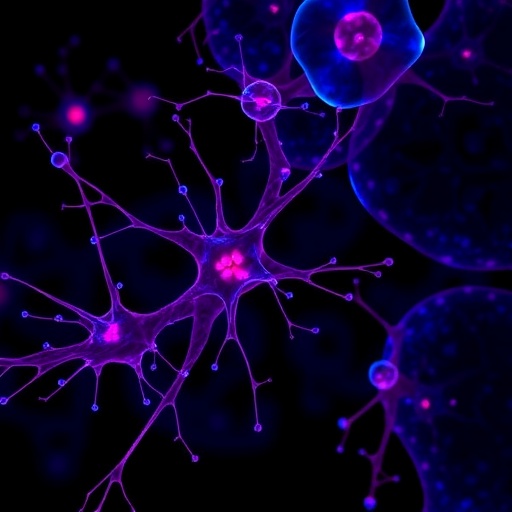
Dendritic cells (DCs) serve as sentinels within the immune system, bridging innate and adaptive immunity by processing and presenting antigens to T cells. Among these, the subset expressing CCR7, a chemokine receptor prominent in guiding cell migration to lymphatic tissues, has garnered attention for their potential to sustain pathogenic immune memory. The dual expression of IL-23A and IL-12B by these CCR7+ dendritic cells signifies a complex modulatory capacity that could perpetuate inflammatory signals, fostering a milieu conducive to psoriatic lesion reappearance.
This synthesis of CCR7 expression with IL-23A and IL-12B highlights an intricate balance within the cytokine network, where IL-23 and IL-12, both cytokines sharing the subunit IL-12B, orchestrate T helper cell differentiation and activity. IL-23 is instrumental in maintaining Th17 cells, key effectors in psoriasis, while IL-12 is associated with Th1 responses. The co-expression of these cytokines by dendritic cells implies a dual-pronged inflammatory stimulus capable of sustaining both arms of the adaptive immune response.
Such an immunological profile suggests that CCR7+ DCs inhabiting the skin or lymphoid organs during remission periods might serve as reservoirs of pathogenic signals, hastening disease relapse upon encountering triggering stimuli. Understanding the spatial distribution, lifespan, and activation thresholds of these cells is crucial for envisioning strategies that could selectively neutralize their impact without broadly suppressing immune competence.
The methodologies deployed by the researchers ingeniously combined single-cell RNA sequencing with advanced immunophenotyping techniques to chart the molecular identity of dendritic cells within psoriatic lesions and unaffected skin. This granular approach unveiled not only phenotypic markers but also functional characteristics associated with disease relapse propensity. Furthermore, the integration of cytokine profiling reinforced the pivotal role of IL-23A and IL-12B co-expression in defining pathogenic DC subsets.
Moreover, elucidating the migratory patterns of these CCR7+ dendritic cells suggests their capacity to traverse from peripheral tissues to lymph nodes, potentially reactivating memory T cells and propagating inflammatory cycles. This migratory behavior underscores the importance of CCR7 as a therapeutic target, envisioning interventions that could interrupt harmful cell trafficking and prevent chronic inflammation escalation.
Intriguingly, the study also sheds light on the temporal dynamics of cytokine expression, revealing that the presence of IL-23A and IL-12B is not static but rather correlates with disease activity phases. Such insights imply that therapeutic modulation might require timing precision to preempt relapse rather than merely mitigate active inflammation, marking a paradigm shift in psoriasis management.
The implications extend beyond psoriasis itself, touching on broader themes in autoimmune research where dendritic cell heterogeneity and cytokine milieu contribute to disease rhythms. This framework positions CCR7+ dendritic cells as central nodes in pathogenic networks, whose manipulation may yield benefits for conditions with overlapping immunopathogenic mechanisms.
Further research is warranted to delineate the intracellular signaling cascades that regulate IL-23A and IL-12B expression within CCR7+ dendritic cells, including potential epigenetic modifications and environmental influences such as microbiota interactions or metabolic cues. Such explorations could reveal novel druggable targets or biomarkers predictive of relapse risk.
In clinical contexts, these findings encourage the refinement of biologic therapies targeting the IL-23/Th17 axis, proposing complementary approaches that incorporate dendritic cell modulation. Personalized medicine models might integrate phenotypic assessments of CCR7+ DC subsets to tailor interventions, optimizing efficacy and minimizing adverse effects.
The discovery also raises intriguing questions about the interplay between resident skin immune cells and circulating immune populations, as well as how systemic factors might influence the behavior of CCR7+ dendritic cells. Unraveling these complex interactions promises to enhance comprehensive psoriasis care strategies.
Ultimately, this research underscores the intricacy of immune regulation in chronic inflammatory diseases and exemplifies how dissecting cell-specific cytokine expression profiles can yield transformative insights. The identification of CCR7+ dendritic cells co-expressing IL-23A and IL-12B as potential contributors to psoriasis relapse marks a defining advancement in the pursuit of durable disease control.
As the immunology community digests these findings, the translational journey toward novel therapeutics targeting these dendritic cell subsets is set to accelerate. With ongoing interdisciplinary collaborations, the prospect of mitigating psoriasis relapse through targeted immunomodulation draws closer to clinical reality, offering renewed hope to millions affected worldwide.
This pioneering work not only spotlights a crucial immunological axis in psoriasis but also exemplifies the power of cutting-edge molecular techniques to unravel complex disease mechanisms. The confluence of basic science discovery with therapeutic innovation heralds a new chapter in managing chronic autoimmune conditions.
Sun, Y., Lou, F., Cai, X. et al. CCR7+ dendritic cells expressing both IL-23A and IL-12B potentially contribute to psoriasis relapse.
Nat Commun 16, 7581 (2025). https://doi.org/10.1038/s41467-025-62874-9
Cite Scienmag News
Ophelia Keating. (August 15, 2025). CCR7+ Dendritic Cells Linked to Psoriasis Relapse. Scienmag. https://scienmag.com/ccr7-dendritic-cells-linked-to-psoriasis-relapse/
Ophelia Keating. "CCR7+ Dendritic Cells Linked to Psoriasis Relapse." Scienmag, 15 August 2025, https://scienmag.com/ccr7-dendritic-cells-linked-to-psoriasis-relapse/. Accessed 4 September 2026.
Ophelia Keating. "CCR7+ Dendritic Cells Linked to Psoriasis Relapse." Scienmag. August 15, 2025. https://scienmag.com/ccr7-dendritic-cells-linked-to-psoriasis-relapse/


