

Saturday, July 11, 2026
Science
No Result
View All Result
  • Login
  • HOME
  • SCIENCE NEWS
  • CONTACT US
  • HOME
  • SCIENCE NEWS
  • CONTACT US
No Result
View All Result
Scienmag
No Result
View All Result
Home Science News Medicine

Calcineurin/NFAT Pathway Links Calcium Stress to Neurodegeneration Timing

July 11, 2026
in Medicine
Reading Time: 2 mins read
0
Calcineurin/NFAT Pathway Links Calcium Stress to Neurodegeneration Timing

Calcineurin/NFAT Pathway Links Calcium Stress to Neurodegeneration Timing

65
SHARES
587
VIEWS
Share on FacebookShare on Twitter
ADVERTISEMENT

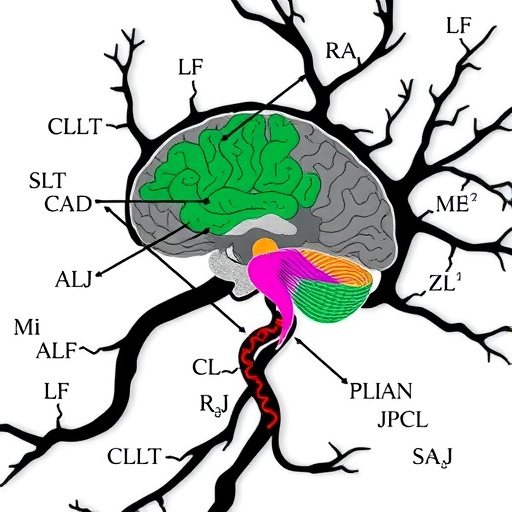
Neurodegenerative diseases remain one of the most daunting challenges in modern medicine, with their complex etiologies and often irreversible progression. A new study published in Cell Death Discovery sheds light on the pivotal signaling mechanisms that may underpin the temporal dynamics of calcium (Ca²⁺) stress in neuronal cells. Researchers Da Silva Oliveira, Innocenti, and Granucci bring fresh insight into the calcineurin/NFAT pathway and its role in integrating Ca²⁺ signals over time, which is increasingly recognized as a crucial factor in neurodegeneration.

Calcium ions serve as critical second messengers within neurons, orchestrating a myriad of cellular activities from neurotransmitter release to gene expression. However, dysregulated Ca²⁺ homeostasis is a hallmark of neurodegenerative diseases such as Alzheimer’s, Parkinson’s, and Huntington’s. The study highlights how the calcineurin phosphatase, in concert with the nuclear factor of activated T-cells (NFAT), transduces sustained Ca²⁺ stimuli into transcriptional programs that can either protect or harm neuronal viability depending on the context and duration of the stress.

The temporal dimension of Ca²⁺ signaling has often been overlooked in favor of amplitude or frequency. This research emphasizes the importance of the timing and persistence of Ca²⁺ elevations, proposing that calcineurin/NFAT acts as a molecular integrator that converts fluctuating Ca²⁺ signals into a coherent transcriptional response. Such integration is essential in determining whether neurons engage survival pathways or succumb to apoptotic cascades in prolonged stress scenarios.

Employing advanced imaging techniques and molecular assays, the authors demonstrated that transient Ca²⁺ spikes activate NFAT signaling differently than prolonged Ca²⁺ elevations. Short bursts lead to reversible changes promoting plasticity and repair, whereas sustained stress triggers a shift towards pro-degenerative gene expression patterns. This nuanced decoding of Ca²⁺ dynamics provides a deeper understanding of how neurons interpret stress signals over time.

Importantly, the study reveals that calcineurin inhibitors, previously considered only for immune modulation, might have therapeutic potential in neurodegeneration by fine-tuning NFAT activity. Such interventions could recalibrate the transcriptional responses to chronic Ca²⁺ stress, potentially slowing or preventing the progression of neuronal damage.

This research opens avenues to explore how temporal regulation of signaling pathways governs cellular fate decisions in the nervous system. It also underscores the necessity of investigating the timing of intracellular signals, not merely their intensity, as pivotal factors in disease pathogenesis.

Future studies will be critical to unravel how calcineurin/NFAT signaling interacts with other pathways affected in neurodegenerative disorders. The integration of this knowledge could propel novel strategies aimed at temporal control of molecular responses to preserve neuronal function.

Understanding the intricacies of Ca²⁺ stress integration marks a significant step forward in decoding the molecular determinants of neurodegeneration. As this signaling axis is further explored, it promises to offer exciting targets for combating some of the most debilitating diseases of the modern age.


Subject of Research: Calcineurin/NFAT signaling and its role in temporal integration of calcium stress in neurodegeneration.

Article Title: Calcineurin/NFAT signaling in the temporal integration of Ca²⁺ stress in neurodegeneration.

Article References:
Da Silva Oliveira, B., Innocenti, M. & Granucci, F. Calcineurin/NFAT signaling in the temporal integration of Ca²⁺ stress in neurodegeneration. Cell Death Discov. (2026). https://doi.org/10.1038/s41420-026-03251-3

Image Credits: AI Generated

Tags: calcineurin/NFAT signaling in neurodegenerationcalcium homeostasis and neurodegenerative disease mechanismscalcium signaling as a therapeuticcalcium stress and neuronal cell deathcalcium-dependent transcription factors in neurodegenerationmolecular mechanisms of calcium stress in neuronsneurodegenerative disease progression and calcium signalingNFAT pathway in neuronal survivalrole of calcineurin in neurodegenerationsignaling pathways linking calcium dysregulation to neurodegenerationtemporal dynamics of calcium signaling in neurodegenerative diseases
Share26Tweet16
Previous Post

Norwegian Stakeholders Review Guidelines to Prevent Elder Abuse

Next Post

Data-Driven Autism Subtyping Advances Understanding Across Multiple Levels

Related Posts

Akkermansia massiliensis and FcRL3 Gene Linked to Multiple Sclerosis Protection
Medicine

Akkermansia massiliensis and FcRL3 Gene Linked to Multiple Sclerosis Protection

July 11, 2026
Norwegian Stakeholders Review Guidelines to Prevent Elder Abuse
Medicine

Norwegian Stakeholders Review Guidelines to Prevent Elder Abuse

July 11, 2026
Pycnogenol Reduces Neurobehavioral and Liver Damage from Thioacetamide Exposure
Medicine

Pycnogenol Reduces Neurobehavioral and Liver Damage from Thioacetamide Exposure

July 11, 2026
Physiatrists Evolve from Team Players to Leaders in Parkinson’s Care
Medicine

Physiatrists Evolve from Team Players to Leaders in Parkinson’s Care

July 11, 2026
Long-Term Home Deep Sleep Modulation Shows Promise in Parkinson’s Disease
Medicine

Long-Term Home Deep Sleep Modulation Shows Promise in Parkinson’s Disease

July 11, 2026
Multi-Omics Reveal DNA Methylation Changes in Obesity Rat Model
Medicine

Multi-Omics Reveal DNA Methylation Changes in Obesity Rat Model

July 11, 2026
Next Post
Data-Driven Autism Subtyping Advances Understanding Across Multiple Levels

Data-Driven Autism Subtyping Advances Understanding Across Multiple Levels

  • Mothers who receive childcare support from maternal grandparents show more

    Mothers who receive childcare support from maternal grandparents show more parental warmth, finds NTU Singapore study

    27656 shares
    Share 11059 Tweet 6912
  • University of Seville Breaks 120-Year-Old Mystery, Revises a Key Einstein Concept

    1061 shares
    Share 424 Tweet 265
  • Bee body mass, pathogens and local climate influence heat tolerance

    682 shares
    Share 273 Tweet 171
  • Researchers record first-ever images and data of a shark experiencing a boat strike

    546 shares
    Share 218 Tweet 137
  • Groundbreaking Clinical Trial Reveals Lubiprostone Enhances Kidney Function

    531 shares
    Share 212 Tweet 133
Science

Embark on a thrilling journey of discovery with Scienmag.com—your ultimate source for cutting-edge breakthroughs. Immerse yourself in a world where curiosity knows no limits and tomorrow’s possibilities become today’s reality!

RECENT NEWS

  • Akkermansia massiliensis and FcRL3 Gene Linked to Multiple Sclerosis Protection
  • Data-Driven Autism Subtyping Advances Understanding Across Multiple Levels
  • Calcineurin/NFAT Pathway Links Calcium Stress to Neurodegeneration Timing
  • Norwegian Stakeholders Review Guidelines to Prevent Elder Abuse

Categories

  • Agriculture
  • Anthropology
  • Archaeology
  • Athmospheric
  • Biology
  • Biotechnology
  • Blog
  • Bussines
  • Cancer
  • Chemistry
  • Climate
  • Earth Science
  • Editorial Policy
  • Marine
  • Mathematics
  • Medicine
  • Pediatry
  • Policy
  • Psychology & Psychiatry
  • Science Education
  • Social Science
  • Space
  • Technology and Engineering

Subscribe to Blog via Email

Enter your email address to subscribe to this blog and receive notifications of new posts by email.

Join 5,146 other subscribers

© 2025 Scienmag - Science Magazine

Welcome Back!

Login to your account below

Forgotten Password?

Retrieve your password

Please enter your username or email address to reset your password.

Log In
No Result
View All Result
  • HOME
  • SCIENCE NEWS
  • CONTACT US

© 2025 Scienmag - Science Magazine

Discover more from Science

Subscribe now to keep reading and get access to the full archive.

Continue reading
