


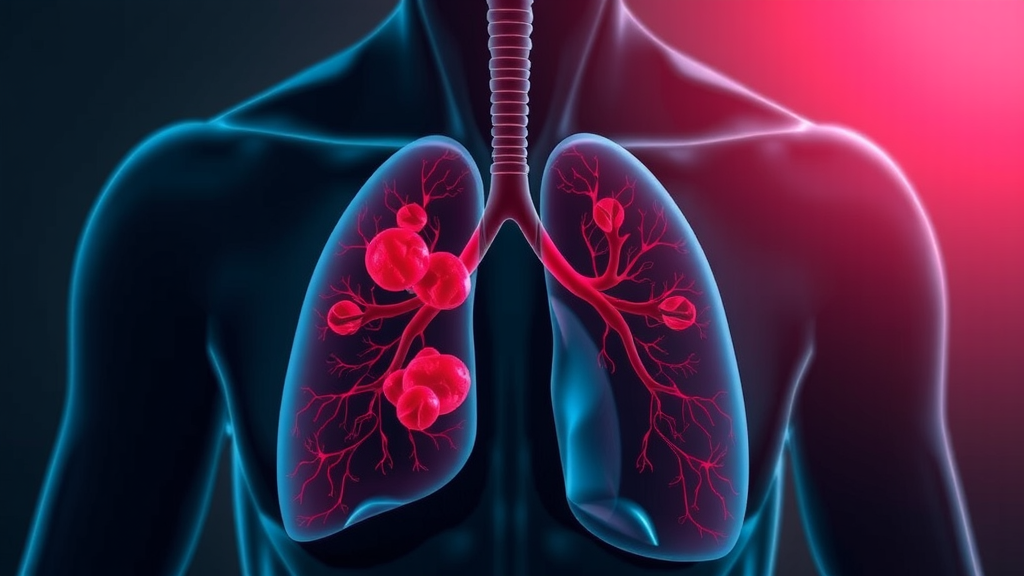
For years, oncologists have noticed a troubling pattern in their clinics: patients with non-small cell lung cancer who carry high levels of triglycerides in their blood tend to fare worse than those whose lipid profiles are normal. The observation appeared repeatedly in retrospective datasets, but correlation is not mechanism, and the field lacked a convincing explanation for why a dietary fat circulating in the bloodstream would help a tumour escape its original location and colonise distant organs. A new study published in the British Journal of Cancer now offers a detailed molecular account of that connection, tracing a continuous chain of events that runs from elevated serum triglycerides all the way to the physical machinery a cancer cell needs to squeeze through the dense scaffolding of tissue that surrounds it.
The research, led by Yingchu Dai, Yufan Ling and Lu Hou with senior authorship from Leyuan Zhou, Hailong Pei and Wanshi Li, began with a retrospective analysis of 77 patients with non-small cell lung cancer, the most common form of lung malignancy worldwide. The team stratified the cohort according to serum triglyceride levels and followed outcomes over time. The differences were stark. Patients whose triglycerides exceeded 2.3 millimoles per litre showed significantly shorter overall survival than those in the normal range below 1.7 millimoles per litre, a difference that reached statistical significance with a log-rank p-value of 0.009. More striking still were the metastasis rates: 84.4 percent of hypertriglyceridemic patients displayed lymph node metastasis compared with just 37.9 percent of normotriglyceridemic patients, and distant metastasis was detected in 31.3 percent versus 3.4 percent respectively.
Those clinical associations set the stage for the mechanistic work. To test whether high triglycerides were merely a marker of poor health or an active participant in cancer progression, the researchers modelled hypertriglyceridemia in mice and examined how lung tumours behaved under those conditions. The animal data reinforced the human findings, showing reduced survival in tumour-bearing mice with elevated triglycerides. The team then turned to controlled laboratory systems, using extracellular matrix constrained invasion assays in non-small cell lung cancer cell lines. These assays recreate a critical physical barrier that metastasising cells must overcome in the body: the dense network of collagen and other proteins that forms the extracellular matrix, the biological scaffolding that anchors tissues together and that a migrating tumour cell must physically breach.
It is within this constrained microenvironment that the study’s central discovery emerges. The researchers found that triglycerides enhance lipid beta-oxidation, the cellular process by which fatty acids are broken down in mitochondria to generate energy. Rather than serving simply as inert fuel, this surge of lipid catabolism appeared to activate a signalling pathway centred on RhoA, a small GTP-binding protein well known to cell biologists as a master regulator of the actin cytoskeleton. When RhoA signalling intensified, tumour cells remodelled their internal scaffolding of actin filaments, gaining the mechanical force and structural plasticity needed to deform their bodies, push through narrow gaps in the matrix, and acquire what the authors describe as metastatic competence.
The technical logic of this axis deserves close attention. Triglycerides stored in lipid droplets must first be mobilised and transported into mitochondria, a step that depends on CPT1A, also known as CPT1A or carnitine palmitoyltransferase 1A, the rate-limiting enzyme of fatty acid import into mitochondria. The study’s figures trace this progression carefully: elevated neutral lipid levels enhanced tumour invasion potential in matrix-based assays, lipid depletion proved to be a prerequisite for tumour cell metastasis, and metastasising cells exhibited both enhanced lipid metabolism and pronounced actin cytoskeleton remodelling. Perhaps most intriguingly, the team found that RhoA promotes metastasis by enhancing the transcriptional activity of CPT1A, suggesting a feed-forward loop in which cytoskeletal signalling amplifies the very lipid-burning machinery that activates it.
To establish causality rather than mere correlation, the researchers deployed both pharmacological inhibition and genetic silencing. When they blocked CPT1A or RhoA, either with drugs or by knocking down the genes that encode them, the triglyceride-driven invasion and metastasis were significantly suppressed. This dual approach matters because it demonstrates that the lipid beta-oxidation and RhoA-driven cytoskeletal remodelling axis is not simply associated with metastatic behaviour but is functionally required for it. Interrupting the pathway at either node collapses the pro-metastatic effect of elevated triglycerides, which is precisely the kind of evidence needed to justify pursuing these molecules as therapeutic targets.
The findings sit within a rapidly expanding body of literature on cancer metabolism and metastasis. Previous work has shown that the fatty acid receptor CD36 marks metastasis-initiating cells in oral cancer, that the enzymes ACSL4 and polyunsaturated lipids support metastatic extravasation and colonisation, and that mechanical cues from the extracellular matrix can regulate lipid metabolism through the Lipin-1 and SREBP pathways. The new study adds an important directional insight: lipids are not only passive building blocks or energy reserves for migrating cells but can actively trigger the mechanical programming that makes migration possible. The link between membrane lipid milieu and Rho-family signalling had been hinted at in earlier work on peroxisomal beta-oxidation, and the cytoskeleton’s role in controlling lipid droplet movement and storage has been documented, but the demonstration that this circuitry operates in the context of systemic hypertriglyceridemia and lung cancer metastasis is novel.
The clinical implications are potentially significant. Elevated serum triglycerides are extraordinarily common, driven by diet, obesity, diabetes and genetic factors, and they are already a recognised risk factor for cardiovascular disease. If the mechanism described here holds in broader patient populations, then triglyceride management could become a meaningful component of supportive care in non-small cell lung cancer, and lipid-lowering interventions might be evaluated not only for heart health but for their potential to reduce metastatic risk. More immediately, the identification of CPT1A and RhoA as druggable nodes in the pathway suggests that inhibitors of fatty acid oxidation, some of which are already in clinical development for other cancers, could be repurposed or combined with existing treatments for patients with hypertriglyceridemia-associated lung tumours.
Important caveats remain. The human component of the study was retrospective and involved a relatively modest cohort of 77 patients, so prospective validation in larger and more diverse populations will be essential before triglyceride levels can be incorporated into prognostic models or treatment decisions. The mouse and cell-line experiments, while mechanistically rigorous, capture only parts of the complexity of human tumour biology, and the interplay between triglycerides, immune cells, the lymphatic vasculature and other microenvironmental factors remains to be fully explored. The authors also note that their data were generated with appropriate ethical oversight, with approval from the Ethics Committee of Soochow University and informed consent from all patients, and that datasets are available from the corresponding author upon reasonable request.
Nevertheless, the study represents a compelling example of how a systemic metabolic condition can be connected, step by step, to the cellular physics of cancer spread. By showing that triglycerides fuel beta-oxidation, that beta-oxidation activates RhoA, and that RhoA-driven cytoskeletal remodelling enables tumour cells to overcome the mechanical constraints of the extracellular matrix, the researchers have transformed a statistical association into a testable, targetable pathway. As metastasis remains the leading cause of death in lung cancer, strategies that target lipid catabolism and cytoskeletal dynamics may open a new front in the effort to keep the disease localised, offering hope that something as routine as a blood lipid panel could one day help identify which patients need the most aggressive intervention.
Subject of Research: The role of triglyceride-driven lipid beta-oxidation and RhoA cytoskeletal signalling in non-small cell lung cancer metastasis
Article Title: Triglyceride enhancs NSCLC metastasis via lipid β-oxidation by RhoA-driven cytoskeletal remodeling in ECM-constrained microenvironments
Article References: Dai, Y., Ling, Y., Hou, L., Yang, T., Gu, Q., Fang, Y., Li, W., Pei, H., & Zhou, L. (2026). Triglyceride enhancs NSCLC metastasis via lipid β-oxidation by RhoA-driven cytoskeletal remodeling in ECM-constrained microenvironments. British Journal of Cancer. https://doi.org/10.1038/s41416-026-03586-9
Image Credits: AI Generated
DOI: 10.1038/s41416-026-03586-9
Keywords: non-small cell lung cancer, triglycerides, metastasis, lipid beta-oxidation, RhoA, CPT1A, cytoskeleton, extracellular matrix, cancer metabolism, hypertriglyceridemia, British Journal of Cancer, Triglyceride
Cite Scienmag News
Nathaniel Bowman. (September 24, 2026). Blood Fats May Fuel Lung Cancer Spread Through a Hidden Metabolic Switch. Scienmag. https://scienmag.com/blood-fats-may-fuel-lung-cancer-spread-through-a-hidden-metabolic-switch/
Nathaniel Bowman. "Blood Fats May Fuel Lung Cancer Spread Through a Hidden Metabolic Switch." Scienmag, 24 September 2026, https://scienmag.com/blood-fats-may-fuel-lung-cancer-spread-through-a-hidden-metabolic-switch/. Accessed 5 October 2026.
Nathaniel Bowman. "Blood Fats May Fuel Lung Cancer Spread Through a Hidden Metabolic Switch." Scienmag. September 24, 2026. https://scienmag.com/blood-fats-may-fuel-lung-cancer-spread-through-a-hidden-metabolic-switch/


