


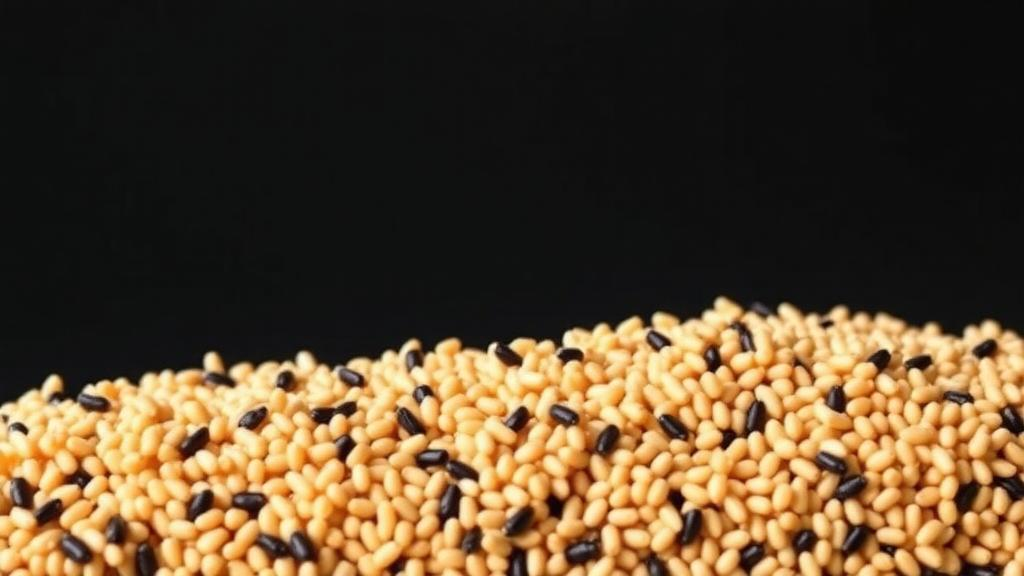
Sorghum has long been celebrated as one of the world’s most climate-resilient cereals, thriving in arid environments where wheat and maize falter. But a new study from Australian researchers suggests the crop’s value may extend far beyond drought tolerance. In the most comprehensive analysis of its kind, scientists have mapped the phenolic chemistry of thirteen Australian-grown sorghum genotypes, revealing dramatic differences in antioxidant capacity that track closely with grain colour, genetics, and growing location. The findings, published in the Journal of Agriculture and Food Research, position deeply pigmented black and brown sorghum varieties as candidates for functional foods and nutraceutical applications.
The research team, led by Yenealem Solomon Kebede and colleagues at Charles Sturt University, analysed thirteen sorghum varieties sourced from field trials in Bellata and Croppa Creek in New South Wales, glasshouse trials in Queensland, and commercial seed suppliers. The varieties spanned the full colour spectrum of the species, from white-pericarp Liberty and experimental white lines through red commercial hybrids MR-Buster and MR-Bazley to brown B14A111 and the black-pericarp Shawaya Short Black-1. Whole grains were milled, defatted with hexane, and extracted using acidified acetone, a solvent system chosen specifically for its ability to liberate condensed tannins and anthocyanidins that more conventional methanol extractions often miss.
The results were striking. The black sorghum variety Shawaya Short Black-1 recorded a total phenolic content of 11.08 milligrams of gallic acid equivalents per gram, roughly seventy times higher than the white variety 2069A353-01, which measured just 0.16 milligrams per gram. The brown genotype B14A111 followed closely at 8.16 milligrams per gram. Red varieties occupied an intermediate range, while white genotypes clustered at the bottom. This gradient mirrors the biology of pericarp pigmentation: varieties carrying dominant B1 and B2 genes, and particularly those with the dominant spreader gene that produces brown pericarp, accumulate far higher levels of tannins and other polyphenols in their seed coats.
Antioxidant assays told the same story. Using three complementary tests, DPPH and ABTS radical scavenging, which measure hydrogen donation, and the FRAP assay, which measures electron transfer to ferric ions, the team found that black and brown sorghum consistently outperformed their paler counterparts. Shawaya Short Black-1 topped the DPPH and FRAP rankings at 18.94 and 18.96 milligrams of Trolox equivalents per gram respectively, while the brown B14A111 led the ABTS assay at 6.31 milligrams per gram. Statistical correlations between phenolic content and antioxidant activity were exceptionally strong, with Pearson coefficients approaching 0.98 for the DPPH assay, confirming that the polyphenols themselves, rather than some other grain constituent, drive the antioxidant effect.
The analytical centrepiece of the study was a high-resolution UHPLC-DAD-ESI-QTOF-MS/MS platform coupled with online ABTS detection, a setup that allowed the researchers to separate individual phenolic compounds, fragment them for structural analysis, and simultaneously detect which ones actively scavenge radicals. In total, eighty phenolic compounds were tentatively annotated across the thirteen varieties, spanning phenolic acids, phenol amides, flavanones, flavan-3-ols, flavanonols, flavones, isoflavonoids, 3-deoxyanthocyanidins, and proanthocyanidins. Identification confidence was graded according to the Schymanski guidelines, with authentic standards of ferulic acid, caffeic acid, procyanidin B3, luteolin, and apigenin anchoring the highest-confidence assignments.
Among the most significant discoveries were the high-molecular-weight condensed tannins. The team identified B-type procyanidin dimers, trimers, and tetramers, including an A-type procyanidin tetramer rarely reported in cereals, concentrated in the black and brown varieties. Previous sorghum profiling studies using aqueous methanol had failed to detect these larger polymers, and the authors attribute their success to the acidified acetone extraction, which is known to efficiently solubilise condensed tannins. These polymeric proanthocyanidins, built from flavan-3-ol units linked by C4-C6 and C4-C8 bonds, carry abundant free hydroxyl groups that make them potent electron donors, and they are increasingly linked to anti-inflammatory and antioxidant health benefits.
The study also documented an unusually rich array of phenol amides, with N,N’-dicaffeoylspermidine emerging as the most abundant compound across all thirteen extracts. These caffeic-acid-conjugated polyamines, found in multiple isomeric forms, have been associated in prior research with anti-diabetic, anti-cancer, anti-inflammatory, and neuroprotective activities. Their ubiquity across white, red, brown, and black genotypes suggests that even pale sorghum varieties contribute meaningful bioactive chemistry, even if their total antioxidant capacity is modest.
Genotype and environment both left their fingerprints on the chemistry. The same red and white varieties grown at Bellata showed slightly higher total phenolic content than those grown at Croppa Creek, while the red commercial lines A50, A88, and A90 from Queensland displayed notably lower phenolic levels than the New South Wales red varieties. The white Liberty variety, by contrast, was statistically indistinguishable across locations. This genotype-by-environment interaction underscores a persistent challenge for breeders: selecting for high polyphenol content requires either controlled growing conditions or multi-location trials to separate genetic potential from environmental noise. The authors acknowledge this limitation and plan follow-up studies using grains grown under identical conditions to isolate genetic effects.
Several compounds detected in the study had never before been reported in sorghum. Four isomers of catechin-(4alpha->8)-pelargonidin 3′-glucoside, anthocyanin dimers covalently linked to flavan-3-ol units previously known only from strawberries, were identified in the black and brown varieties. The team also tentatively annotated a procyanidin trimer triglycoside whose detailed structure remains unresolved, along with pyrano-flavonoid derivatives and the isoflavone puerarin, a compound with documented pharmacological activity against neurological, cardiovascular, and metabolic disease in preclinical models. The only 3-deoxyanthocyanidin detected, apigeninidin, was found in red varieties and adds to growing interest in these pigments, which are more stable under heat and pH stress than common anthocyanins and have shown chemopreventive properties in recent studies.
The practical implications reach from farm to pharmacy. For breeders, the study provides a chemical roadmap for selecting varieties with superior nutritional profiles, with black and brown genotypes as obvious lead candidates. For food manufacturers, the distinct phenolic profiles suggest opportunities to formulate sorghum-based functional ingredients targeting oxidative stress and inflammation. And for consumers, the message is simple: the darker the grain, the richer the antioxidant payload. As climate variability pushes agriculture toward hardier crops, sorghum’s combination of drought resilience and bioactive chemistry may finally earn it a place on plates well beyond its traditional strongholds in Africa and Asia.
Subject of Research: Phenolic composition and antioxidant activity of Australian-grown sorghum genotypes
Article Title: Comprehensive characterisation of phenolic composition and antioxidant activity across diverse Australian-grown sorghum ( Sorghum bicolor L. Moench) genotypes
Article References: Kebede, Y. S., Marefa, J., Budiono, B. P., Blanchard, C., & Santhakumar, A. B. (2026). Comprehensive characterisation of phenolic composition and antioxidant activity across diverse Australian-grown sorghum (Sorghum bicolor L. Moench) genotypes. Journal of Agriculture and Food Research, Article 103349. https://doi.org/10.1016/j.jafr.2026.103349
Image Credits: AI Generated
DOI: 10.1016/j.jafr.2026.103349
Keywords: sorghum, polyphenols, antioxidants, condensed tannins, proanthocyanidins, 3-deoxyanthocyanidins, UHPLC-MS/MS, functional foods, grain colour, genotype, flavonoids, food chemistry
Cite Scienmag News
Alan Morgan. (October 4, 2026). Black Sorghum Emerges as Antioxidant Powerhouse in Landmark Australian Grain Study. Scienmag. https://scienmag.com/black-sorghum-emerges-as-antioxidant-powerhouse-in-landmark-australian-grain-study/
Alan Morgan. "Black Sorghum Emerges as Antioxidant Powerhouse in Landmark Australian Grain Study." Scienmag, 4 October 2026, https://scienmag.com/black-sorghum-emerges-as-antioxidant-powerhouse-in-landmark-australian-grain-study/. Accessed 4 October 2026.
Alan Morgan. "Black Sorghum Emerges as Antioxidant Powerhouse in Landmark Australian Grain Study." Scienmag. October 4, 2026. https://scienmag.com/black-sorghum-emerges-as-antioxidant-powerhouse-in-landmark-australian-grain-study/


