


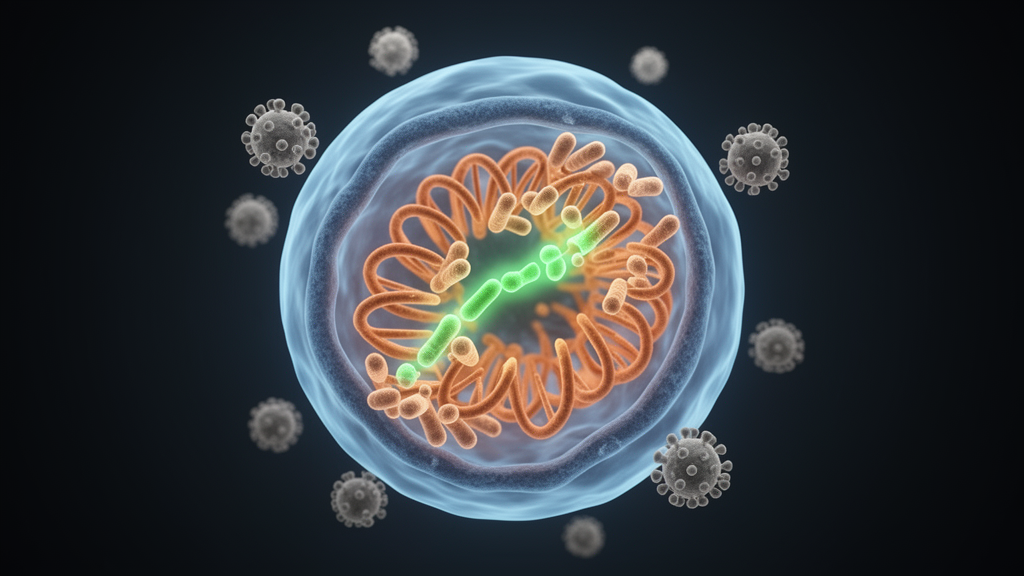
Human retroviruses such as HIV-1 and human T-cell leukemia virus type 1 (HTLV-1) persist for decades in infected individuals not only because they evade immune defenses, but because they co-opt the epigenetic machinery of the cells they invade. A new review published in Molecular Biology Reports synthesizes what is known about one family of epigenetic regulators, the bromodomain-containing proteins, and argues that a comparatively obscure member of this family, BRD9, may represent an underappreciated player in retroviral persistence and a candidate target for future therapies. The review, authored by Mohammad Mehdi Akbarin, Zahra Farjami, and Hugo Ramírez Álvarez, draws on the extensive literature surrounding the well-characterized BET proteins to frame the emerging, and still very limited, evidence implicating BRD9 in HIV-1 latency.
Bromodomain proteins are epigenetic readers. They do not chemically modify chromatin themselves; instead, they recognize acetylated lysine residues on histone tails and on certain non-histone proteins, and recruit transcriptional regulators and chromatin-remodeling complexes to those acetylated regions. The human genome encodes 61 bromodomains distributed across 46 proteins, organized into eight major evolutionary families. All bromodomains share a conserved four-helix fold, with the ZA and BC loops forming a hydrophobic pocket that binds acetyl-lysine through a conserved asparagine residue. Variation in these loops determines which acetylation patterns each bromodomain recognizes, and this structural diversity underlies the remarkable functional specialization within the family, from transcriptional activation and enhancer regulation to DNA repair and innate immune signaling.
The most intensively studied bromodomain proteins in virology belong to the bromodomain and extra-terminal (BET) family: BRD2, BRD3, BRD4, and BRDT. These proteins carry two tandem bromodomains and an extra-terminal domain, and BRD4 and BRDT additionally possess a C-terminal domain that interacts with positive transcription elongation factor b (P-TEFb), a complex of CDK9 and Cyclin T1 that drives RNA polymerase II-dependent transcriptional elongation. Because integrated retroviruses depend entirely on host transcription machinery, BET proteins sit at the heart of how HIV-1 and HTLV-1 control expression of their genomes. Non-BET bromodomain proteins, by contrast, often operate within ATP-dependent SWI/SNF chromatin-remodeling complexes, where they regulate chromatin accessibility rather than elongation directly.
In HIV-1 infection, the role of BRD4 has been defined over two decades of work. Early studies identified BRD4 as a recruiter of P-TEFb to cellular promoters, and subsequent research revealed a more nuanced picture: BRD4 can act as a negative regulator of HIV transcription by competing with the viral Tat protein for access to P-TEFb. A conserved P-TEFb-binding domain within BRD4 inhibits HIV transcription, and related work showed that BRD4 modulates Tat-dependent elongation through phosphorylation of CDK9 at threonine 29. Later studies demonstrated that BRD4 liberates P-TEFb from the inhibitory 7SK snRNP complex through a dual-binding mechanism, and that BRD4 is also an atypical kinase capable of phosphorylating serine 2 of the RNA polymerase II C-terminal domain. Together these findings established the Tat–P-TEFb axis, and BRD4’s position within it, as a central determinant of HIV-1 gene expression.
Bromodomain proteins also govern HIV latency, the state in which proviral DNA sits transcriptionally silent in host chromatin, forming the reservoir that prevents eradication of the virus. BET inhibition with compounds such as JQ1 reactivates latent HIV-1, both by antagonizing BRD4-mediated repression of Tat transactivation and through Tat-independent mechanisms. Notably, the short isoform of BRD4 was shown to promote latency by recruiting repressive SWI/SNF complexes to the proviral promoter, a finding that directly connected bromodomain biology to chromatin-remodeling machinery. Genome-wide CRISPR screens have since confirmed that latency is maintained by interconnected epigenetic and transcriptional pathways rather than by any single host factor. Therapeutically, BET inhibitors have been explored both as latency-reversing agents for shock-and-kill strategies and, in the case of BRD4-selective molecules such as ZL0580, as block-and-lock compounds that durably suppress proviral transcription.
Against this backdrop, BRD9 has recently entered the field. BRD9 is not a BET protein; it contains a single bromodomain with a distinctive tyrosine gatekeeper residue and serves as a defining component of the non-canonical BAF (ncBAF) complex, one of three compositionally distinct mammalian SWI/SNF assemblies alongside canonical BAF and PBAF. ncBAF contains BRD9 together with GLTSCR1 or GLTSCR1L, and its ATP-dependent remodeling activity alters nucleosome positioning and the accessibility of regulatory DNA. In 2025, Luk and colleagues provided the first direct experimental evidence that BRD9-containing ncBAF complexes regulate chromatin accessibility at the HIV-1 provirus, influencing proviral transcriptional competence, latency maintenance, and viral reactivation. Using complementary genetic and pharmacological approaches, the study established BRD9 as a bona fide host factor involved in HIV persistence, and suggested that selective BRD9 inhibition could support block-and-lock strategies aimed at durable proviral silencing.
The review’s authors are careful to stress that this single study marks the beginning, not the culmination, of BRD9 research in retrovirology. Independent validation, mechanistic work across multiple reservoir cell types, and characterization of BRD9 interaction partners remain necessary. Several fundamental questions are unresolved: how BRD9 is recruited to retroviral chromatin, whether it cooperates with or acts independently of BRD4, and what its genomic occupancy at proviral loci looks like. The authors also caution that most bromodomain-targeted compounds evaluated in HIV cure research, including JQ1, CPI-203, and OTX015, are pan-BET inhibitors, so their antiviral effects cannot be attributed to BRD9. Future studies will require selective BRD9 inhibitors or degraders to distinguish BRD9-specific mechanisms from the broader consequences of BET inhibition.
The picture for HTLV-1 is even more preliminary. No direct experimental study has yet examined BRD9 in HTLV-1 infection. What is established comes almost entirely from BET protein research. The viral transactivator Tax was shown to modulate the BRD4–P-TEFb interaction, competing with BRD4 and with the inhibitory 7SK snRNP/HEXIM1 complex to increase the pool of active P-TEFb available for the HTLV-1 long terminal repeat promoter. BET inhibition with JQ1 suppresses Tax-mediated cellular transformation and reduces NF-κB signaling, a pathway constitutively activated in HTLV-1-transformed cells. More recently, BET inhibition disrupted the BATF3/IRF4-dependent transcriptional network essential for adult T-cell leukemia/lymphoma (ATLL) cell survival, supporting the idea that ATLL cells are transcriptionally addicted to bromodomain-regulated programs. Resistance, however, is a documented challenge: loss of FBXW7-mediated BRAF degradation promotes BET inhibitor resistance in ATLL cells through sustained MAPK signaling, underscoring the likely need for combination therapies.
Whether BRD9 contributes to HTLV-1 transcription, proviral chromatin organization, Tax- or HBZ-mediated regulation, or ATLL leukemogenesis remains entirely unknown, and the review presents it only as a biologically plausible, untested candidate. Given ncBAF’s roles in enhancer accessibility, three-dimensional chromatin architecture, and signaling-dependent transcription, the question is well worth asking. The authors propose a research agenda: mapping BRD9 genomic occupancy with ChIP-seq, CUT&RUN, CUT&Tag, and single-cell multi-omics; identifying viral and cellular interaction partners proteomically; testing BRD9 function across HIV reservoirs including resting CD4-positive T cells, macrophages, and tissue-resident immune cells; and evaluating selective BRD9 inhibitors, degraders, and PROTACs in preclinical retroviral models. If BRD9-specific modulation proves feasible and safe, it could open a genuinely new epigenetic front in the effort to control retroviral persistence, reverse latency, or prevent retrovirus-associated malignancy, while reinforcing a broader lesson of the field: bromodomain proteins are not a single mechanistic class, but a diverse family of chromatin readers whose individual contributions to viral pathogenesis must each be established on their own experimental footing.
Subject of Research: The roles of bromodomain-containing proteins, particularly BRD9 and BRD4, in regulating chromatin, transcription, and latency during HIV-1 and HTLV-1 infection
Article Title: BRD proteins in human retroviral infection: emerging evidence from HIV-1 and future perspectives for HTLV-1
Article References: BRD proteins in human retroviral infection: emerging evidence from HIV-1 and future perspectives for HTLV-1. (n.d.). https://doi.org/10.1007/s11033-026-12778-8
Image Credits: AI Generated
DOI: 10.1007/s11033-026-12778-8
Keywords: BRD9, BRD4, bromodomain proteins, HIV-1, HTLV-1, viral latency, chromatin remodeling, ncBAF, P-TEFb, epigenetics, ATLL, retrovirus
Cite Scienmag News
Juliet Wilcox. (October 15, 2026). Beyond BRD4: Bromodomain Protein BRD9 Emerges as a New Regulator of Retroviral Latency. Scienmag. https://scienmag.com/beyond-brd4-bromodomain-protein-brd9-emerges-as-a-new-regulator-of-retroviral-latency/
Juliet Wilcox. "Beyond BRD4: Bromodomain Protein BRD9 Emerges as a New Regulator of Retroviral Latency." Scienmag, 15 October 2026, https://scienmag.com/beyond-brd4-bromodomain-protein-brd9-emerges-as-a-new-regulator-of-retroviral-latency/. Accessed 15 October 2026.
Juliet Wilcox. "Beyond BRD4: Bromodomain Protein BRD9 Emerges as a New Regulator of Retroviral Latency." Scienmag. October 15, 2026. https://scienmag.com/beyond-brd4-bromodomain-protein-brd9-emerges-as-a-new-regulator-of-retroviral-latency/


