


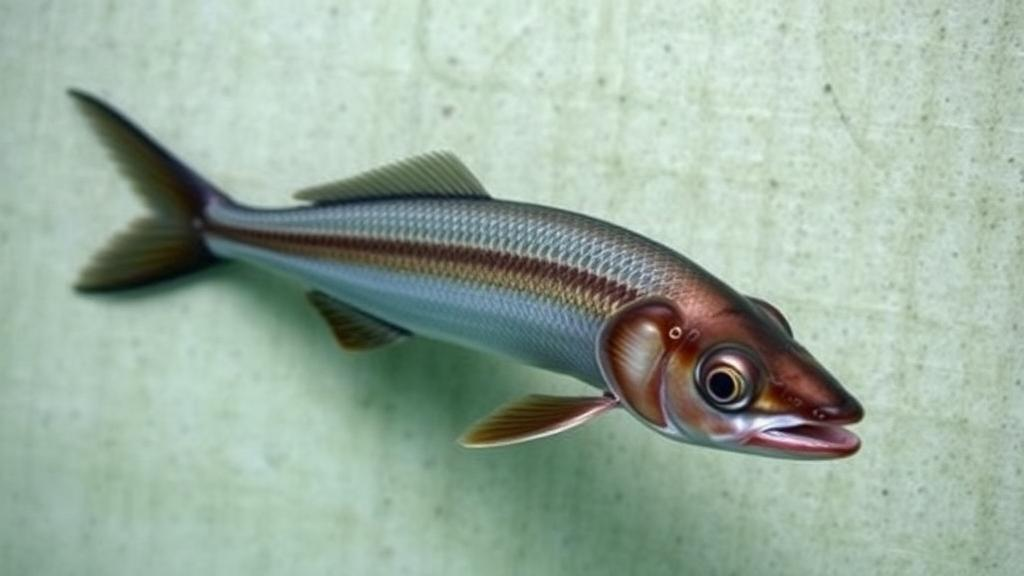
A study published on 19 March 2025 examined Ayu fish nursery conditions in three Vietnamese estuaries using field sampling, satellite imagery and a hybrid artificial-intelligence model. Researchers detected Ayu, Plecoglossus altivelis, in Ka Long and Ba Lat, but not in Dinh during the surveys. The results describe differences between these sampled locations; they do not establish that Ayu occur in only two estuaries nationwide or quantify habitat loss over time.
The Ayu is a small, salmon-like fish that reproduces in rivers. After hatching, its larvae drift downstream with river currents into coastal waters, where they spend the winter before returning upstream to mature for the following spawning season. Sandy shorelines and estuaries are therefore central to the species’ life cycle, functioning as transitional nurseries where young fish can feed, grow and survive before migration. These habitats are not uniform refuges. Temperature, salinity, turbidity, mangrove cover, access to river sources and distance from cities can all alter the conditions encountered by larvae and juveniles, while coastal development and aquaculture may compound the pressures.
To examine these relationships, the research team sampled locations in Ka Long, Ba Lat and Dinh. They collected 63 samples from Ka Long in Quang Ninh province between September and December 2021, 77 from Ba Lat in Nam Dinh province between March and April 2022, and 54 from Dinh in Ninh Thuan province between May and June 2022. At each location, the researchers measured water temperature, salinity, turbidity and chlorophyll-a. Larvae and juveniles were separated under a dissecting microscope and identified by external morphology. Catch per unit effort, or CPUE, was calculated from small-seine hauls designed to capture fish in shallow shoreline habitats.
The model predicted mean CPUE values of 105.10 Ayu per haul in Ka Long and 52.86 per haul in Ba Lat. These are the modeled estimates reported in Table 4, not observed mean catches from field sampling. No Ayu were found at any of the 54 Dinh sites. Ka Long also displayed a broader predicted range in abundance, from 0.35 to 732.28 individuals per haul, compared with 0.60 to 218.50 at Ba Lat. The absence of Ayu at Dinh was associated with environmental conditions that differed markedly from those in the northern estuaries, including higher average turbidity and greater salinity.
The researchers integrated these field measurements with a Digital Elevation Model, geographic information on mangroves and urban areas, and sun-glint-corrected Sentinel-2 satellite imagery. They then used an Adaptive Neuro-Fuzzy Inference System, a framework that combines fuzzy logic with neural-network learning, to estimate Ayu CPUE. An ant colony optimization algorithm was added to search for the model’s most useful parameters and reduce the complexity of the environmental input. For each estuary, 70% of observations were used for training and 30% for validation, allowing the researchers to compare predictions with measured catches across both sampled and unsurveyed locations.
Ant colony optimization selected temperature, salinity and turbidity as the three strongest environmental correlates of Ayu presence. In Ka Long, their correlation coefficients with CPUE were 0.47, 0.54 and 0.40, respectively; at Ba Lat, the corresponding values were 0.49, 0.50 and 0.42. Mangrove proximity, distance from the river source and distance from urban centers also showed comparatively strong relationships. The model identified favorable conditions as temperatures of about 19–25°C, salinity below 15 parts per thousand and turbidity below 18 nephelometric turbidity units, with the highest CPUE category associated with water below 13 parts per thousand salinity and below 10 turbidity units.
These modeled relationships offer hypotheses about differences between the sampled estuaries; they do not by themselves establish the cause of the absence at Dinh. Dinh’s water reached maximum values of 25.27°C, 34.43 parts per thousand salinity and 43.90 turbidity units, with means of 20.09°C, 16.34 parts per thousand and 35.27 turbidity units. Although its mean temperature fell within the favorable range, mean salinity exceeded the preferred threshold and turbidity was substantially higher. The estuary also has a history of aquaculture development, including shrimp farming, as well as other human pressures. The findings therefore point to the combined effects of hydrography and human activity rather than a single environmental variable.
Performance metrics showed that the hybrid model could reproduce observed patterns with reasonable accuracy. At Ka Long, the coefficient of determination was 0.84 for training data and 0.79 for validation data, with a root mean square error of 7.00 individuals per haul and a mean absolute error of 3.10. At Ba Lat, the corresponding training and validation values were 0.81 and 0.75, while root mean square error was 5.54 and mean absolute error 2.41. Area under the receiver operating characteristic curve was 0.804 for Ka Long and 0.793 for Ba Lat. These results support the model as a practical tool for mapping Ayu nursery habitat, although its performance has not yet been established across a broad national network of estuaries.
The analysis indicates that predicted nursery suitability differs between the surveyed estuaries and within them. Ka Long appears to provide the strongest nursery conditions, and its maximum predicted CPUE was about 3.4 times that of Ba Lat, but even there the distribution was patchy. That concentration means losses in a limited number of productive sites could have disproportionate consequences for the population. Mapping environmental thresholds and predicted abundance can help conservation authorities prioritize estuarine sections, design field monitoring and identify changes associated with climate variability, urban expansion, aquaculture and habitat fragmentation. Further validation across other Vietnamese estuaries will be essential before the model can be treated as a broad management tool.
Editorial correction: The mean CPUE values of 105.10 and 52.86 are model predictions, not observed mean catches. The headline and introduction now reflect the three-estuary survey scope and the 2025 publication date. A total of 194 sites has been removed because the source’s stated total conflicts with its listed sample counts and requires clarification.
Subject of Research: Environmental controls and nursery distribution of Ayu larvae in three Vietnamese estuaries
Article Title: Assessment of the nursery environment and distribution of Ayu, Plecoglossus altivelis ( Actinopterygii , Osmeriformes , Plecoglossidae ), in Vietnam
Article References: Chu, H. X., Le, T. Q., Nguyen, N. M., Tong, A. H. T., Bui, H. Q., Hoang, H., Nguyen, H. P., Nguyen, H. D., & Do, A. N. T. (2025). Assessment of the nursery environment and distribution of Ayu, Plecoglossus altivelis (Actinopterygii, Osmeriformes, Plecoglossidae), in Vietnam. Acta Ichthyologica et Piscatoria, 55, 19-29. https://doi.org/10.3897/aiep.55.140634
Image Credits: AI Generated
Keywords: Ayu fish, Plecoglossus altivelis, nursery habitat, Vietnam estuaries, machine learning, water salinity, water turbidity, river temperature, conservation, remote sensing, Assessment, nursery
Cite Scienmag News
Blake Davidson. (October 19, 2026). Survey detects Ayu larvae in two of three Vietnamese estuaries. Scienmag. https://scienmag.com/ayu-fish-found-in-only-two-northern-vietnamese-estuaries/
Blake Davidson. "Survey detects Ayu larvae in two of three Vietnamese estuaries." Scienmag, 19 October 2026, https://scienmag.com/ayu-fish-found-in-only-two-northern-vietnamese-estuaries/. Accessed 19 October 2026.
Blake Davidson. "Survey detects Ayu larvae in two of three Vietnamese estuaries." Scienmag. October 19, 2026. https://scienmag.com/ayu-fish-found-in-only-two-northern-vietnamese-estuaries/


