


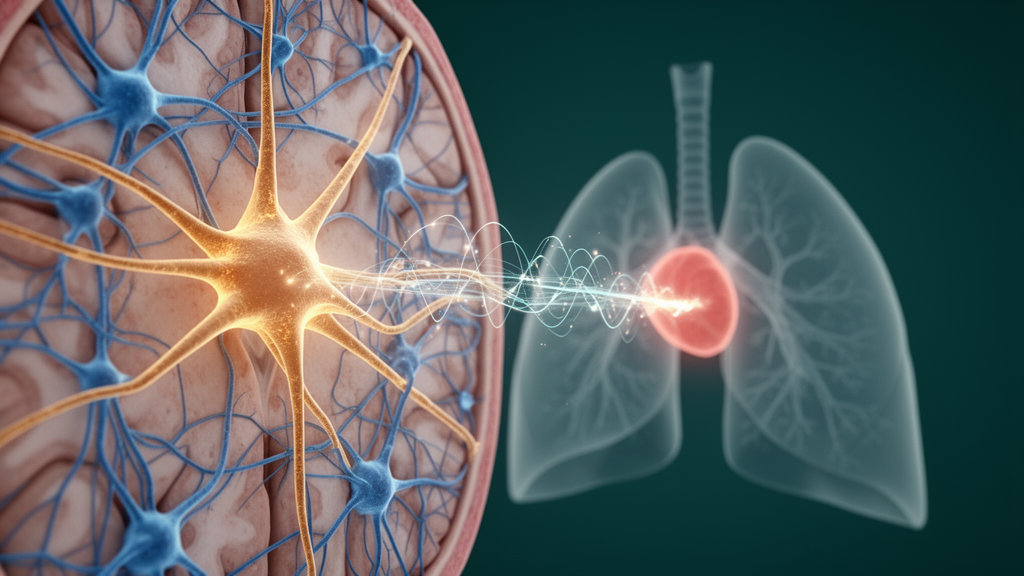
Sudden unexpected death in epilepsy, known as SUDEP, remains the leading cause of death among people with epilepsy, and its defining feature is a terrifyingly rapid terminal cascade: respiratory failure, cardiac arrhythmia, and widespread cerebral suppression, all unfolding within minutes of a seizure. For decades, this fatal sequence was studied almost exclusively through the lens of neurons, the electrically excitable cells whose hypersynchronized firing defines the epileptic brain. A new review published in Frontiers in Network Physiology argues that this neuron-centric view is incomplete. The authors, led by Isato Fukushi of Aomori University of Health and Welfare, marshal evidence that astrocytes, the star-shaped glial cells long dismissed as passive support cells, sit at a critical junction between seizure activity, breathing dysfunction, and the lethal outcome that defines SUDEP.
The review’s central premise rests on a conceptual shift that has been gathering momentum in neuroscience: epilepsy is not a neuron-proprietary disorder. Astrocytes actively shape brain function through what researchers now call the active milieu, an integrated cellular network encompassing neurons, glia, vasculature, and the extracellular matrix. Within this framework, astrocytes perform two homeostatic functions that are directly relevant to seizure generation. First, they regulate extracellular potassium concentrations through the inwardly rectifying potassium channel Kir4.1. Because the extracellular space is limited, intense neuronal activity can drive extracellular potassium to 10 to 12 millimolar, levels characteristic of epileptiform activity. Astrocytes counteract this through spatial potassium buffering, a process in which potassium ions enter astrocytes at sites of high concentration and exit at distant sites through the coupled glial syncytium, effectively redistributing the ionic load across the tissue.
Second, astrocytes clear glutamate, the brain’s principal excitatory neurotransmitter, from the synaptic cleft. Under physiological conditions, glutamate released during synaptic transmission is taken up by astrocytes, converted to glutamine by the enzyme glutamine synthetase, and recycled back to neurons in what is known as the glutamate-glutamine cycle. This uptake is electrogenic and enhanced at hyperpolarized membrane potentials, meaning it depends critically on the astrocyte’s own electrical state. When either of these homeostatic mechanisms fails, the consequences are immediate and severe. Elevated extracellular potassium depolarizes neuronal resting membrane potentials and lowers the seizure threshold, while impaired glutamate reuptake allows the neurotransmitter to overstimulate neurons and trigger seizures. Animal studies have shown that Kir4.1 is essential for astrocytic potassium buffering, and astrocyte-specific deletion of Kcnj10, the gene encoding Kir4.1, disrupts both potassium and glutamate uptake, leading to increased seizure activity and premature death.
The review also highlights a more nuanced picture of astrocytic involvement in epilepsy, one that resists simple categorization. Reactive astrogliosis, the transformation of astrocytes into an activated state following neurological insults such as traumatic brain injury, stroke, status epilepticus, or viral infection, is a hallmark of the epileptic focus. Reactive astrocytes release pro-inflammatory cytokines, including interleukin-1β and tumor necrosis factor-α, which reinforce epileptogenic inflammatory signaling and play a key role in seizure initiation. Recurrent excitatory loops between astrocytes and neurons, driven by astrocytic calcium elevation, correlate with the initiation and sustenance of ictal discharges. Yet in a striking counterpoint, a recent study demonstrated that optogenetic activation of channelrhodopsin-2-expressing astrocytes exerts an anti-seizure effect on kainic acid-induced neocortical seizures, driven by stimulation of astrocytic Na⁺-K⁺-ATPase through sodium influx, independent of calcium signaling. Astrocytes, in other words, exhibit marked functional heterogeneity and can either promote or suppress seizure activity depending on the pathological context.
Where the review makes its most provocative contribution is in connecting these astrocytic mechanisms to the respiratory dysfunction that precedes SUDEP. Hypoxia occupies a central place in this connection. Mild hypoxia increases ventilation through carotid body activation, and brainstem astrocytes contribute to this hypoxic ventilatory augmentation by directly sensing low oxygen and enhancing respiratory output via gliotransmission. Severe hypoxia, however, tells a different story. After an initial augmentation, severe hypoxia inhibits the brainstem respiratory circuit, causing diminished ventilation, exacerbated hypoxia, and global brain suppression. This deepens ventilatory depression in a vicious cycle that culminates in respiratory arrest and death. The authors’ own experimental work provides a compelling piece of evidence: pretreatment with arundic acid, an inhibitor of astrocytic activation, delays the onset of severe hypoxia-induced seizures and respiratory arrest in mice. This finding suggests that excessive astrocytic activation during severe hypoxia may promote neuronal hyperexcitability and hypersynchrony, facilitating seizure generation and potentially seizure-induced respiratory arrest.
The review proposes a sequential activation model in which microglia, the brain’s resident immune cells, act first. Severe hypoxia activates microglia, which release ATP that binds to P2Y1 receptors on neighboring astrocytes, stimulating them in a paracrine manner. Activated microglia lower the seizure threshold by promoting pro-inflammatory cytokines and astrocytic glutamate release. Thus, hypoxia-enhanced microglial activation in brain regions critical for epileptogenesis drives seizure onset and the subsequent astrocytic activation, which in turn precipitates postictal ventilatory suppression. This microglia-first, astrocyte-second sequence has been demonstrated in epileptic models and represents a key mechanism linking hypoxia to both epileptogenesis and respiratory compromise.
On the respiratory side, the review assembles evidence that brainstem structures, including the pre-Bötzinger complex, the parafacial respiratory group and retrotrapezoid nucleus, and the nucleus tractus solitarius, are essential for maintaining adequate respiratory regulation. Neuropathological studies have consistently demonstrated volume loss of the ventrolateral medulla in SUDEP victims, accompanied by reductions in both neurons and astrocytes. This volume loss deepens as epilepsy progresses, implicating chronic brainstem dysfunction in postictal respiratory compromise. Seizures originate in the cortex, but lethality involves disruption of autonomic and respiratory function at the brainstem level. Brainstem respiratory centers maintain reciprocal connections with multiple cortical and subcortical structures, providing an anatomical substrate through which seizure activity can propagate and suppress respiratory output. Specifically, hyperexcitability of GABAergic neurons in the nucleus tractus solitarius reduces the threshold for spreading depolarization, a self-propagating wave of near-complete neuronal excitation accompanied by ionic and neurotransmitter homeostasis disruption that can facilitate acute respiratory and cardiac shutdown.
The review also addresses the controversial role of postictal generalized EEG suppression, or PGES, which has been proposed as a biomarker of SUDEP risk. Studies have shown that the occurrence and duration of PGES vary across seizures within individual patients, suggesting it may represent a seizure-specific, transient phenomenon rather than a stable trait-like marker. The authors argue that the pathophysiological processes underlying SUDEP likely extend beyond PGES itself and involve a rapid failure of cardiorespiratory and autonomic control, manifested by early postictal respiratory dysfunction and terminal ventricular arrhythmias. This perspective underscores the limitations of PGES as a standalone predictor and highlights the need to consider the broader context of postictal cardiorespiratory dysfunction.
Synthesizing these threads, the authors propose an integrative model of SUDEP pathogenesis. SUDEP is frequently initiated by terminal generalized tonic-clonic seizures. Upon seizure onset, activity propagates to the brainstem, sparking astrocytic dysfunction. Compromised astrocytic potassium buffering impedes clearance of elevated extracellular potassium, sustaining a lowered seizure threshold. Astrocytic impairment also attenuates carbon dioxide sensitivity and the hypercapnic ventilatory response while suppressing the release of gliotransmitters such as ATP, collectively destabilizing respiratory regulation. Seizure propagation within the brainstem disrupts central autonomic networks, triggering central and obstructive apneas and hypoventilation, which lead to acute ventilatory failure. Intertwined astrocytic and respiratory disturbances contribute to hypoxia and hypercapnia, precipitating cardiorespiratory collapse. In this model, astrocytic malfunction and breathing deficit trap the body in a harmful feedback loop that pushes epilepsy toward sudden death.
The review acknowledges significant open questions. It remains unresolved whether astrocytic epileptic alterations are the driving pathogenic force or secondary responses to recurrent seizures. It is also unclear whether epilepsy-associated genes expressed by neurons or astrocytes within brainstem respiratory networks contribute directly to respiratory susceptibility to SUDEP, and how dysregulated astrocytic potassium buffering, glutamate clearance, and gliotransmission influence seizure propagation into the brainstem requires further clarification. Nevertheless, the therapeutic implications are substantial. Restoring astrocytic homeostasis, including potassium buffering, glutamate clearance, gliotransmission, and the regulation of neuroinflammation, opens novel avenues for preventing seizure progression and reducing SUDEP risk. Elucidating bidirectional communication between astrocytes and microglia may identify additional interventions. As the authors conclude, a more comprehensive understanding of neuron-glia interactions within the active neuronal milieu will not only advance understanding of epileptic pathophysiology but also accelerate the development of targeted preventative and therapeutic measures for one of epilepsy’s most devastating outcomes.
Subject of Research: The role of astrocyte dysfunction in peri-ictal breathing impairment and sudden unexpected death in epilepsy
Article Title: Astrocytes at the interface of peri-ictal breathing dysfunction and SUDEP
Article References: Fukushi, I., Ozaki, I., Pokorski, M., & Okada, Y. (2026). Astrocytes at the interface of peri-ictal breathing dysfunction and SUDEP. Frontiers in Network Physiology, 6, Article 1955271. https://doi.org/10.3389/fnetp.2026.1955271
Image Credits: AI Generated
DOI: 10.3389/fnetp.2026.1955271
Keywords: SUDEP, astrocytes, epilepsy, hypoxia, respiratory failure, brainstem, Kir4.1, microglia, gliotransmission, spreading depolarization, neuroinflammation, pre-Bötzinger complex
Cite Scienmag News
Cassandra Pierce. (October 16, 2026). Astrocytes Emerge as Central Players in the Deadly Chain Linking Seizures to Breathing Failure. Scienmag. https://scienmag.com/astrocytes-emerge-as-central-players-in-the-deadly-chain-linking-seizures-to-breathing-failure/
Cassandra Pierce. "Astrocytes Emerge as Central Players in the Deadly Chain Linking Seizures to Breathing Failure." Scienmag, 16 October 2026, https://scienmag.com/astrocytes-emerge-as-central-players-in-the-deadly-chain-linking-seizures-to-breathing-failure/. Accessed 16 October 2026.
Cassandra Pierce. "Astrocytes Emerge as Central Players in the Deadly Chain Linking Seizures to Breathing Failure." Scienmag. October 16, 2026. https://scienmag.com/astrocytes-emerge-as-central-players-in-the-deadly-chain-linking-seizures-to-breathing-failure/


