


Antibody–drug conjugates, once a niche corner of oncology drug development, have become one of the fastest-moving fields in cancer medicine, and a new comprehensive review published in Holistic Integrative Oncology maps both their remarkable rise and the stubborn problems that still stand between them and broader patient benefit. The review, led by Teng Yang and colleagues at Zhejiang Cancer Hospital and the Hangzhou Institute of Medicine of the Chinese Academy of Sciences, with Takaya Shimura of Nagoya City University as a co-author, synthesizes the clinical landscape of ADCs in solid tumors with regulatory and clinical information updated through 7 September 2026. Its central argument is twofold: ADCs have delivered transformative results in several refractory cancers, yet their clinical application remains constrained by a shortage of actionable targets, unreliable predictive biomarkers, and safety signals—most notably ocular toxicity and interstitial lung disease—that no approved agent has fully escaped.
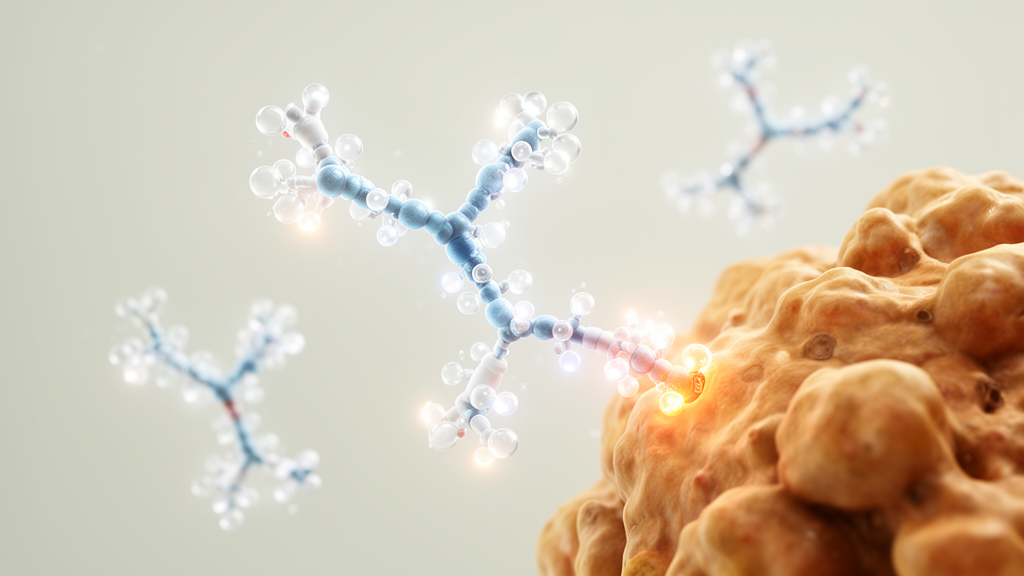
The therapeutic logic of an ADC is elegantly simple on paper. Each molecule combines three components: a monoclonal antibody that recognizes an antigen displayed on the surface of tumor cells, a chemical linker that holds the assembly together, and a cytotoxic payload far too potent to administer as a conventional drug. After infusion, the ADC circulates in the bloodstream, docks onto its target antigen, and is swallowed whole by the cancer cell through antigen-mediated endocytosis. Inside endosomes and lysosomes, the linker is cleaved and the payload is released, where it kills the cell by disrupting DNA replication or crippling microtubule function. The design goal is selective eradication—chemotherapy-grade killing delivered only to cells bearing the right molecular address, sparing normal tissue from the collateral damage that has defined cytotoxic therapy for decades.
Clinical reality has largely vindicated that concept, at least for a growing list of tumors. Since the U.S. Food and Drug Administration approved the first ADC, gemtuzumab ozogamicin (Mylotarg), in 2000, the field has progressed through three recognizable generations. First-generation conjugates from 2000 to 2012 relied on non-selective linkers and conventional payloads with limited efficacy. The second generation, spanning 2013 to 2019, introduced the linker and payload chemistry that made agents such as trastuzumab emtansine and trastuzumab deruxtecan clinically meaningful. The third generation, from 2020 onward, adds site-specific conjugation, bispecific antibody designs, and immunomodulatory payloads. The pace of approvals has accelerated sharply, and the authors anticipate a continued expansion that will keep reshaping the oncology formulary.
Yet the review is unsparing about who actually benefits. Clinically established ADC targets in solid tumors remain confined to a narrow set of molecules—HER2, TROP2, Nectin-4, folate receptor alpha, tissue factor, and c-MET, with Claudin 18.2-directed agents still investigational. Many membrane proteins and mutated subtypes prevalent in refractory gastrointestinal cancers remain unexplored; KRAS mutations, common in colorectal and pancreatic cancer and associated with poor prognosis, still have no approved ADC directed at them. Compounding the target scarcity is the pronounced intratumoral heterogeneity of solid tumors: within a single lesion, some cell subpopulations express the target abundantly while others show little or none. A single-target ADC may therefore eradicate only a fraction of the tumor, leaving target-negative subclones to seed relapse—and therapeutic pressure actively selects for resistant clones that have downregulated or lost the antigen altogether.
The biomarker problem is, if anything, more disorienting. In theory, the level of target antigen expression should predict response, and in some settings it does: trastuzumab emtansine works best in HER2-high breast cancer, and mirvetuximab soravtansine shows superior efficacy in folate receptor alpha-high, platinum-resistant ovarian cancer. But the correlation repeatedly breaks down. Trastuzumab deruxtecan benefits not only HER2-high patients but also those with HER2-low and, in the defined hormone receptor-positive population, even HER2-ultralow expression. Sacituzumab govitecan and other approved ADCs produce response rates that do not track cleanly with target levels. The authors argue that efficacy is governed by a far more complex biology—epitope accessibility, internalization and recycling kinetics, stromal composition, hypoxia, immune infiltration—and they point to emerging solutions ranging from genomic and transcriptomic profiling to patient-derived organoid assays and machine-learning models that integrate multimodal biomarker data for patient stratification.
Two engineering strategies dominate the search for solutions. The first is multispecificity: bispecific ADCs that recognize two distinct antigens, or two epitopes on the same antigen, can in principle sweep up heterogeneous tumor populations and exploit differential expression between malignant and healthy tissue to concentrate payload at the tumor site. Examples include ZW49, a HER2 biparatopic ADC that has completed a phase I study, and M1231, a MUC1×EGFR bispecific that achieved complete tumor regression in patient-derived xenograft models of non-small cell lung cancer and esophageal cancer. The second is payload diversification. Immune-stimulating antibody conjugates deliver small-molecule agonists—such as activators of the STING pathway—directly to the tumor microenvironment, aiming to ignite local innate immunity while avoiding the systemic toxicity that doomed earlier attempts with TLR7/8 agonists. The review highlights work combining STING activation with TGF-β and PD-L1 blockade, as well as dual-payload ADCs designed to produce additive or synergistic killing from a single molecule.
Sequencing and combination questions are becoming urgent as more patients cycle through multiple ADCs. Four ADCs are now FDA-approved for breast cancer: trastuzumab emtansine, trastuzumab deruxtecan, sacituzumab govitecan, and datopotamab deruxtecan. Some share antibody backbones, others share payload mechanisms—trastuzumab deruxtecan and sacituzumab govitecan both rely on topoisomerase I inhibition—and accumulating evidence suggests payload-mediated cross-resistance may be a dominant mechanism of acquired resistance. The Translational Breast Cancer Research Consortium is running one prospective registry study and three phase II trials to settle the question. Meanwhile, ADC–immunotherapy combinations have already produced an approved first-line regimen for metastatic urothelial carcinoma, but the disappointing results of pairing trastuzumab deruxtecan with immunotherapy show that rational combination design still requires a much deeper understanding of how individual ADCs remodel the tumor microenvironment.
Safety is the review’s most sobering chapter. A pooled meta-analysis cited by the authors found that treatment-related adverse events occur in more than 90 percent of ADC-treated patients, with 46 percent reaching grade 3 or higher—profiles comparable to, or worse than, conventional chemotherapy. Three agents—belantamab mafodotin, tisotumab vedotin, and mirvetuximab soravtansine—carry FDA boxed warnings for ocular toxicity. In the InnovaTV 204 trial of tisotumab vedotin in cervical cancer, roughly 53 percent of 101 patients experienced ocular adverse events, mostly low-grade conjunctivitis, dry eye, and keratitis, but two developed ulcerative keratitis requiring discontinuation and 22 percent needed dose reductions. Real-world data suggest belantamab-associated ocular toxicity may reach 90 percent in myeloma. The proposed mechanism is unsettling in its simplicity: ADCs accumulate in tears and corneal tissue through Fcγ receptor-mediated uptake by corneal epithelial and limbal stem cells, and the ocular surface’s poor drainage prolongs exposure.
Interstitial lung disease is the other defining hazard. Reported incidence for trastuzumab deruxtecan ranges from 7.6 to 26.4 percent, with some cases progressing to fatal pulmonary injury, and the HER2-targeted candidate ARX788 has shown rates as high as 32.7 percent. No validated pharmacologic prophylaxis exists; management rests on treatment interruption and prompt corticosteroids, with grade 2 or higher pneumonitis mandating permanent discontinuation of trastuzumab deruxtecan. The authors’ own prior work offers a mechanistic clue: alveolar macrophages internalize and process ADCs via Fcγ receptor-mediated phagocytosis, triggering local lung inflammation—an off-target, off-tumor pathway that engineering strategies such as site-specific conjugation, linker stabilization, and antibody masking have so far failed to translate into substantial clinical improvement. ADC development, they note, still leans on trial and error rather than mechanism-guided optimization.
The review closes on a note of ambition rather than resignation. China, which accounts for roughly 43.8 percent of global esophageal cancer cases and 37 percent of gastric cancer cases—against a backdrop of about 4.82 million new cancer diagnoses and 2.57 million cancer deaths in 2022—now hosts the world’s largest clinical pipeline of bispecific ADCs. BL-B01D1, an EGFR×HER3 bispecific developed by Sichuan Baili Pharmaceutical, achieved confirmed objective response rates of 44.1 percent in urothelial carcinoma; Jacobio Pharma’s HER2-targeted STING-agonist conjugate JAB-BX467 is in IND preparation; and Kanghong’s KH815, a dual-payload TROP2-directed ADC delivering both a topoisomerase I and an RNA polymerase II inhibitor, is in first-in-human testing. For the authors, these programs mark China’s transition from fast follower to innovator—and, more broadly, signal that the next generation of ADCs will be judged not by their ability to hit a single target, but by how intelligently they navigate the heterogeneity, biomarker uncertainty, and toxicity that the first two decades of the technology have laid bare.
Subject of Research: Antibody–drug conjugates for solid tumors: mechanisms, clinical landscape, and safety challenges
Article Title: Antibody–drug conjugates in solid tumors: current landscape, challenges, and future directions
Article References: Yang, T., Shimura, T., Wei, Q., & Cheng, X. (2026). Antibody–drug conjugates in solid tumors: current landscape, challenges, and future directions. Holistic Integrative Oncology, 5(1), Article 83. https://doi.org/10.1007/s44178-026-00304-6
Image Credits: AI Generated
DOI: 10.1007/s44178-026-00304-6
Keywords: antibody-drug conjugates, solid tumors, targeted therapy, HER2, interstitial lung disease, ocular toxicity, bispecific antibodies, biomarkers, cancer immunotherapy, payload diversification, China oncology pipeline, drug resistance
Cite Scienmag News
Nathaniel Bowman. (October 19, 2026). Antibody–Drug Conjugates Reshape Solid Tumor Therapy Amid Safety and Target Challenges. Scienmag. https://scienmag.com/antibody-drug-conjugates-reshape-solid-tumor-therapy-amid-safety-and-target-challenges/
Nathaniel Bowman. "Antibody–Drug Conjugates Reshape Solid Tumor Therapy Amid Safety and Target Challenges." Scienmag, 19 October 2026, https://scienmag.com/antibody-drug-conjugates-reshape-solid-tumor-therapy-amid-safety-and-target-challenges/. Accessed 19 October 2026.
Nathaniel Bowman. "Antibody–Drug Conjugates Reshape Solid Tumor Therapy Amid Safety and Target Challenges." Scienmag. October 19, 2026. https://scienmag.com/antibody-drug-conjugates-reshape-solid-tumor-therapy-amid-safety-and-target-challenges/


