

Wednesday, July 29, 2026
Science
No Result
View All Result
  • Login
  • HOME
  • SCIENCE NEWS
  • CONTACT US
  • HOME
  • SCIENCE NEWS
  • CONTACT US
No Result
View All Result
Scienmag
No Result
View All Result
Home Science News Earth Science

Ancient Shipwreck Cargo Uncovers Unexpected 1600s Global Trade Secrets

July 29, 2026
in Earth Science
Reading Time: 2 mins read
0
Ancient Shipwreck Cargo Uncovers Unexpected 1600s Global Trade Secrets

Ancient Shipwreck Cargo Uncovers Unexpected 1600s Global Trade Secrets

65
SHARES
587
VIEWS
Share on FacebookShare on Twitter
ADVERTISEMENT

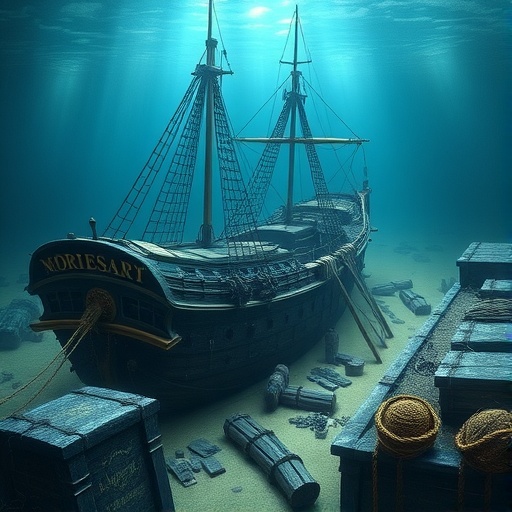
A Curtin University research team has used stones recovered from the Batavia shipwreck to expose a surprisingly complex 17th-century construction supply network. The Dutch East India Company vessel, wrecked off Western Australia in 1629, carried building materials whose origins have long been hard to verify after centuries underwater.

The study focused on stone blocks, bricks, and ballast recovered from the site. Rather than pointing to a single quarry source—as earlier assumptions suggested—the materials traced to multiple quarry regions across Europe.

Lead researcher Dr Anthony Clarke explains that visual identification is unreliable for waterlogged, timeworn cargo. “Historical records are incomplete, and after nearly 400 years underwater, these stones can look very similar,” he said. To overcome that problem, the team turned to mineral microanalysis to build a geological fingerprint.

Instead of relying on the bulk appearance of the cargo, researchers examined microscopic zircon grains. Using detrital zircon U–Pb dating, they measured the age and internal characteristics of zircon mineral populations embedded within the stone.

This approach revealed that blocks that appeared almost identical actually formed in different quarry regions in what is now Germany. The results indicate the shipment was assembled from at least two distinct quarry areas before being consolidated for long-distance transport.

Such mineral-level provenance offers a clearer view of how the Dutch East India Company coordinated logistics across continents. The findings suggest materials were not merely sourced, but systematically processed, combined, and shipped as part of a highly organized infrastructure plan.

The Batavia cargo likely included prefabricated sandstone blocks intended for the company’s fortified headquarters in Jakarta, alongside thousands of bricks and other building supplies. When the ship wrecked near the Abrolhos Islands, the cargo remained entombed—yet still preserved enough to be chemically decoded.

Beyond reconstructing trade routes, the work shows how museum collections can unlock new history with modern geochemical tools. By pairing shipwreck samples with advanced analytical methods, researchers can retrieve details that would otherwise be invisible to traditional documentation.

The team now plans to analyze additional Batavia stones and compare them with a broader range of European quarry sources, expanding the map of historical procurement pathways.

Subject of Research: Not applicable
Article Title: Bricks, Ballast, and the Batavia: Provenancing Dutch East India Company Cargo from a 1629 Shipwreck
News Publication Date: 29-Jul-2026
Web References: https://doi.org/10.1016/j.jasrep.2026.105958
References: 10.1016/j.jasrep.2026.105958
Image Credits: WA Museum

Keywords: Batavia shipwreck, provenance, detrital zircon U–Pb dating, mineral fingerprinting, quarry sourcing, Dutch East India Company, geochemical analysis, global supply chains, archaeological science, geology

Tags: 17th-century maritime tradeancient construction material sourcingBatavia shipwreck excavationdetrital zircon U–Pb datingDutch East India Company shipping routeshistorical cargo provenancehistorical trade secrets uncoveringlong-distance trade of building materialsmedieval European quarry regionsshipwreck cargo analysis techniquesunderwater archaeological researchunderwater mineral microanalysis
Share26Tweet16
Previous Post

Acute Pancreatitis Increasing in South Australia as Risk Shifts

Next Post

Warm Agulhas Current Powers Western Cape’s Deadliest Flood-Producing Storms

Related Posts

Hybrid bioelectrochemical system boosts C, N, and P removal for negative carbon wastewater
Earth Science

Hybrid bioelectrochemical system boosts C, N, and P removal for negative carbon wastewater

July 29, 2026
6.5 Million Americans Reside in Landslide Hazard Zones
Earth Science

6.5 Million Americans Reside in Landslide Hazard Zones

July 29, 2026
Widespread Tropical Cyclones During the Late Paleozoic Ice Age
Earth Science

Widespread Tropical Cyclones During the Late Paleozoic Ice Age

July 29, 2026
Extended Autumn Growing Season Drives Major Increases in Earth Greening
Earth Science

Extended Autumn Growing Season Drives Major Increases in Earth Greening

July 29, 2026
Molecular Rotors Map the 3D Viscous Habitat of Mucus-Gliding Bacteria
Earth Science

Molecular Rotors Map the 3D Viscous Habitat of Mucus-Gliding Bacteria

July 29, 2026
Pine Island Glacier Shows Dynamic Response to Two Decades of Ice Shelf Regrounding
Earth Science

Pine Island Glacier Shows Dynamic Response to Two Decades of Ice Shelf Regrounding

July 29, 2026
Next Post
Warm Agulhas Current Powers Western Cape’s Deadliest Flood-Producing Storms

Warm Agulhas Current Powers Western Cape’s Deadliest Flood-Producing Storms

  • Mothers who receive childcare support from maternal grandparents show more

    Mothers who receive childcare support from maternal grandparents show more parental warmth, finds NTU Singapore study

    27656 shares
    Share 11059 Tweet 6912
  • University of Seville Breaks 120-Year-Old Mystery, Revises a Key Einstein Concept

    1061 shares
    Share 424 Tweet 265
  • Bee body mass, pathogens and local climate influence heat tolerance

    682 shares
    Share 273 Tweet 171
  • Researchers record first-ever images and data of a shark experiencing a boat strike

    546 shares
    Share 218 Tweet 137
  • Groundbreaking Clinical Trial Reveals Lubiprostone Enhances Kidney Function

    531 shares
    Share 212 Tweet 133
Science

Embark on a thrilling journey of discovery with Scienmag.com—your ultimate source for cutting-edge breakthroughs. Immerse yourself in a world where curiosity knows no limits and tomorrow’s possibilities become today’s reality!

RECENT NEWS

  • Comment on: ‘Modelled impact of a multi-cancer early detection screening programme on cancer treatment in England
  • Black hole “blast” reaches 300,000 light years
  • Taufer Leads NSF-Funded $9 Million Team to Accelerate AI-Driven Discovery
  • Massey researchers uncover pathway that could transform glioblastoma treatment options

Categories

  • Agriculture
  • Anthropology
  • Archaeology
  • Athmospheric
  • Biology
  • Biotechnology
  • Blog
  • Bussines
  • Cancer
  • Chemistry
  • Climate
  • Earth Science
  • Editorial Policy
  • Marine
  • Mathematics
  • Medicine
  • Pediatry
  • Policy
  • Psychology & Psychiatry
  • Science Education
  • Social Science
  • Space
  • Technology and Engineering

Subscribe to Blog via Email

Enter your email address to subscribe to this blog and receive notifications of new posts by email.

Join 5,147 other subscribers

© 2025 Scienmag - Science Magazine

Welcome Back!

Login to your account below

Forgotten Password?

Retrieve your password

Please enter your username or email address to reset your password.

Log In
No Result
View All Result
  • HOME
  • SCIENCE NEWS
  • CONTACT US

© 2025 Scienmag - Science Magazine

Discover more from Science

Subscribe now to keep reading and get access to the full archive.

Continue reading
