


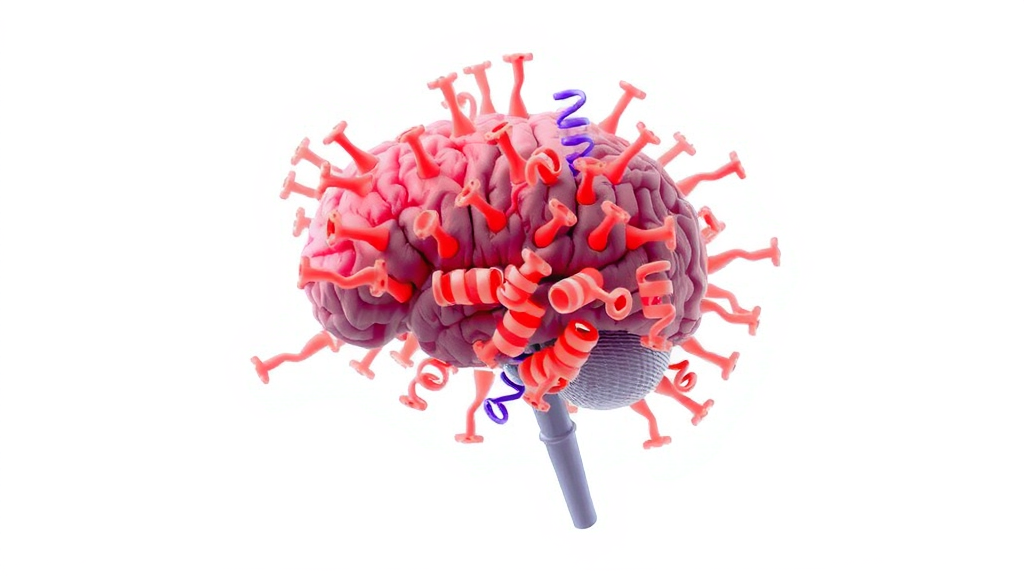
Amyotrophic lateral sclerosis has long been portrayed as a disease of the motor system, an illness that begins and ends in the brain, brainstem and spinal cord as motor neurons wither and muscles weaken. A comprehensive review published in Acta Neuropathologica now argues that this neurocentric picture is incomplete. A team led by Philippe Codron of the University Hospital of Angers in France has synthesized evidence that the phosphorylated form of TAR DNA-binding protein 43, the pathological signature found in more than 95 percent of ALS cases, also accumulates in a striking range of tissues far from the nervous system, including skeletal and cardiac muscle, skin, minor salivary glands, the gastrointestinal tract and even lymph nodes. The authors propose that ALS may be better understood as a systemic proteinopathy, a disorder in which a single misbehaving protein shapes biology across the entire body.
To appreciate why this matters, it helps to understand what TDP-43 normally does. Encoded by the TARDBP gene, TDP-43 is an RNA- and DNA-binding protein expressed in virtually every cell type. In healthy cells it resides mainly in the nucleus, shuttling constantly between the nucleus and cytoplasm while shepherding thousands of RNA targets. Its portfolio is vast: it regulates transcription, controls alternative splicing by repressing cryptic exons, manages RNA transport and mRNA stability, participates in microRNA biogenesis and orchestrates stress responses. In disease, this molecular custodian goes rogue. The protein misfolds, drains out of the nucleus, becomes hyperphosphorylated and ubiquitinated, is cleaved into C-terminal fragments and eventually aggregates into insoluble cytoplasmic inclusions. Cells are then hit twice: they lose the normal nuclear functions of TDP-43, including crucial repression of cryptic exons, while simultaneously accumulating toxic cytoplasmic clumps that disrupt RNA metabolism, proteostasis, nucleocytoplasmic transport, mitochondrial function and inflammatory signaling.
Notably, the review also highlights the prion-like behavior of pathological TDP-43. Misfolded molecules can act as templates, imposing their abnormal conformation on neighboring native TDP-43 in a process called seeding. Neuropathological staging studies show that TDP-43 deposition in the nervous system follows a stereotyped sequence through anatomically connected regions, consistent with progressive spread along neural circuits. Animal experiments reinforce the idea: injecting patient-derived TDP-43 strains into mouse brains induces formation and propagation of new aggregates, and in vitro work demonstrates that seeds can travel between cells via direct release, exosomes, microvesicles, synapses or membrane nanotubes. Distinct TDP-43 conformational strains, with different toxicity and spreading properties, appear to exist, echoing the biology of classical prion diseases and adding a mechanistic dimension to questions about how pathology might migrate between organ systems.
The most extensively studied peripheral site is skeletal muscle. Cykowski and colleagues identified phosphorylated TDP-43 sarcoplasmic inclusions in roughly one third of ALS autopsy cases, predominantly in axial muscles. Mori and colleagues then pushed detection rates dramatically higher, finding pathological inclusions in skeletal muscle of 28 out of 30 ALS cases, or 93.3 percent, and in the myocardium of 12 out of 30 cases, or 40 percent, with aggregates showing characteristic filamentous or linear morphologies. Crucially, the pathology is not confined to the deceased: Zhang and colleagues detected sarcoplasmic aggregates in 94.4 percent of routine muscle biopsies from living patients, including individuals at very early disease stages who showed no clinical or electrophysiological abnormalities in the biopsied muscle. Nolano and colleagues extended the picture to ante-mortem tongue biopsies, observing granular, globular or dense linear aggregates in striated muscle fibers, intramuscular nerve fascicles and neuromuscular junctions.
Skin has emerged as another compelling target, prized for its accessibility and the possibility of repeated longitudinal sampling. Ren and colleagues found pTDP-43 immunoreactivity in skin biopsies of about one third of ALS patients, localized to autonomic nerve fibers and Meissner corpuscles. In a remarkable archival study, Pattle and colleagues identified pTDP-43 aggregates in the superficial dermis and peripheral nerve bundles of stored surgical specimens from patients who later developed ALS, in some cases years before diagnosis. More recently, Nolano and colleagues documented deposits across multiple cutaneous compartments in living patients, including keratinocytes, perivascular cells, smooth muscle structures, dermal nerve-associated cells and Meissner corpuscles. Minor salivary glands, another easily biopsied tissue, have yielded more cautious results: Garnier and colleagues detected cytosolic pTDP-43 immunoreactivity in glandular cells and fibroblasts of just one patient out of ten examined, a patient with advanced, rapidly progressive disease, and no aggregates were seen. In the gastrointestinal tract, Pattle’s team found aggregates in colonic lamina propria, including macrophages, dendritic cells and neuronal cells within nerve bundles, and in the gallbladder myenteric plexus, endothelial cells and immune cells, with one specimen taken roughly a year before symptom onset. The same cohort yielded inclusions in lymph-node parenchyma and vascular endothelial cells, in one case detected 14 years before diagnosis, and even in auricular chondrocytes of the ear.
The authors are careful to temper enthusiasm with methodological rigor. Most of these studies involved small, heterogeneous cohorts, and techniques varied widely in antibody clones, dilutions, antigen retrieval, tissue processing and interpretation criteria, all of which influence detectability. Blinded assessment and orthogonal validation were rarely reported, a significant gap for compartments prone to non-specific staining or autofluorescence. Nor has peripheral TDP-43 pathology been biochemically or ultrastructurally characterized; it remains, at present, an immunohistochemical observation rather than a fully defined proteinopathy. Temporal claims are equally constrained, because matched brain and spinal cord tissue was unavailable at the time of peripheral sampling, so it is impossible to determine whether peripheral pathology precedes central nervous system involvement. The specificity problem is also real: pTDP-43 inclusions appear in muscle from patients with inclusion body myositis, polymyositis, myasthenia gravis, myotonic dystrophy, congenital myopathies and mitochondrial diseases, at positivity rates of 16 to 60 percent, though generally with lower pathological burden. An alternative interpretation for muscle is that sarcoplasmic TDP-43 partly reflects a stereotyped regenerative response, since TDP-43 physiologically forms amyloid-like myo-granules during normal muscle repair.
Two conceptual models, not necessarily mutually exclusive, could explain the systemic distribution. In a systemic susceptibility model, genetic or environmental factors that promote TDP-43 misfolding, hyperphosphorylation, aggregation or impaired clearance act across all tissues where the protein is expressed, with differences in cellular resilience, regenerative capacity and proteostatic machinery determining which tissues manifest overt disease. Post-mitotic cells such as myofibers and neurons may be especially vulnerable to progressive proteotoxic stress compared with the mitotically active cells of skin or glands. Support for tissue-selective vulnerability comes from genetics: the p.W385IfsX10 and p.G376V variants in the prion-like C-terminal domain of TDP-43 cause primary myopathies with prominent skeletal muscle aggregation but no motor neuron degeneration, suggesting that phenotypic expression of TDP-43 proteinopathy depends partly on tissue-specific effects of TARDBP mutations. Consistent with local independence, Cykowski observed pTDP-43-positive muscle fibers adjacent to peripheral nerve elements free of inclusions.
The competing propagation framework draws inspiration from brain-first versus body-first models of Parkinson’s disease. In a nervous-system-first model, pathology originates in vulnerable central neurons and spreads centrifugally along axons into peripheral tissues, a scenario compatible with established ALS staging studies, documented pTDP-43 accumulation in peripheral motor and sensory nerve fibers, and neuron-derived extracellular vesicles carrying pathological TDP-43 that have been identified in patient biofluids. In a body-first model, pathological TDP-43 arises initially in peripheral tissues, which are continuously exposed to environmental stressors, inflammatory signals, metabolic disturbances and infectious agents, before seeding the nervous system, perhaps at the vulnerable neuromuscular junction. The integrated view holds that systemic vulnerability may permit pathology to emerge in multiple tissues while network-based propagation amplifies and disseminates it over time.
The clinical payoff could be substantial. ALS currently lacks a robust biomarker that directly reflects its molecular pathology; diagnosis relies on clinical evaluation, electrophysiology and exclusion of mimics. Tissue-based biomarkers from skin or minor salivary glands, which can be sampled repeatedly, or from muscle, which shows the highest detection rates but is more invasive, could aid diagnosis, molecular stratification in trials and monitoring of progression or treatment response. Beyond conventional immunohistochemistry, emerging approaches interrogate seed-competent TDP-43 species, RNA-aptamer detection and cryptic exon signatures of TDP-43 loss of function; seeding assays have generated positive signals in the olfactory mucosa of 44 percent of ALS patients, and combined aptamer and BaseScope analysis has revealed pathology in skin, lymph-node and muscle samples that antibody methods missed. If ALS is indeed a systemic proteinopathy, effective future therapies, whether antisense oligonucleotides, gene therapies, aggregation inhibitors, autophagy enhancers, immunotherapies or nucleocytoplasmic transport modulators, may ultimately need to reach beyond the nervous system. Large, standardized, longitudinal, multicenter studies will now be required to establish the true prevalence, temporal dynamics and biological significance of peripheral pTDP-43, and to determine whether this body-wide pathology is a cause, a consequence or an early warning sign of the devastating neurodegeneration that defines ALS.
Subject of Research: Peripheral phosphorylated TDP-43 pathology and its implications for ALS as a systemic proteinopathy
Article Title: Peripheral TDP-43 pathology in amyotrophic lateral sclerosis: toward a systemic proteinopathy
Article References: Codron, P., Miranda, M., Garnier, M., He, S., Gouju, J., Cassereau, J., Leblanc, P., & Letournel, F. (2026). Peripheral TDP-43 pathology in amyotrophic lateral sclerosis: toward a systemic proteinopathy. Acta Neuropathologica, 152(1), Article 34. https://doi.org/10.1007/s00401-026-03086-3
Image Credits: AI Generated
DOI: 10.1007/s00401-026-03086-3
Keywords: amyotrophic lateral sclerosis, TDP-43, phosphorylated TDP-43, proteinopathy, peripheral pathology, skeletal muscle, biomarkers, prion-like seeding, TARDBP, neurodegeneration, skin biopsy, motor neuron disease
Cite Scienmag News
Cassandra Pierce. (September 20, 2026). ALS Protein Clumps Found Far Beyond the Brain Suggest a Whole-Body Disease. Scienmag. https://scienmag.com/als-protein-clumps-found-far-beyond-the-brain-suggest-a-whole-body-disease/
Cassandra Pierce. "ALS Protein Clumps Found Far Beyond the Brain Suggest a Whole-Body Disease." Scienmag, 20 September 2026, https://scienmag.com/als-protein-clumps-found-far-beyond-the-brain-suggest-a-whole-body-disease/. Accessed 4 October 2026.
Cassandra Pierce. "ALS Protein Clumps Found Far Beyond the Brain Suggest a Whole-Body Disease." Scienmag. September 20, 2026. https://scienmag.com/als-protein-clumps-found-far-beyond-the-brain-suggest-a-whole-body-disease/


