Wednesday, October 28, 2026
Science
No Result
View All Result
  • Login
  • HOME
  • SCIENCE NEWS
  • CONTACT US
  • HOME
  • SCIENCE NEWS
  • CONTACT US
No Result
View All Result
Scienmag
No Result
View All Result
Home Science News Biology

Single-nucleus maps of human skeletal muscle expose cell-specific genetic control of metabolic traits

October 28, 2026
in Biology
Juliet Wilcox
By Juliet Wilcox Scienmag Editorial Profile - Human Genetics
Reading Time: 3 mins read
0
Single-nucleus maps of human skeletal muscle expose cell-specific genetic control of metabolic traits

Single-nucleus maps of human skeletal muscle expose cell-specific genetic control of metabolic traits

65
SHARES
587
VIEWS
Share on FacebookShare on Twitter
ADVERTISEMENT

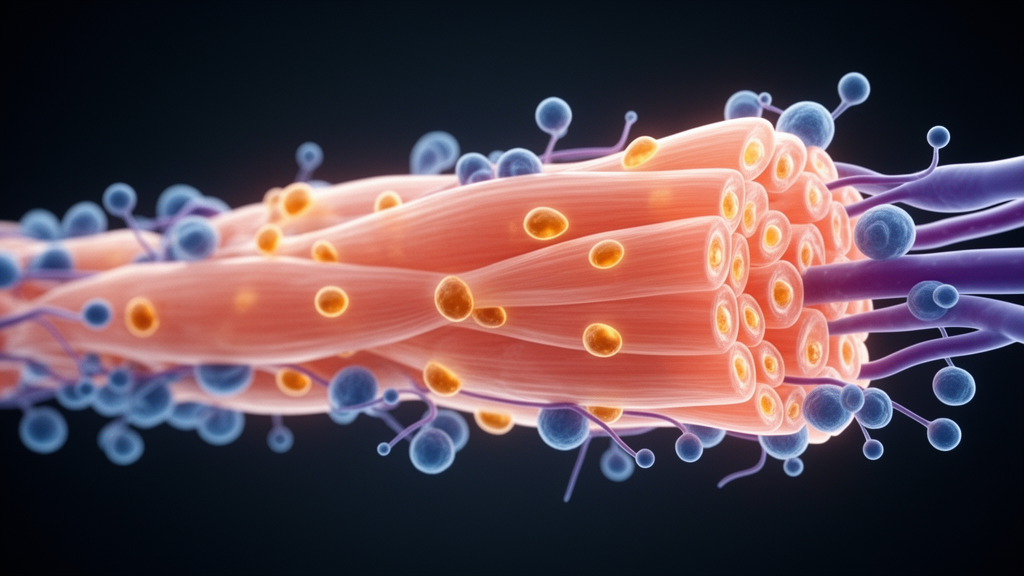
Skeletal muscle does far more than move the body. It is a major metabolic organ, and genetic variants that influence traits such as diabetes risk often exert their effects through the muscle cells themselves.

A team led by researchers including Arushi Varshney and Stephen C. J. Parker used a technique called genetic multiplexing to profile 287 frozen human skeletal muscle biopsies at single-nucleus resolution. Using single-nucleus assay for transposase-accessible chromatin with sequencing (snATAC-seq), they measured which stretches of DNA are open and potentially active in each cell, and with single-nucleus RNA sequencing (snRNA-seq) they measured which genes are actually switched on.

The profiling identified 13 distinct cell types within the muscle samples.

By integrating genetic variation from the donors, the researchers discovered more than 7,000 expression quantitative trait loci (eQTLs), which are variants associated with gene activity levels, and more than 100,000 chromatin accessibility QTLs (caQTLs), which are variants associated with whether particular DNA regions are open. These signals were catalogued across the different cell types, and some were context-specific, showing significant interactions between genotype and cellular context.

The team identified nearly 2,000 eGenes, meaning genes whose expression is controlled by nearby or distant genetic variants, that colocalized with caQTLs. They also constructed causal directional maps linking chromatin accessibility to gene expression, an approach designed to indicate which regulatory changes are likely driving changes in gene activity rather than merely occurring alongside them.

The most striking result concerns disease genetics. Almost 3,500 signals from genome-wide association studies (GWAS) across 38 cardiometabolic and related traits colocalized with the single-nucleus eQTLs or caQTLs, and most of these did so in a cell-specific manner. In other words, the genetic variants associated with metabolic traits could be tied to particular cell types within skeletal muscle.

Notably, these GWAS signals typically colocalized with caQTLs rather than eQTLs. That pattern suggests that many disease-associated variants act first by changing chromatin accessibility, the opening or closing of DNA regions that controls how genes can be read, rather than by directly altering gene expression. The authors argue that this highlights the importance of population-scale chromatin profiling for functional follow-up of GWAS findings.

The work was published in Nature Genetics.

For researchers trying to move from GWAS hits to biological mechanisms, the resource offers a way to narrow down which cell type, which regulatory element and which target gene a candidate variant is likely to affect.

The results, the authors write, illuminate the genetic regulatory architecture of human skeletal muscle, providing a reference map that connects cell types, regulatory elements, target genes and causal variants for polygenic metabolic traits and diseases.

Subject of Research: Single-nucleus multi-omic profiling of human skeletal muscle to map cell-type-specific genetic regulation of metabolic traits

Article Title: Population-scale single-nucleus multi-omic profiling of skeletal muscle reveals extensive context-specific genetic regulation

Article References: Varshney, A., Manickam, N., Orchard, P., Tovar, A., Ventresca, C., Zhang, Z., Feng, F., Mears, J., Erdos, M. R., Narisu, N., Nishino, K., Rai, V., Stringham, H. M., Jackson, A. U., Tamsen, T., Gao, C., Yang, M., Koues, O. I., Welch, J. D., … Parker, S. C. J. (2026). Population-scale single-nucleus multi-omic profiling of skeletal muscle reveals extensive context-specific genetic regulation. Nature Genetics. https://doi.org/10.1038/s41588-026-02786-6

Image Credits: AI Generated

DOI: 10.1038/s41588-026-02786-6

Keywords: skeletal muscle, single-nucleus multi-omics, snATAC-seq, snRNA-seq, eQTL, caQTL, chromatin accessibility, GWAS, cardiometabolic traits, gene regulation, genetics, Nature Genetics

Cite Scienmag News

Juliet Wilcox. (October 28, 2026). Single-nucleus maps of human skeletal muscle expose cell-specific genetic control of metabolic traits. Scienmag. https://scienmag.com/single-nucleus-maps-of-human-skeletal-muscle-expose-cell-specific-genetic-control-of-metabolic-traits/

Juliet Wilcox. "Single-nucleus maps of human skeletal muscle expose cell-specific genetic control of metabolic traits." Scienmag, 28 October 2026, https://scienmag.com/single-nucleus-maps-of-human-skeletal-muscle-expose-cell-specific-genetic-control-of-metabolic-traits/. Accessed 28 October 2026.

Juliet Wilcox. "Single-nucleus maps of human skeletal muscle expose cell-specific genetic control of metabolic traits." Scienmag. October 28, 2026. https://scienmag.com/single-nucleus-maps-of-human-skeletal-muscle-expose-cell-specific-genetic-control-of-metabolic-traits/

Tags: caQTLCardiometabolic traitscell-type-specific gene regulationChromatin Accessibilitychromatin accessibility in muscle cellseQTLeQTL and caQTL mapping in muscleGene regulationgenetic architecture of metabolic traitsgenetic control of metabolic traitsgenetic variants influencing diabetes riskgeneticsGWAShuman skeletal muscle single-cell genomicsmulti-omics analysis of skeletal musclemuscle-specific gene expression regulationNature Geneticssingle-nucleus multi-omicssingle-nucleus muscle cell profilingsingle-nucleus RNA sequencingskeletal musclesnATAC-seqsnATAC-seq in skeletal musclesnRNA-seq
Share26Tweet16
Previous Post

Cancer cells on the move shed giant vesicles packed with whole genomes

Next Post

Thirty Years of Data Show Uruguay River Water Quality Improved but Never Excellent

Related Posts

Mosquito bites against malaria reveal antibodies to salivary protein SG1L3
Biology

Mosquito bites against malaria reveal antibodies to salivary protein SG1L3

October 28, 2026
Urine biomarker flags kidney transplant rejection before it strikes
Biology

Urine biomarker flags kidney transplant rejection before it strikes

October 28, 2026
Excess potassium triggers functional magnesium deficiency that hurts gerbera vase life
Biology

Excess potassium triggers functional magnesium deficiency that hurts gerbera vase life

October 28, 2026
New Whitening Method Speeds Up Giant Genetic Data Analysis
Biology

New Whitening Method Speeds Up Giant Genetic Data Analysis

October 28, 2026
New Open-Source Pipeline Speeds Up Whole Exome Sequencing Analysis
Biotechnology

New Open-Source Pipeline Speeds Up Whole Exome Sequencing Analysis

October 28, 2026
Four Simulation Tools Put Astrocyte Calcium Signaling to the Test
Biology

Four Simulation Tools Put Astrocyte Calcium Signaling to the Test

October 28, 2026
Next Post
Thirty Years of Data Show Uruguay River Water Quality Improved but Never Excellent

Thirty Years of Data Show Uruguay River Water Quality Improved but Never Excellent

  • Mothers who receive childcare support from maternal grandparents show more optimized

    Mothers who receive childcare support from maternal grandparents show more parental warmth, finds NTU Singapore study

    27656 shares
    Share 11059 Tweet 6912
  • University of Seville Breaks 120-Year-Old Mystery, Revises a Key Einstein Concept

    1061 shares
    Share 424 Tweet 265
  • Bee body mass, pathogens and local climate influence heat tolerance

    682 shares
    Share 273 Tweet 171
  • Researchers record first-ever images and data of a shark experiencing a boat strike

    546 shares
    Share 218 Tweet 137
  • Groundbreaking Clinical Trial Reveals Lubiprostone Enhances Kidney Function

    531 shares
    Share 212 Tweet 133
Science

Embark on a thrilling journey of discovery with Scienmag.com—your ultimate source for cutting-edge breakthroughs. Immerse yourself in a world where curiosity knows no limits and tomorrow’s possibilities become today’s reality!

RECENT NEWS

  • 3D Printed Colour Routers Could Let Camera Sensors Use Three Times More Light
  • Fluoroquinolone Regimens Linked to Higher Treatment Failure in Human Brucellosis
  • Soft Fish Protein Gels Built from Interlocking Molecular Networks
  • Blending Three Plant-Based Polymers Yields Edible Packaging Films That Resist Moisture

Categories

  • Agriculture
  • Anthropology
  • Archaeology
  • Athmospheric
  • Biology
  • Biotechnology
  • Blog
  • Bussines
  • Cancer
  • Chemistry
  • Climate
  • Earth Science
  • Editorial Policy
  • Marine
  • Mathematics
  • Medicine
  • Pediatry
  • Policy
  • Psychology & Psychiatry
  • Science Education
  • Science News
  • Social Science
  • Space
  • Technology and Engineering

Subscribe to Blog via Email

Enter your email address to subscribe to this blog and receive notifications of new posts by email.

Join 5,151 other subscribers

© 2025 Scienmag - Science Magazine

Welcome Back!

Login to your account below

Forgotten Password?

Retrieve your password

Please enter your username or email address to reset your password.

Log In
No Result
View All Result
  • HOME
  • SCIENCE NEWS
  • CONTACT US

© 2025 Scienmag - Science Magazine

Discover more from Science

Subscribe now to keep reading and get access to the full archive.

Continue reading